







Arguably Orson Welles’ finest hour as a director and actor, this resurrected masterpiece remains one of cinema’s most extraordinary adaptations of Shakespeare, and features one of the most visceral battle sequences of all time.
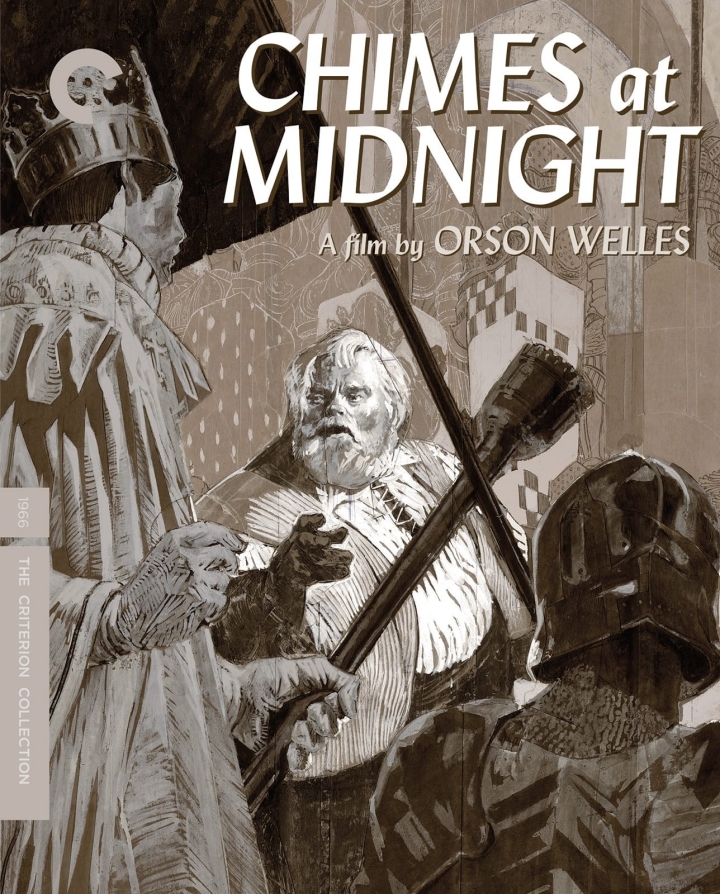
Dir. Orson Welles
1965 | Spain | Drama/Comedy | 116 mins | 1.66:1 | English
Not rated – likely to be PG13 for some violence
Cast: Orson Welles, Keith Baxter, Jeanne Moreau, John Gielgud, Margaret Rutherford
Plot: On the brink of Civil War, King Henry IV attempts to consolidate his reign while dealing with his son’s neglect of his royal duties. Hal, the young Prince, openly consorts with Sir John Falstaff.
Awards: Won 20th Anniversary Prize, Technical Grand Prize & Nom. for Palme d’Or (Cannes)
Source: Mr Bongo Worldwide Ltd
Accessibility Index
Subject Matter: Moderate – Shakespeare’s Falstaff; Friendship; Power & Loyalty
Narrative Style: Slightly Complex
Pace: Slightly Slow
Audience Type: Slightly Arthouse
Viewed: Criterion Blu-ray
Spoilers: No
(This review was first published on 8 Apr 2020. It has since been updated on 25 Aug 2026.)
There have been great screen adaptations of Shakespeare since the medium’s earliest days, and then there is Chimes at Midnight, resurrected from the ashes of poor distribution, mixed critical reception, and a host of technical issues, into what a growing number of film historians and critics now consider Orson Welles’ finest hour as both director and actor (yes, forget about the darn Citizen Kane).
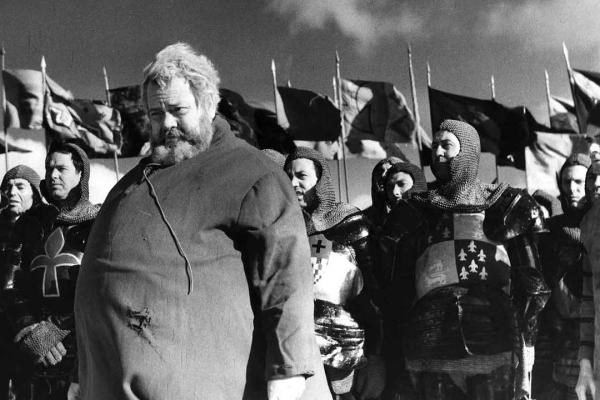
At just under two hours, Welles managed to economically combine portions from not one but five (!) of Shakespeare’s plays, including Henry IV Part 1, Henry IV Part 2, Henry V, Richard II, and The Merry Wives of Windsor, into a coherent tale involving, at its core, Falstaff, who’s most prominent in the two parts of Henry IV, and is played by Welles to bulging-belly perfection.
Stitching together these disparate texts into a single, flowing narrative speaks to Welles’ deep, lifelong obsession with the material. Chimes at Midnight centers on Falstaff’s surrogate-father relationship with the unruly Prince Hal (Keith Baxter), who is waiting in line to succeed the disapproving but increasingly ill King Henry IV.
Beneath the drinking, thievery, and tavern camaraderie lies a quietly devastating story about loyalty, aging, and the painful cost of political ambition.
“There live not three good men unhanged in England, and one of them is fat and grows old.”
The film is most notable for the Battle of Shrewsbury sequence that occurs midway through, which could be one of the most extraordinary depictions of brutal medieval warfare ever presented, in the form of a dynamic and heightened rhythmic montage (you really need to see it to believe your eyes).
Given its meagre budget, it’s astonishing to see how Welles achieved his vision with the thoughtful use of cinematography, editing, and sound, turning financial limitations into inventive, visceral filmmaking.
Chimes at Midnight can be seen as an artistic interplay between the cinematic and the theatrical, bringing together montage and long takes with text, performance, and mise-en-scène as realised for the stage.
There is boisterous comedy and gutsy drama in equal measure, and I suspect the film will, in time, find a more appreciative audience, especially cinephiles (like myself) who may not be at all into Shakespeare. Having seen it thrice now, and being even more impressed each time, I very much consider Chimes at Midnight to be Welles’ magnum opus.
Grade: A+
Trailer:


[…] Welles’ other Shakespearean masterpiece, Chimes at Midnight (1965), I wanted to start Othello up again when it […]
LikeLike
You have great movie tastes.
LikeLiked by 1 person
Thank you!
LikeLike