







The result of a “bad marriage” between provocateur Ken Russell and Oscar-winning screenwriter Paddy Chayefsky, this gimmicky, intelligent, and chaotic psychedelic sci-fi horror centers on one scientist’s unrelenting pursuit of an existential, primordial truth.
Review #3,102
Dir. Ken Russell
1980 | USA | Sci-Fi, Mystery, Horror | 103min | 1.85:1 | English
M18 (passed clean) for nudity
Cast: William Hurt, Blair Brown, Bob Balaban
Plot: A research scientist explores the boundaries and frontiers of human consciousness. Using sensory deprivation and hallucinogenic mixtures from Native American shamans, he explores these altered states of cognizance and finds that memory, time, and reality itself are states of mind.
Awards: Nom. for 2 Oscars – Best Sound & Best Original Score
Distributor: Warner
Accessibility Index
Subject Matter: Slightly Disturbing – Existential Truth; Hallucinogenic Experience; Reality & Time
Narrative Style: Straightforward
Pace: Normal
Audience Type: Slightly Mainstream
Viewed: Criterion Blu-ray
Spoilers: No
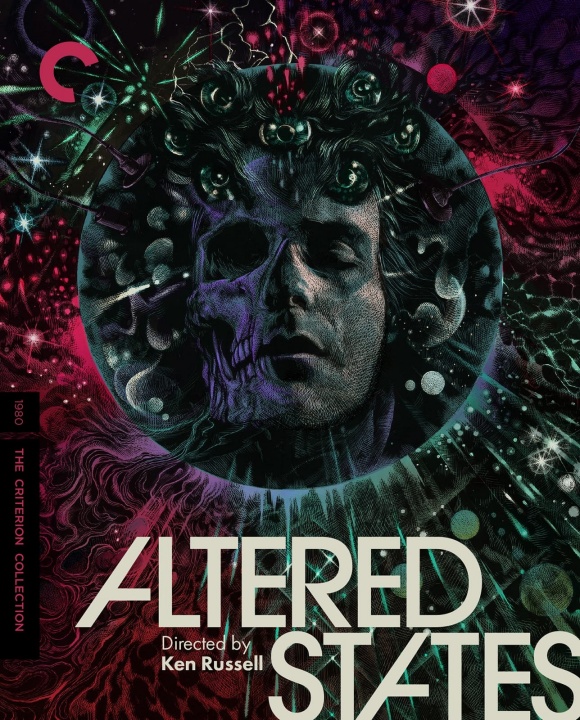
My third Ken Russell film is the trippiest of head trips: Altered States, which made it into the Criterion Collection last year in a new 4K restoration. There are scenes here that could arguably match the iconic stargate sequence in Kubrick’s 2001: A Space Odyssey (1968).
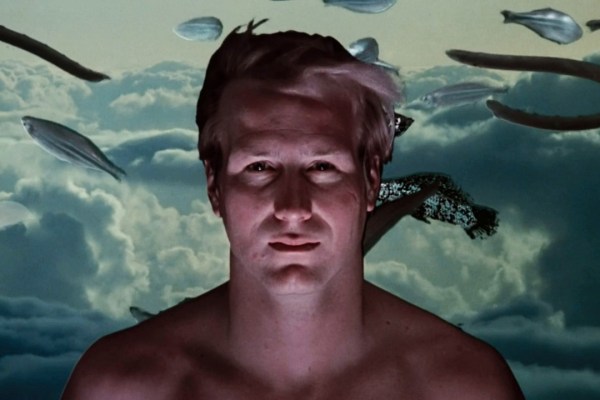
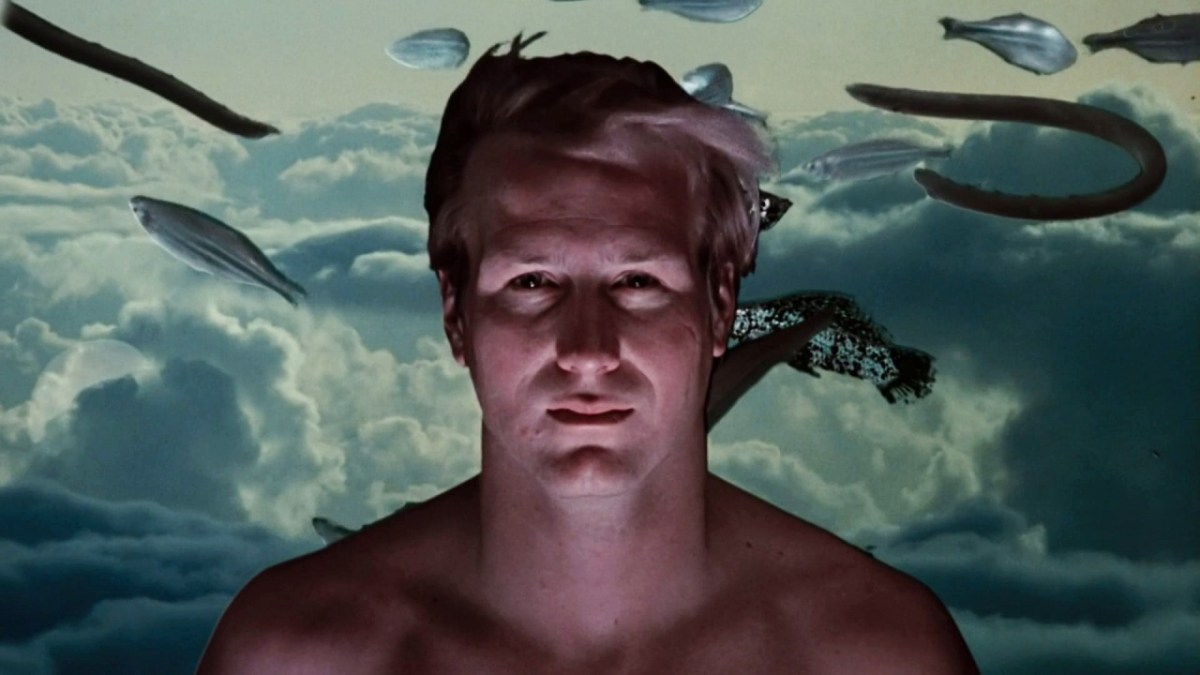
Like Kubrick, Russell was interested in the exteriority of space meeting the interiority of mind. With Altered States, he gives us something not just to think about, but to experience—through drug-induced hallucinations, rendered in special effects that are occasionally garish, tawdry, or even tactile.
This world of “mad scientists” is led by the persuasive Eddie (played by William Hurt in his first feature-film role), who is obsessed with pushing the limits of existential thought, and becomes a test subject himself.
Forcing himself into the confines of a claustrophobic sensory deprivation pod, he takes increasingly lethal doses of a shamanic drug used by Native American tribes, surrendering himself to a psychoactive process that he hopes will bring him closer to the Truth.
Eddie’s unrelenting pursuit of this elusive, existential “truth”, a beyond that could take him back millions of years to a primordial state, drives Russell’s psychedelic work, which some might feel is in the same company as, say, Cronenberg’s later The Fly (1986).
“You’re supposed to be reputable scientists! Not two dorm kids freaking on Mexican mushrooms!”
Transformation, whether subliminal or phenomenological, is the key—transcending science, logic, and even matters of the heart. There’s a concurrent Eros to Eddie’s Thanatos, as his wife, also an incredibly smart researcher, finds herself facing a dilemma that defies rationalism, yet one that possesses very real consequences for everybody—and perhaps even for humanity itself.
We must also talk about Paddy Chayefsky, who adapted his own novel and refused to be credited as such, but whose first and middle names, Sidney Aaron, became his “pseudonym” for the screenplay credit. The Oscar-winning Chayefsky (Marty, 1955; Network, 1976), one of the rare screenwriters in Hollywood who had unusually extensive creative control, was not exactly the easiest person to work with.
On the other hand, Russell came with a controversial reputation, having made provocative films like Women in Love (1969) and The Devils (1971) that pushed boundaries of morality and stylistic excess. Russell’s lurid visual phantasmagoria of a film (his first Hollywood venture) seems like a nightmare Chayefsky would wake from in a cold sweat.
Chayefsky, who thought of Russell as a “carnival barker”, wanted the studio to fire the director after Russell found him to be too controlling and banned him from his set. The result of this “bad marriage” is one of the great sci-fi horror films of the ‘80s—gimmicky, intelligent, chaotic.
Grade: A-
Trailer:
Music:

