



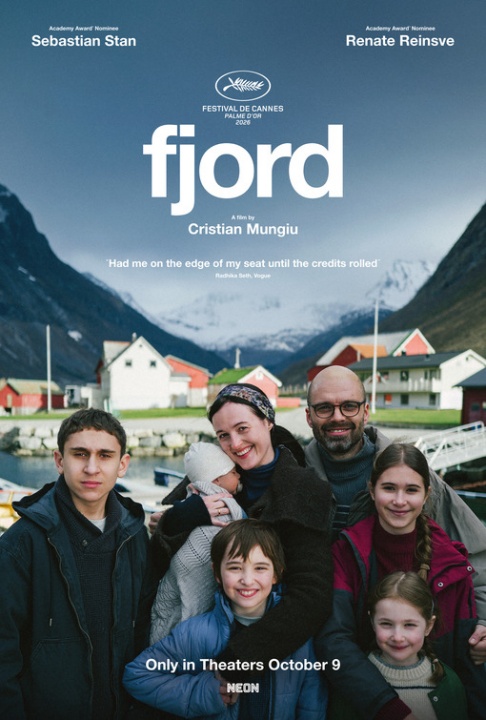
A thorny family-in-crisis drama, Mungiu’s remarkable Cannes Palme d’Or winner throws questions of faith, parenthood, and social policy into the grinder, and taps into the pulse of what divides many people today, particularly the values we impose on others.
Review #3,101
Dir. Cristian Mungiu
2026 | Romania, Norway | Drama | 146min | 2.39:1 | Norwegian, English, Romanian
NC16 (passed clean) for some nudity
Cast: Sebastian Stan, Renate Reinsve, Lisa Carlehed, Ellen Dorrit Petersen, Lisa Loven Kongsli
Plot: An immigrant Romanian family living in Norway is subject to an investigation and faces the scrutiny of the local judicial system.
Awards: Won Palme d’Or & FIPRESCI Prize (Cannes)
International Sales: Goodfellas (SG: Anticipate Pictures)
Accessibility Index
Subject Matter: Moderate – Family in Crisis; Immigrants; Faith; Social Policy
Narrative Style: Slightly Complex
Pace: Slightly Slow
Audience Type: Slightly Arthouse
Viewed: Screener
Spoilers: No
Earning Cristian Mungiu his second Palme d’Or at Cannes after the superlative abortion drama 4 Months, 3 Weeks and 2 Days (2007), still his finest film to me, Fjord comes with very high expectations.
It is Mungiu’s first film to be shot outside Romania, and for the first time, he works with internationally known actors in Sebastian Stan and Renate Reinsve.
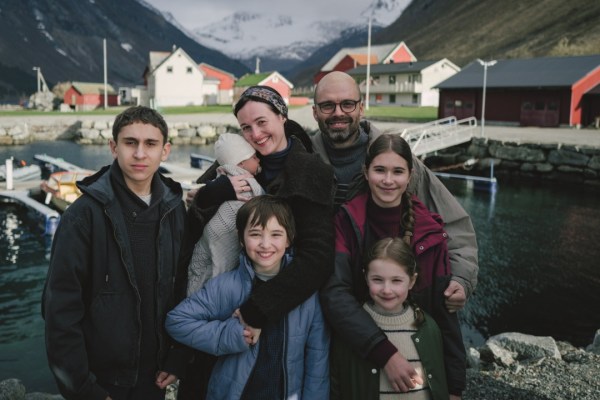
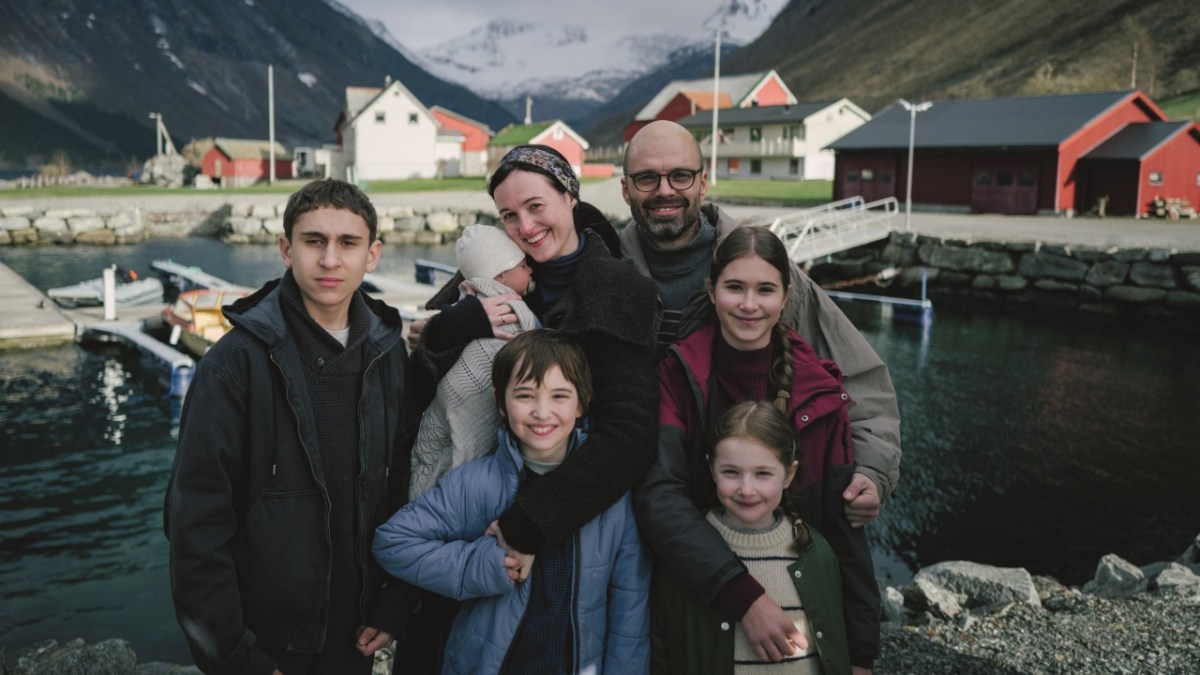
They play Mihai and Lisbet, respectively, a married couple with five kids in tow who move from Romania to Norway after the passing of Mihai’s parents. They seek a new life in a welcoming town, until one day, their daughter appears at school with conspicuous bruises.
This triggers an avalanche of unintended consequences that Mungiu expertly weaves into a family-in-crisis drama that eventually becomes a contentious legal and moral anti-thriller.
Marked by riveting performances that are largely restrained—despite the subject matter being rather fiery—Fjord does a lot with its material, particularly the tendency to assume guilt in others even when the facts aren’t yet clear enough.
With child protection services disrupting the religiously conservative family (Mihai and Lisbet are staunch evangelical Christians, who are adamant that they have never, and will never, hit their children), Mungiu pits the freedom of conservative beliefs against the “authoritarian” liberalism of Norway’s social policies.
“Nobody could love children more than their parents.”
Can the state interfere in how a family raises its children? I don’t think it’s difficult to catch Mungiu’s veiled suggestion that this very open-minded Norwegian town is not at all any different from the communist Romania he grew up in.
Most cinephiles will probably appreciate how thematically dense Fjord is, even though, formally and stylistically, it might be one of Mungiu’s most straightforward and unadorned films.
The outdoor cinematography is incredibly beautiful, especially if you enjoy international arthouse works that are just gleaming with visual polish. Its “clean-shaven” look perhaps only counter-amplifies the dark, psychological impasse that Mihai and Lisbet need to overcome in the only way they know how: through their deep and unwavering faith in God.
The anxieties over religiosity, family, social policies, and law are thrown into the grinder, and out comes not so much a problem to be solved, but one to be reckoned with.
Fjord ultimately feels very modern and now—as it taps into the pulse of what divides many people today, it poses a thorny question about critical tolerance: are we compromising on our values when we defend or reassert the values of others whom we may not necessarily agree with?
Grade: A-
Trailer:


My experience with complex social issues has shown that personal biases significantly influence how we interpret these cinematic narratives. This film highlights how different cultural perspectives shape individual moral frameworks.
LikeLiked by 1 person
Yes indeed
LikeLike