




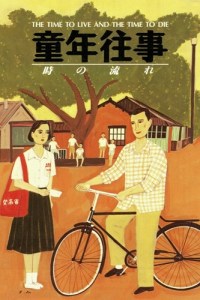
Signaling what was then a more mature approach to his filmmaking, Hou’s deeply personal recollection of childhood transforms memory into quietly profound cinema, finding extraordinary emotional resonance in the unadorned moments of everyday family life.
Dir. Hou Hsiao-Hsien
1985 | Taiwan | Drama | 138 mins | 1.85:1 | Mandarin, Min Nan & Hakka
M18 (passed clean) for coarse language
Cast: Chang Chia-bao, Chang Neng, Chen Chih-Chen, Tang Ru-Yun
Plot: This depiction of childhood and adolescence draws heavily from the filmmaker’s own boyhood. Like many of their compatriots, Hou’s family moved from the mainland to Taiwan in 1948 and was unable ever to return.
Awards: Won FIPRESCI Prize – Forum of New Cinema (Berlin); Won 2 Golden Horse Awards – Best Supporting Actress, Best Original Screenplay. Nom. for 4 Golden Horse Awards – Best Feature Film, Best Director, Best Original Score, Best Sound
Source: Central Motion Picture Corporation
Accessibility Index
Subject Matter: Moderate – Family; Coming-of-Age; Memories
Narrative Style: Slightly Complex
Pace: Slow
Audience Type: Slightly Arthouse
(Reviewed at the Hou Hsiao-Hsien retrospective – first published 28 Apr 2016; updated 11 Aug 2026 on second viewing)
Spoilers: No
The first truly outstanding work of Hou Hsiao-Hsien’s career, after impressing with his breakthrough, The Boys from Fengkuei (1983), and his beloved early classic, A Summer at Grandpa’s (1984), A Time to Live, a Time to Die signals a more mature approach to his filmmaking. It is, in some way, a deeper film about life lived, while still retaining the naturalistic photography and earnest drama that define his preceding works.
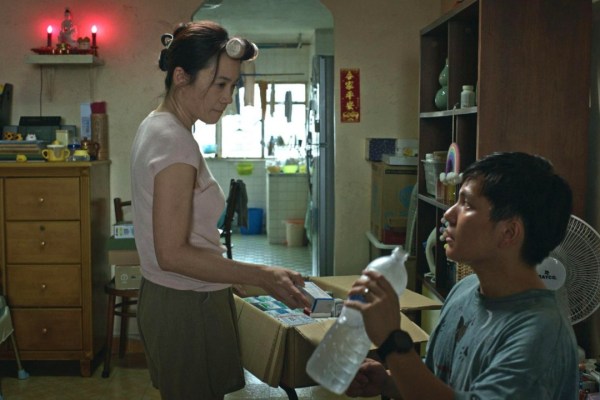
The film centres on a family through the point of view of Ah-Hsiao, a young boy who lives with his parents, siblings, and elderly grandmother. Meant to be autobiographical, Hou’s work is a deeply personal recollection of the bygone days of childhood and his gradual transition into a young man who mixes, sometimes regretfully, with the small-time gangsters in his precinct.
Ah-Hsiao is rather distant from his father, but less so towards his mother. His grandmother (played by Tang Ru-Yun in a Golden Horse-winning supporting performance) is especially affectionate towards him, and, in arguably the film’s most beautiful sequence, the pair embark on a day trip on foot to the Mainland to pay respects to their ancestors, only to end up picking guavas along the way.
In an extraordinary moment, and in all of her aged years, the grandmother attempts to—and successfully—juggle three guavas. The Mainland may be far away and unreachable for an old lady and a young boy, but these scenes, however unadorned, somehow tug at our heartstrings because most of us have that one treasured memory with our grandparents that lingers long after childhood has passed.
“Grandma, there’re guavas!”
For me, it was being in my grandpa’s lorry many times in the mid-to-late ‘90s; because he couldn’t read English, he followed the numbered exits when leaving the expressway. Because of that, I understood then why highway exits were—and still are—numbered.
Those were also the days when I learnt the Teochew dialect, and part of why Hou is my favourite director of all time is because many of his early films feature the Min Nan dialect, the sounds of which bear a striking similarity to the Teochew that I grew up with in Singapore.
While it is a potent tearjerker for a number of reasons, A Time to Live, a Time to Die also vividly evokes rural Taiwan in the 1950s and ’60s, capturing both its nostalgic warmth and its troubling social reality marked by street gangs and juvenile delinquency.
Hou’s preoccupation with disenfranchised youths would later expand with films such as the rough-hewn Mean Streets-esque realism of Goodbye, South, Goodbye (1996), and the postmodern stylistic swagger of Millennium Mambo (2001). Here, however, that concern remains grounded in memory, making this one of the director’s most intimate and emotionally resonant works.
Grade: A
Trailer:
Music:


[…] is the first of Hou’s ‘coming-of-age’ trilogy that would later see him make A Time to Live, a Time to Die (1985) and Dust in the Wind (1986). For these two kids who have lived in the city for years, this […]
LikeLike
[…] world cinema – the ‘coming-of-age’ trilogy with films such as A Summer at Grandpa’s (1984), A Time to Live, a Time To Die (1985) and Dust in the Wind (1986), and the ‘historical’ trilogy comprising of such esteemed […]
LikeLike
[…] The other two films are A Summer at Grandpa’s (1984), and his first great work, A Time to Live, a Time to Die (1985). Dust in the Wind begins with darkness, before we realise that we are on a train coming […]
LikeLike
[…] stage, I can only hope to have the opportunity to catch some of his acclaimed masterpieces like A Time to Live, a Time to Die (1985) and A City of Sadness […]
LikeLike
[…] Loretta Yang as the titular character) and Best Adapted Screenplay—in a year boasting Hou’s A Time to Live and a Time to Die and Yang’s Taipei Story is truly a testament to the film’s […]
LikeLike
[…] master filmmaker Hou Hsiao-Hsien, whose early films such as A Summer at Grandpa’s (1984) and A Time to Live, a Time to Die (1985) often detailed with much lyricism and nostalgia the lives of intergenerational families […]
LikeLike