





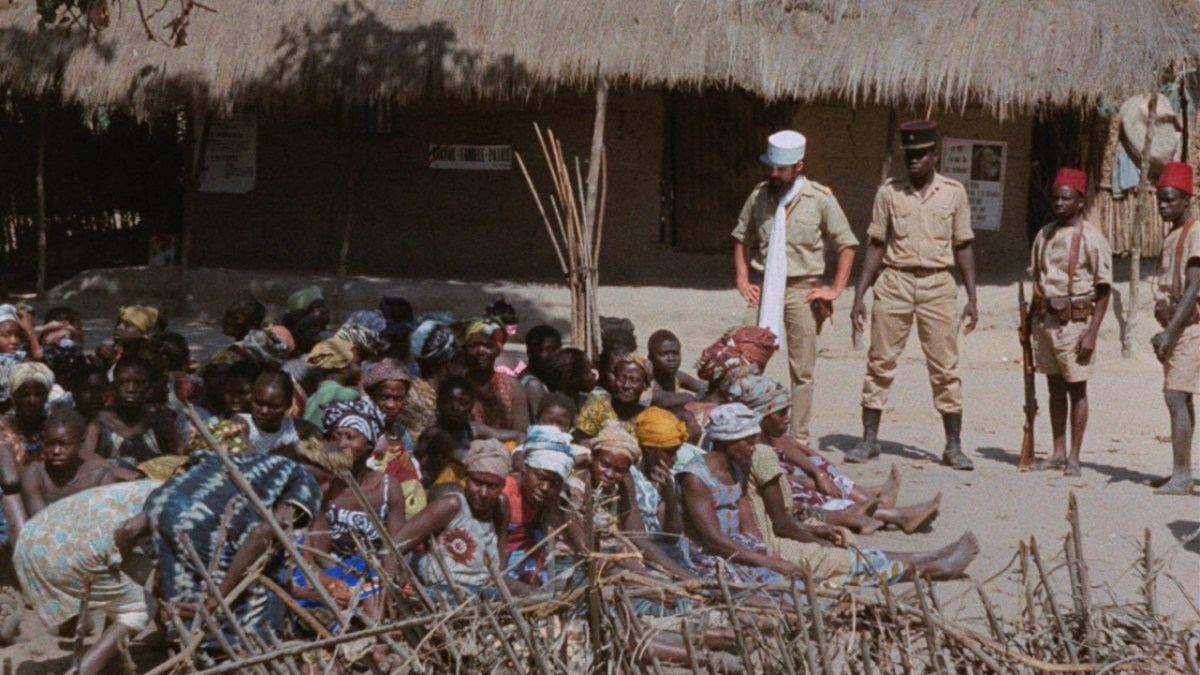
A Diola village is forced to “volunteer” their young men for the French army, while women are asked to give up tonnes of rice in Sembene’s urgent, spiritually defiant WWII work of anti-colonial resistance.
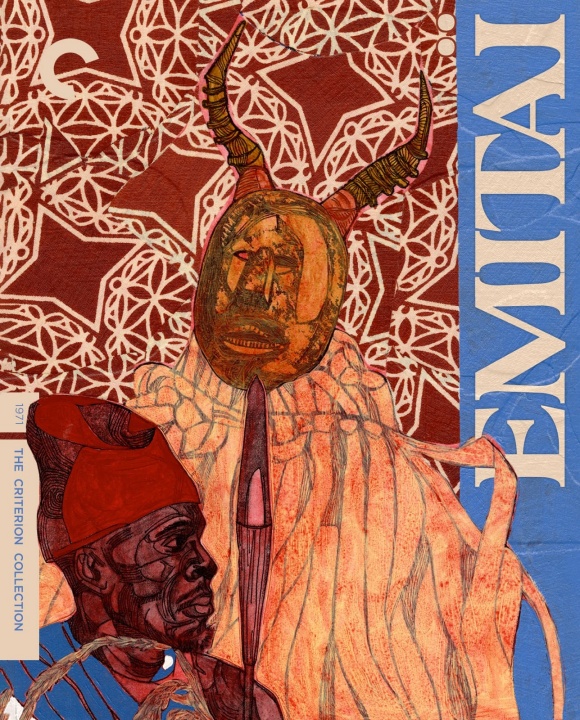
Review #3,093
Dir. Ousmane Sembene
1971 | Senegal | Drama | 101min | 1.66:1 | Diola & French
PG13 (passed clean) for some disturbing scenes
Cast: Mbissine Therese Diop, Andongo Diabon, Michel Renaudeau
Plot: As World War II rages in Europe, a conflict arises between the French and the Diola-speaking tribe of Africa, prompting the village women to organize their men to sit beneath a tree to pray.
Awards: Won OCIC Award – Recommendation in Forum of New Film (Berlinale)
Source: Domireew
Accessibility Index
Subject Matter: Moderate – French Colonialism; Exploitation; Spiritualism
Narrative Style: Straightforward
Pace: Slightly Slow
Audience Type: Arthouse
Viewed: Criterion Blu-ray
Spoilers: No
With Emitai, director Ousmane Sembene finds himself moving towards a more revolutionary form of filmmaking, one that puts the colonial machinery of European imperialism under historical scrutiny.
It was only his third feature, after Black Girl (1966) and Mandabi (1968), but it would anticipate the likes of Xala (1975) and Ceddo (1977), though Sembene experts would point to his later Camp de Thiaroye (1988) as the companion piece par excellence to Emitaï.
Camp features Senegalese soldiers who fought for France during WWII, only to discover that the freedom they helped secure would not extend to them.
Emitai, in contrast, is about the Diola villagers who are being exploited, as France, weakened by its defeat and occupation during WWII, tightens its grip on its colonies. Young men are forced to “volunteer” for the French army, while the women are asked to give up tonnes of rice. If they resist, death and destruction await.
Colonialism was—and still is—a horrible and mortifying disease, and in the hands of Sembene, he pulls no punches in depicting the enduring African experience under oppression, one marked by brutal exploitation and forced helplessness.
“The white men took away our sons. Now they want our rice.”
At the same time, Emitai evokes a collective spirit of resistance, where strategic silence, gritty endurance, and, in some of the film’s most boisterous moments, an acute sense of communion with the living and the dead, express the willingness of the Diola community to embrace self-sacrifice with courage.
In an unforgettable sequence, a dying man seeks counsel from the gods, with Sembene using an overwhelmingly red filter and jump cuts to depict the spiritual turmoil of this encounter.
Similarly, in night scenes, the images have a distinctly dark blue hue, as if the village has been enshrouded in an empty silence, like an oblivion where their deities seem to have abandoned them.
Sembene depicts the Diola’s traditional beliefs and rituals without any judgment or sensationalism, with just enough anthropological curiosity to avoid reducing them to spectacle (if you can stomach two scenes of animal sacrifice).
An assured work with beautiful cinematography, I think Emitai’s best trait is its urgency—Sembene doesn’t waste time, and while it might be slow, he makes every scene count.
The fact that the “opening titles” only come in a good 20 minutes into the film shows how confident the director is in his narrativising of this neglected part of WWII history.
Grade: A–
Trailer:

