

Set against a nation awaiting change, this Cannes-winning debut feature intertwines father-son bonding with the fissures of an angsty population through rich Malickian visual lyricism and sensorial montage, striking that rare balance between accessibility and artistic ambition.
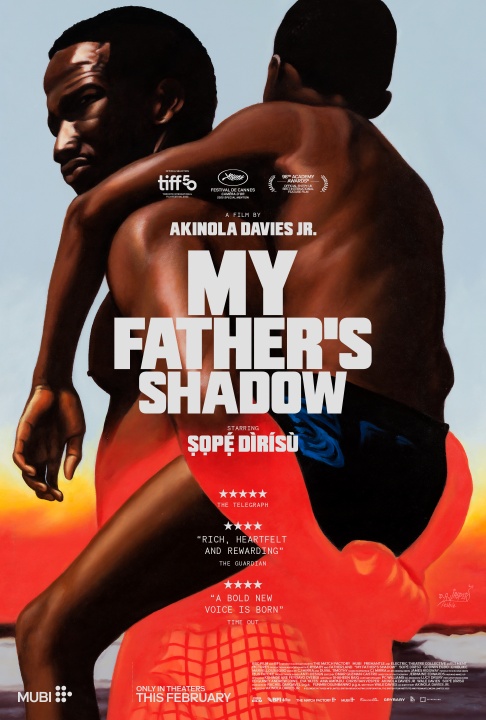
Review #3,086
Dir. Akinola Davies Jr.
2025 | Nigeria | Drama | 94min | 1.66:1 | English & Yoruba
PG (passed clean)
Cast: Ṣọpẹ́ Dìrísù, Chibuike Marvellous Egbo, Godwin Egbo
Plot: Two young brothers explore Lagos with their estranged father during the 1993 Nigerian election crisis, witnessing both the city’s magnitude and their father’s daily struggles as political unrest threatens their journey home.
Awards: Won Camera d’Or – Special Mention & Nom. for Un Certain Regard Award; Won Outstanding Debut by a British Director, Writer or Producer (BAFTA)
International Sales: The Match Factory
Accessibility Index
Subject Matter: Moderate – Election Crisis; Nigerian Politics; Father-Son Bonding
Narrative Style: Slightly Complex
Pace: Slightly Slow
Audience Type: Slightly Arthouse
Viewed: MUBI
Spoilers: No
Nigeria is the most populous country in Africa. Nollywood is the second-largest producer of movies after Bollywood. (Step aside, Hollywood.) When I was with Netflix for an eye-opening 13-month side-quest, I had the pleasure of watching and processing dozens of commercial Nigerian movies.
Yet, that didn’t quite prepare me for My Father’s Shadow, which, granted, with its arthouse sensibility, is most certainly miles away from Nollywood filmmaking—and also apparently the first-ever Nigerian film to compete at the Cannes Film Festival, where it won the Camera d’Or Special Mention.
Co-written by Wale Davies, and directed by his brother, Akinola Davies Jr., who balances a kind of Malickian visual lyricism and sensorial montages with a heartfelt story about a father and his two young sons navigating the city of Lagos, My Father’s Shadow seems to have hit the nail on the head, both in terms of being quite accessible (for cinephiles unfamiliar with African cinema in general), and as a distinctive showcase of the filmmakers’ artistic talents.
I would be curious to know whether Nigerians have flocked to a film like this in their own cinemas.
It’s 1993, and an entire nation waits with grave anticipation for the highly contested presidential election results. With a political crisis likely looming, one that might escalate into violence, stormy clouds hang in the air.
“Boys! This is Lagos. You’ve to use your eyes!”
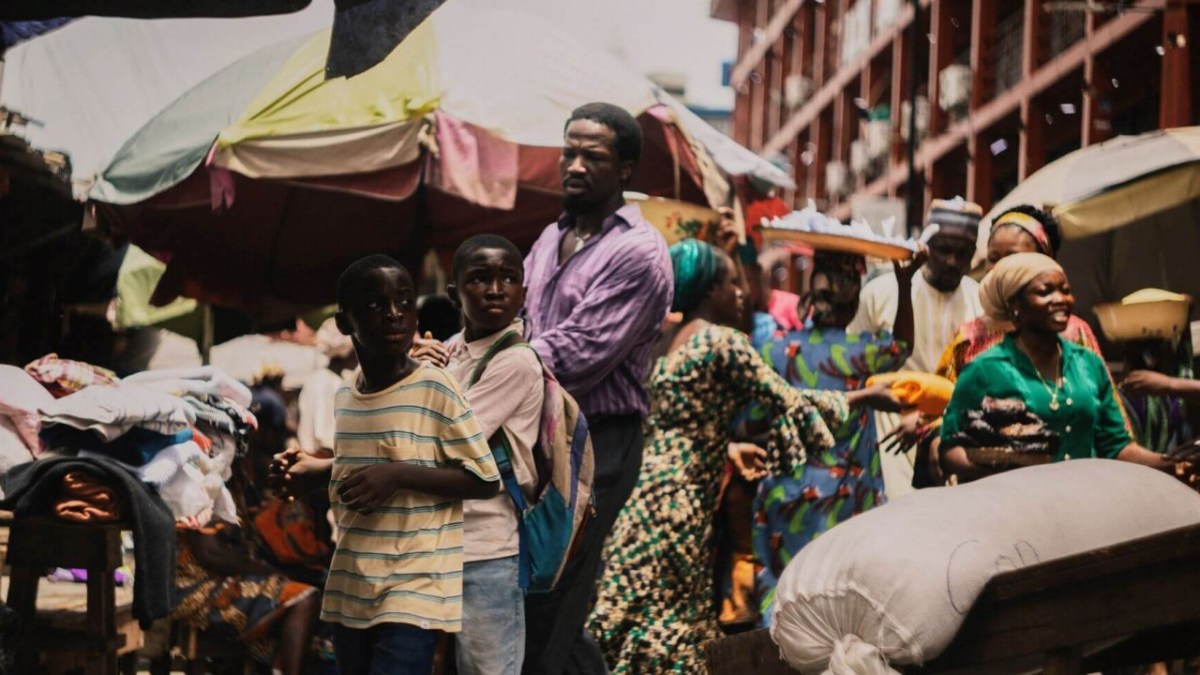
The two boys, on that rare trip out with their mostly absent dad, are alternately moody and excited in their own ways—they (and we) get to explore the hustle and bustle of Lagos, captured with a curious, observational eye.
Their Dad, who’s much more hyperaware of their immediate surroundings, is perturbed by the presence of military trucks roaming the streets. He is also hopeful for political change, away from the threat of military intervention and autocracy.
With a sound design that can careen from the ethereal to the intense at the drop of a beat, My Father’s Shadow connects the bliss of father-son bonding with the fissures of an angsty population. What a contrast, but also what coherence overall.
You know this is a promising debut feature of intimacy and dystopia when the filmmakers (whether intentionally or otherwise) can effortlessly reference Moonlight (2016), with a sublime scene in the beach waters, and Children of Men (2006), as the camera rotates within a moving car while violence unfolds chaotically outside.
Grade: A-
Trailer:
Music (Live Performance):


[…] Mention: MY FATHER’S SHADOW for its concerted use of poetic montage to give the film a lyrical, dreamy, yet unsettling […]
LikeLike