




Though narratively simplistic and less radical than its African contemporaries, Ouedraogo’s debut feature finds hope in self-determination, presenting a prospective vision of a people carving out their own future, away from Western aid and “framings”.

Review #3,088
Dir. Idrissa Ouedraogo
1987 | Burkino Faso | Drama | 79min | 1.37:1 | Moore
Not rated – likely PG13 for sexual references.
Cast: Moussa Blogo, Aoua Guiraud, Assita Ouedraogo
Plot: Poverty and misery are rife in Gourga, a village in the Sahel. The inhabitants must choose: stay and await international assistance or leave for more fertile regions in the country. Salam, a peasant, and his family opt for the second solution, with all the sacrifices this entails.
Awards: Official Selection (Cannes)
Source/Distributor: Les Films de l’Avenir / World Cinema Project
Accessibility Index
Subject Matter: Moderate – Making Choices; Family Survival; Self Determination
Narrative Style: Straightforward
Pace: Slightly Slow
Audience Type: Slightly Arthouse
Viewed: Criterion Blu-ray
Spoilers: No
This could be the first-ever film I have seen from Burkina Faso, a landlocked country in West Africa. It is also the first feature by an African cinema great, as writer-director Idrissa Ouedraogo (who would later win major awards at Cannes and the Berlinale) gives us a beautifully shot film (in 16mm, no less) that is economical in its storytelling.
Some might find it too simplistic from a narrative standpoint, and it might not be as “radical” as, say, Med Hondo’s Oh, Sun (1970, Mauritania) or Djibril Diop Mambéty’s Touki Bouki (1973, Senegal), but there is a quiet, laidback charm to it.
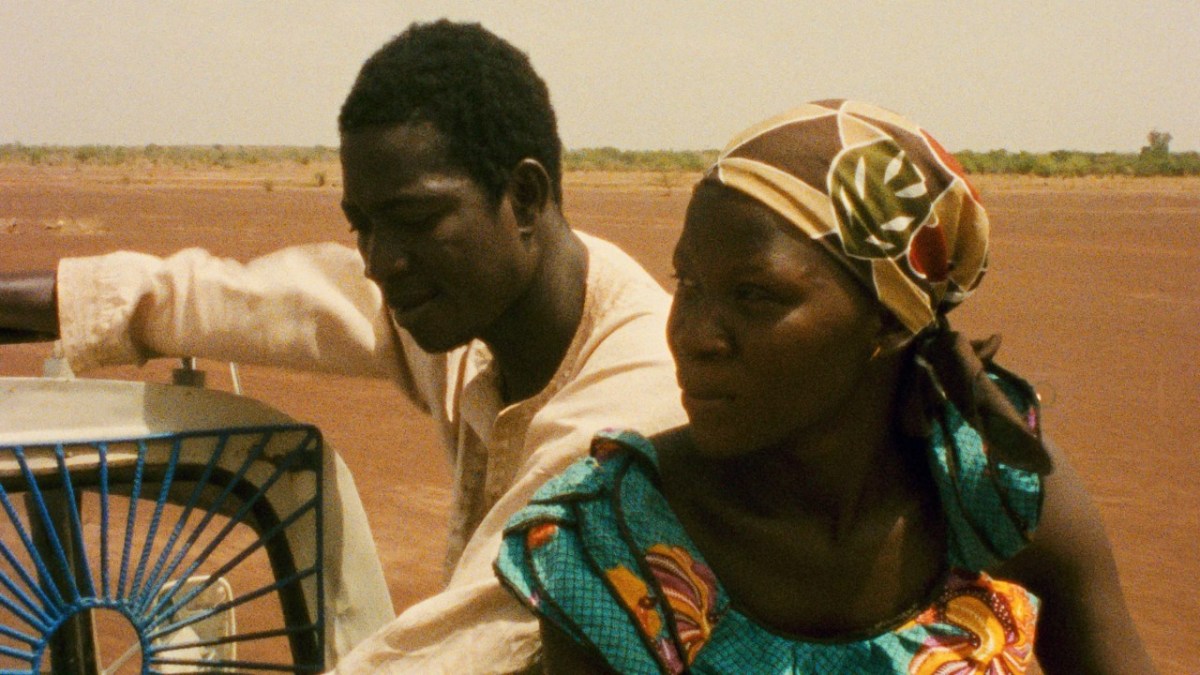
Centering on the travails of a family that has decided to make a choice (the film’s title translates as “The Choice”), to move inland and find greener pastures (well, literally) to make a subsistence living out of the land, and away from the meagre international aid provided by Western organisations, we can sense that Ouedraogo is offering a commentary on his country’s desire to carve out a future for herself.
He captures this family’s self-determination by focusing on their daily activities in natural settings, hot and arid though they may be. We see the bonding of friendship and a blossoming romance—images that are reframed away from Western “propagandic” depictions of a highly volatile Africa on the verge of collapse.
“Where is my gun?”
Still, there are moments of tragedy and angsty jealousy that creep in, but overall, Yam daabo is a film that moves towards the light; in other words, it’s prospective rather than retrospective. It’s not about where one has come from, but where one will go—and as long as anyone can make a choice, he or she will move forward.
Backed by a vibrant score that either punctuates key dramatic moments or functions as quirky aural embellishments, Yam daabo is an accessible entry point if you wish to be more curious about African cinema.
It was also released just months before Burkina Faso’s revolutionary leader, Thomas Sankara, was assassinated. Sankara envisioned his country (and pan-Africa) to be free from imperialism and built on self-sufficiency.
Ouedraogo’s work, while not overtly political, aligns with that perspective, much like how Indian auteur Satyajit Ray’s “Apu” trilogy eschews its source texts’ temporal cyclicality for a much more linear treatment, in tandem with then Indian Prime Minister Jawaharlal Nehru’s progressive, “never look back” vision of a post-colonial India.
Grade: B+
Trailer:

