



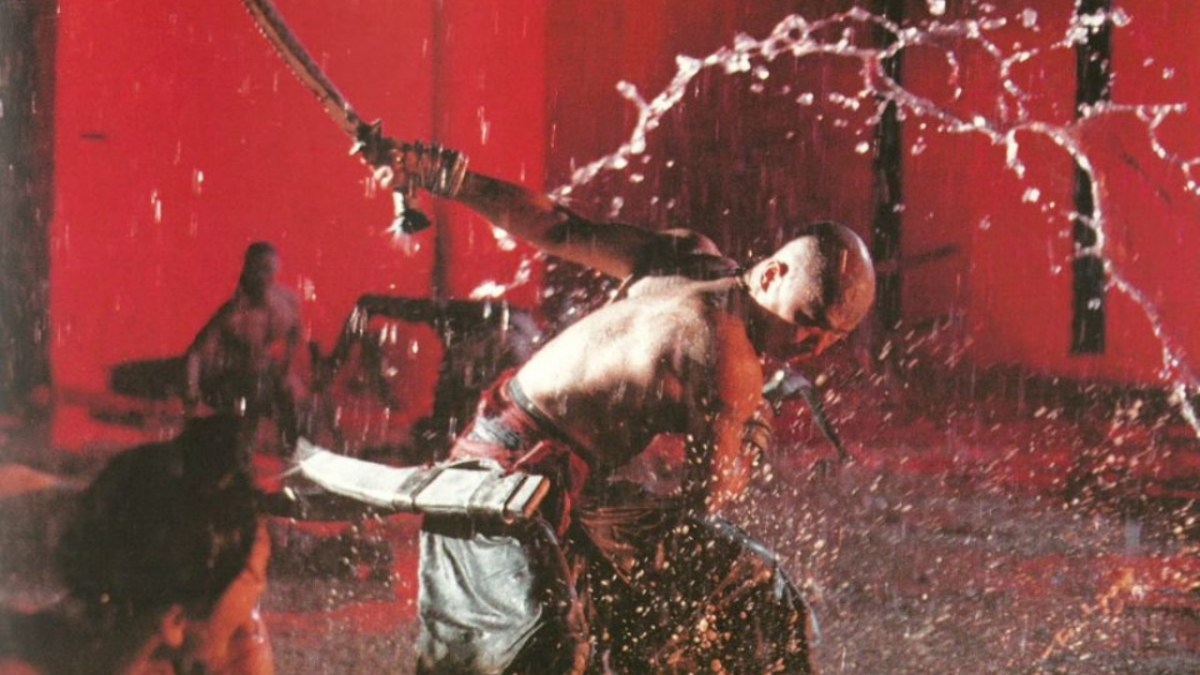
A delirious, nihilistic reimagining of the ‘One-Armed Swordsman’ tale, this is one of Tsui’s boldest achievements, as he disregards continuity and legible mise-en-scène for a whirlwind, impressionistic, and psychic wound of a movie.
Review #3,082
Dir. Tsui Hark
1995 | Hong Kong | Action, Drama | 105min | 1.85:1 | Cantonese
Not rated – likely to be M18 for violence and sexual scene
Cast: Vincent Zhao Wenzhuo, Xiong Xinxin, Sonny Song, Austin Wai Tin-Chi, Moses Chan Ho
Plot: Adopted by a renowned swordsmith, a young man discovers that his biological father was killed by a powerful bandit called Lung. Leaving to seek revenge, he runs afoul of vicious desert scum, losing his right arm in the process. After being nursed back to health, he learns to compensate for his loss and returns to confront Lung.
Awards: Nom. for 2 Hong Kong Film Awards – Best Costume & Makeup Design, & Best Action Choreography
Distributor/Source: Golden Harvest
Accessibility Index
Subject Matter: Slightly Dark – Revenge; Loss & Trauma
Narrative Style: Slightly Complex
Pace: Fast
Audience Type: Slightly Mainstream
Viewed: Screener
Spoilers: No
Just like the American Western, the revisionism of genre elements, codes, and themes, helped it avoid extinction. It has, of course, declined dramatically since the late ‘60s, but it never disappeared, mutating into different forms. Similarly, the wuxia martial arts film, though still ever popular with many audiences today, needed new clothes and attitudes along the way.
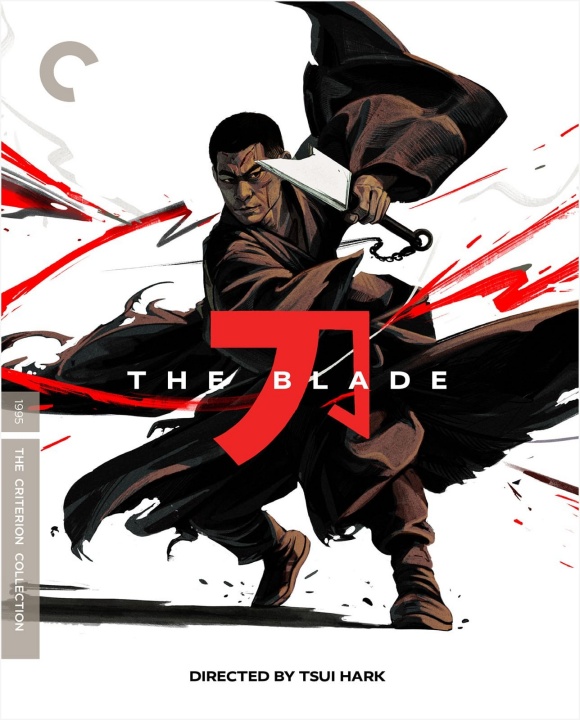
With the Criterion Collection releasing a new 4K restoration of Tsui Hark’s The Blade (1995), it’s high time to reevaluate what was then a box-office failure, and reappraise it as a wuxia enfant terrible. It is not just one of Tsui’s most accomplished films, but a critical mutation that breathes new life, perspectives, and even ‘poetics’ into the genre.
Ironically, The Blade isn’t exactly a sunny film; in fact, it is overwhelmed by nihilism and toxic masculinity, as Tsui updates Chang Cheh’s iconic The One-Armed Swordsman (1967) in uncompromising ways.
Yet, the story is told femininely, as a woman, Ling, recounts her infatuation with two skilled men that she fantasises would fight each other for her undivided love. When a wild bunch of horse thieves arrives and asserts its brutal power in her town, chaos ensues, and, yes, an arm will be severed.
“Even good men have their bad times, and bad men have their good times.”
It’s literally a whirlwind of a film, as Tsui disregards continuity and legible mise-en-scène for an almost abstract form of action filmmaking, where movement becomes less defined and more impressionistic. Because of the fast-paced cuts and delirious style, the acute danger—where the characters could potentially be maimed in excruciatingly bloody ways—gives the film a terrifying sense of dread.
The stakes are high, and one can’t simply enjoy it as an entertaining blockbuster (which could explain its commercial limitations, though in a way that is worlds apart from, say, Hou Hsiao-hsien’s 2015 anti-wuxia, The Assassin).
One of the narrative’s framing devices is the female narrator’s elusive grasping of the jianghu (literally translated as ‘rivers and lakes’), a sort of mythical ‘Wild Wild East’ that operates outside of laws and governmental control, and is marked by itinerant martial heroes, despicable bandits, and wily merchants.
Somewhat shielded by the harsh outside realities, she desires to understand why people act the way they do in this unforgiving place. There is no real answer because it’s not a real place but a psychic wound. So forget it, Ling. It’s the jianghu.
Grade: A
Trailer:
Music:

