







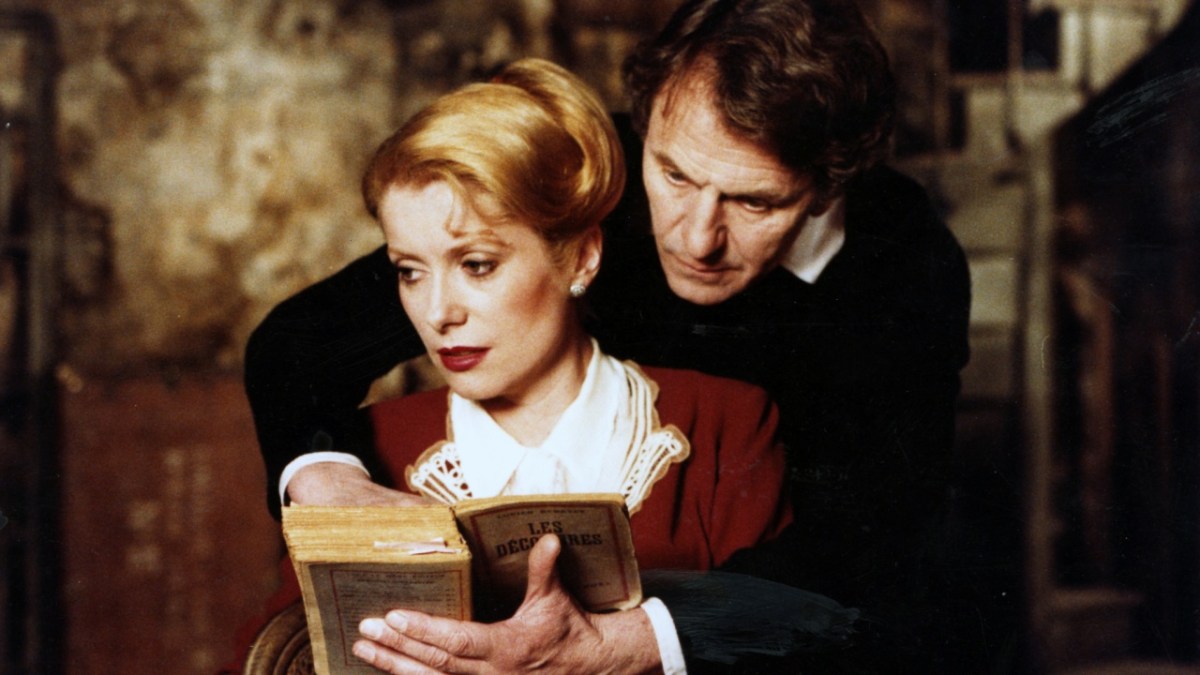
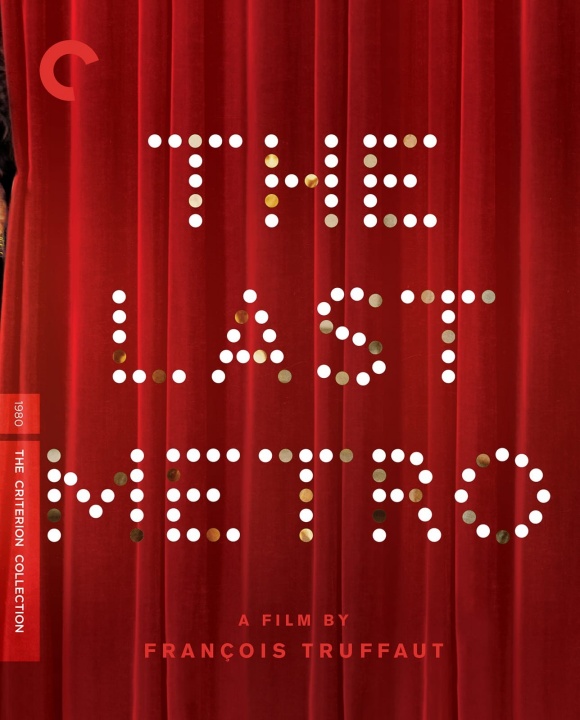
The show must still go on in Nazi-occupied France in Truffaut’s elegantly mounted film that resists simplistic morality, starring Catherine Deneuve and Gerard Depardieu, as a theatre troupe attempts to keep art alive and unblemished in trying times.
Review #3,083
Dir. Francois Truffaut
1980 | France | Drama | 131min | 1.66:1 | French, German & Italian
NC16 (passed clean) for sexual references
Cast: Catherine Deneuve, Gerard Depardieu, Jean Poiret, Andrea Ferreol, Paulette Dubost
Plot: In occupied Paris, an actress married to a Jewish theater owner must keep him hidden from the Germans while doing both of their jobs.
Awards: Nom. for Best Foreign Language Film (Oscars)
Distributor/Source: MK2
Accessibility Index
Subject Matter: Moderate – WWII Occupied France; Theatre; Deception & Survival
Narrative Style: Straightforward
Pace: Normal
Audience Type: Slightly Arthouse
Viewed: Criterion Blu-ray
Spoilers: No
A late-career work by French New Waver François Truffaut, The Last Metro blends romanticism, danger, and historical memory with a kind of effortless storytelling style that makes the two-hour-plus drama sweep by quickly. We are in the heart of Nazi-occupied France, where a theatre company must survive drastic changes and increased scrutiny from the authorities.
Catherine Deneuve plays Marion Steiner, an actress whose Jewish husband, Lucas, a star theatre director, has fled to somewhere safer (or so everyone thinks). Hidden in the theatre’s basement, where he gives directing instructions to Marion, Lucas operates clandestinely—and, well, so do some others in their guarded little ways.
Most prominent of all is the newly hired actor Bernard, played by Gerard Depardieu in shifty fashion. As he tries to hit on a costume designer he has an infatuation with, his more secretive ambition lies in the French Resistance.
When Bernard’s not thinking about romance, or the play in which he stars opposite Marion, he’s planning a side quest involving inflicting something nasty on the Nazis—or the French collaborators.
“As the boss used to say, the theatre is like a bathroom and cemetery—when you got to go, you got to go.”
Truffaut, who was a kid in those days, gives us a ‘theatre’ drama that feels miles away from, say, the raw spontaneity of Cassavetes’s Opening Night (1977). In fact, he has DP Nestor Almendros to thank for the rather dreamy, evocative visual style that permeates The Last Metro.
Although bookended by newsreel-style montages that contextualise that very trying time in the early ’40s, much of Truffaut’s film captures the urge to overcome obstacles through the maxim most aligned with the characters’ art form: the show must go on. No matter what, when, whom, or how.
Truffaut is careful not to over-nostalgise that period or to depict things in black-and-white. Even the repulsive character that is the theatre critic, who owns a newspaper aligned with the Germans, and is critically harsh towards Marion’s newly presented work, will find his comeuppance someday, somewhere.
Everyone desires to survive, some more cunningly than others, yet instead of an unblemished morality tale, The Last Metro works like how art does—we have to read between the lines, appreciate the ambiguities, and make our own judgments. No one has the privilege of a final word or a last laugh, only endless stretches of suffering, and hopefully the prospect of relief.
Grade: A-
Trailer:
Music:

