


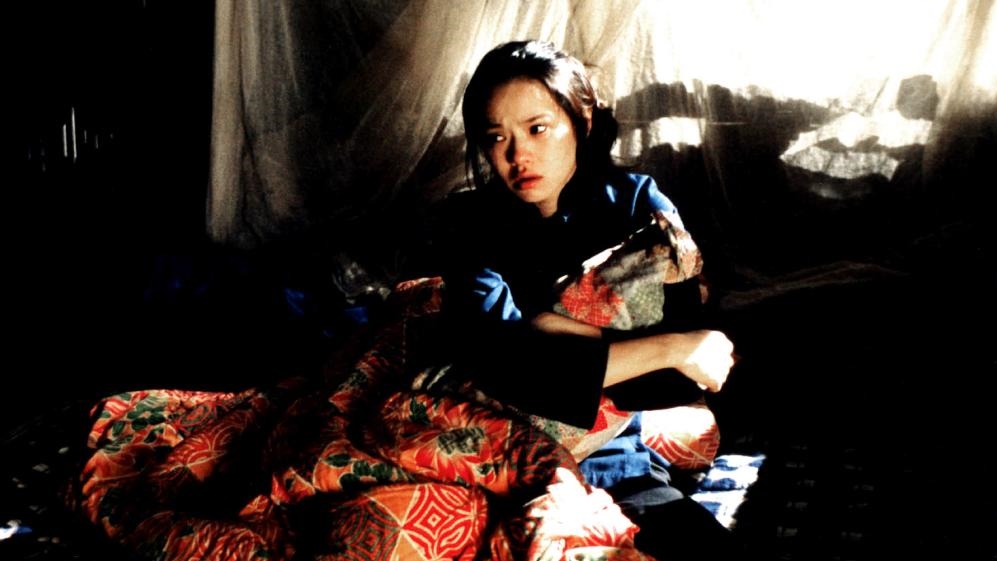
A fantastic achievement as a temporal commentary on Taiwan’s historical sacrifices and the emptiness of present freedoms, this underrated third film in Hou’s “historical” trilogy is layered, complex and possesses extraordinary cinematic power.
Dir. Hou Hsiao-Hsien
1995 | Taiwan | Drama, History | 108 mins | 1.78:1 | Mandarin, Cantonese, Min Nan & Japanese
PG13 (passed clean) for some coarse language
Cast: Annie Shizuka Inoh, Lim Giong, Jack Kao
Plot: Liang Ching is being persecuted by an anonymous man who calls her repeatedly but does not speak. Liang is also rehearsing for a new film that is due to go into production soon. It is about a couple who return to China to participate in the anti-Japanese movement in the 1940s and are arrested as communists when they go back to Taiwan.
Awards: Nom. for Palme d’Or (Cannes); Won 3 Golden Horse Awards – Best Director, Best Adapted Screenplay, Best Sound; Nom. for 3 Golden Horse Awards – Best Picture, Best Leading Actress, Best Film Editing
International Sales: Shochiku
Accessibility Index
Subject Matter: Slightly Heavy – Historical Trauma; Contemporary Listlessness
Narrative Style: Complex
Pace: Slow
Audience Type: Arthouse
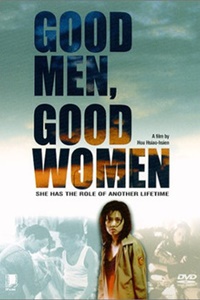
(Reviewed at the Hou Hsiao-Hsien retrospective – first published 4 Apr 2016; updated on 14 Jul 2026 on second viewing)
Coming after the one-two punch of A City of Sadness (1989) and The Puppetmaster (1993), Good Men, Good Women completes Hou Hsiao-Hsien’s “historical” trilogy with potent impact. Unfortunately, being overshadowed by the two preceding films means it remains underrated, which doesn’t do justice to how this work should be regarded.
Good Men, Good Women is one of Hou’s most complex and layered pictures, once again exploring past trauma, but situating it within a modern psychological space marked by a present-day amnesia of Taiwan’s troubling history.
In this regard, the film expands cinema’s engagement with how history is perceived, and how its spectre continues to haunt, knowingly or otherwise, the people of today.
There are three intertwining narratives, which may prove challenging to make sense of. Firstly, a young woman, Liang Ching (Annie Shizuka Inoh), living in modern Taipei, receives anonymous phone calls while also being sent countless faxed pages from her old diary.
Secondly, Liang Ching, from the first thread, is also an actress preparing for the role of Chiang Bi-Yu in a biopic about the anti-Japanese resistance called “Good Men, Good Women”.
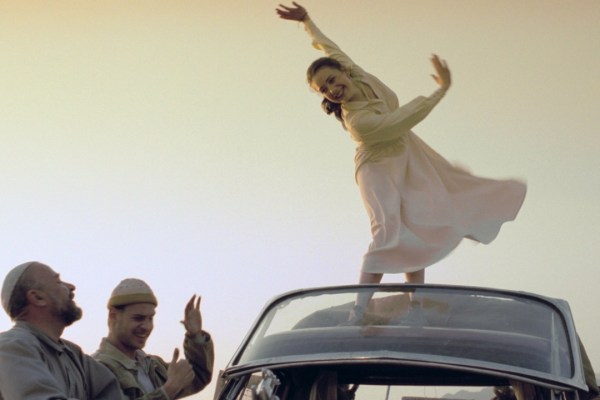
Thirdly, shot with a highly desaturated colour palette, we see Chiang Bi-Yu and her group of anti-Japanese comrades travelling to Mainland China to join the resistance more than 50 years earlier. This is imagined by Liang Ching.
“I have very few possessions here. Just a few bits and pieces for you to pick up, maybe to remember me by.”
Hou keeps these three threads at arm’s length for the bulk of the film; at times, the cutting between different settings and time periods can feel jarring, without eliciting much emotion.
As such, the director’s trivialisation of blatant consumerism, promiscuity, and the lack of idealism among today’s youth is drawn into sharp, even shocking, contrast with the heroic sacrifices of the post-war generation.
However, at some later point, Hou switches gears, and the film becomes emotionally highly charged as the weight of history pushes us to reflect, with a heavy heart, on how the mirroring characters of Liang Ching and Chiang Bi-Yu have suffered, and by extension, how Taiwan has come to be—a fragmented and ignorant country.
Spoilers Ahead: Mild
This brings to the fore the brilliant circularity of its meta-filmic engagement: prologue and epilogue can be read as one and the same—historical past, imagined past, and/or re-enactment.
And what a way to end the film with a goosebumps-inducing song sung as though it were a funereal battle cry for redemption and justice, in a valiant bid to exorcise the ghosts of trauma so deeply embedded in history.
Grade: A
Trailer:
Music:


[…] trilogy comprising of such esteemed works as A City of Sadness (1989), The Puppetmaster (1993) and Good Men, Good Women […]
LikeLike
[…] dramatising that very episode. This somehow reminds me of Hou Hsiao-Hsien’s layered masterpiece, Good Men, Good Women (1995), which I’m sure was a film of considerable influence on […]
LikeLike
[…] he would take this ‘film within a film’ concept to the artistic summit in his masterwork, Good Men, Good Women (1995), the last entry of his momentous historical […]
LikeLike