



A gnarly, maximalist work of burlesque absurdism, this Cannes Palme d’Or-winning arthouse sensation of epic proportions is filled with rowdy energy, visionary filmmaking and fictive mythologising, all of which outweigh its somewhat exhausting excesses.
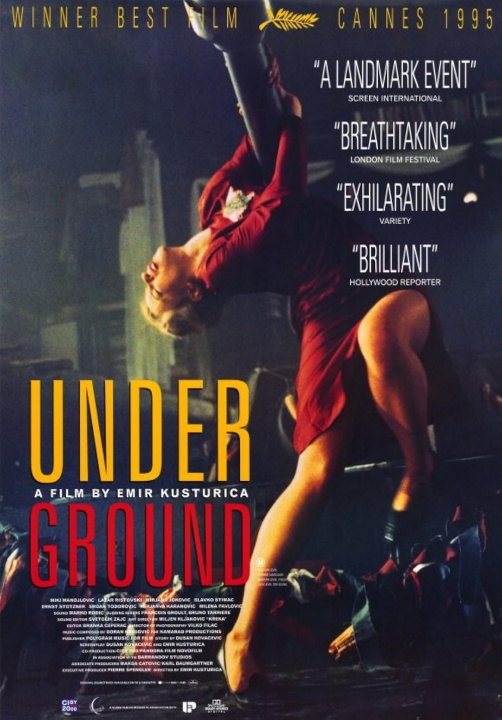
Review #3,089
Dir. Emir Kusturica
1995 | FR Yugoslavia | Drama, Comedy, War | 167min | 1.85:1 | Serbian, German, French, English & Russian
Not rated – likely M18 for some sexual scenes and coarse language
Cast: Predrag ‘Miki’ Manojlovic, Lazar Ristovski, Mirjana Jokovic, Slavko Stimac, Ernst Stotzner
Plot: Two underground black marketeers, Marko and Blacky, sell weapons to the Communist resistance in wartime Belgrade, living the good life along the way.
Awards: Won Palme d’Or (Cannes)
Source/Distributor: TF1 Studio / CiBy Sales
Accessibility Index
Subject Matter: Moderate – War & Nationalism; Exploitation & Deception
Narrative Style: Complex
Pace: Slightly Slow
Audience Type: Slightly Arthouse
Viewed: Solidarity Cinema
Spoilers: No
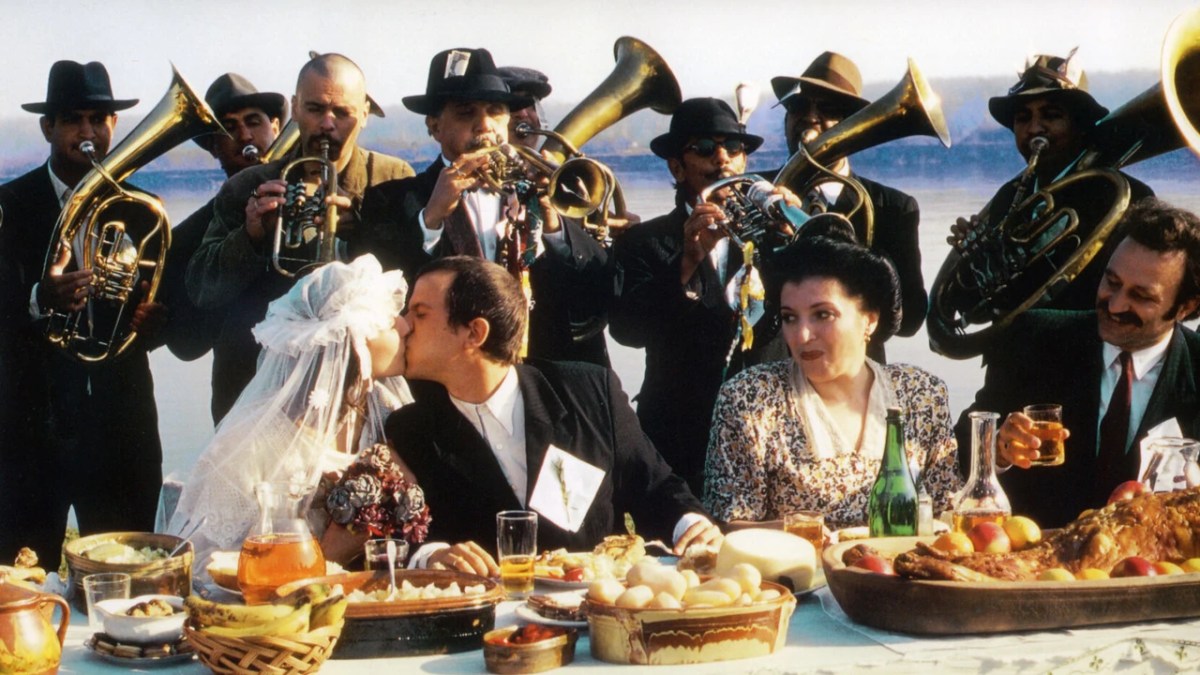
Emir Kusturica loves his diegetic brass band, and here, at the beginning of Underground, it accompanies the drunken exploits of two men as they noisily make their way home. Blacky and Marco, as they are called, are the best of friends who would become pro-communist legends in Yugoslav history.
I use the term “legends” very loosely, aligned with Kusturica’s fictive mythologising of his fragmented country after its post-Tito breakup into different ethno-nationalist states, a process that lasted beyond the film’s release in 1995, and culminating in Kosovo’s contested declaration of independence in 2008.
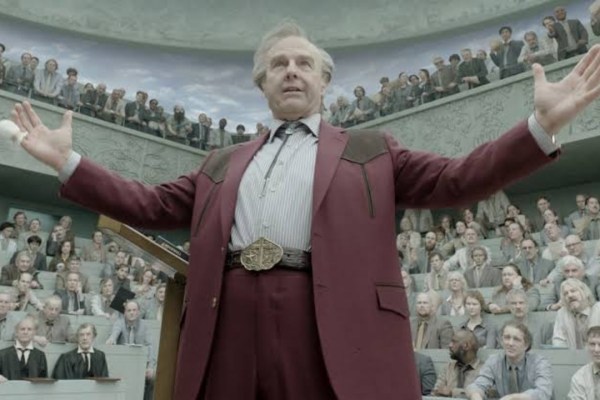
A deserving winner of the Cannes Palme d’Or, Underground comes with a high reputation, and with its length of nearly three hours, it is indeed an arthouse sensation of epic proportions. It is an outsized drama, filled with larger-than-life characters, and styled with film language and production design that seem as if Fellini had too many beers.
It’s a gnarly, maximalist work that flaunts its burlesque absurdism. Some might call it cinema of excess par excellence, though I felt it was rather overlong, despite the narrative legitimising its length by covering the WWII period up to “modern” Yugoslavia.
With bonkers performances all around, Underground centres on the aforementioned duo, who make money by producing weapons and ammunition in an underground bunker in support of the communist insurgency against Nazism. When the war ends, the underground production continues under the deceptive tactics of Marco, who lies to everyone hidden and sheltered in that godforsaken bunker.
“I only steal from the rich what they stole from the poor.”
While it gets way too boisterous and can become a tad exhausting after a while, one can admire Kusturica’s ability to sustain the rowdy energy, culminating in an epilogue that really nails down the point of the film—Yugoslavia may be no more, but it exists in fragments made up of fantasies and memories.
The region was plagued by the brutal Yugoslav Wars in the ’90s, so a film like Underground might appear tone-deaf, given its “light-headed” treatment, where trauma seems to be skimmed over and replaced by outrageous scenarios that are satirical and amusing.
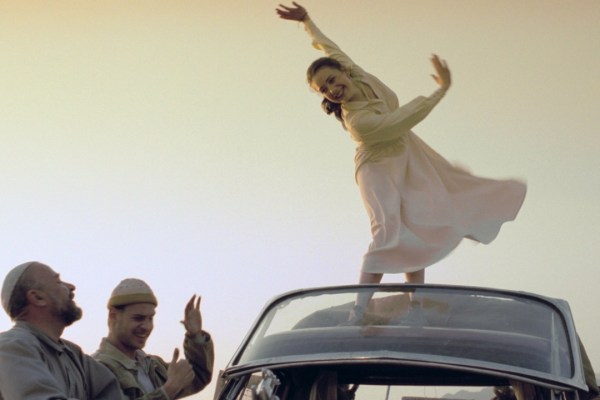
Characters make questionable decisions, while the central romantic triangle between Blacky, Marco, and a woman coveted by a Nazi officer pushes the film into maudlin territory. Kusturica is always one step ahead, however, a visionary who utilises every aspect of cinematic storytelling to engage with turbulent history and politics.
He doesn’t care if his film is overwrought, overlong, or over-the-top; in fact, the worst thing one can do is peddle an official narrative, or deify someone just because somebody tells you to. Everyone can be fooled in the end, even the brass band.
Grade: A-
Trailer:
Music:


[…] Underground (1995) […]
LikeLike
[…] Luna Papa might easily be mistaken for a film by Serbian director Emir Kusturica, whose Underground (1995) and Black Cat, White Cat (1998) similarly revelled in manic excess around the turn of the […]
LikeLike