









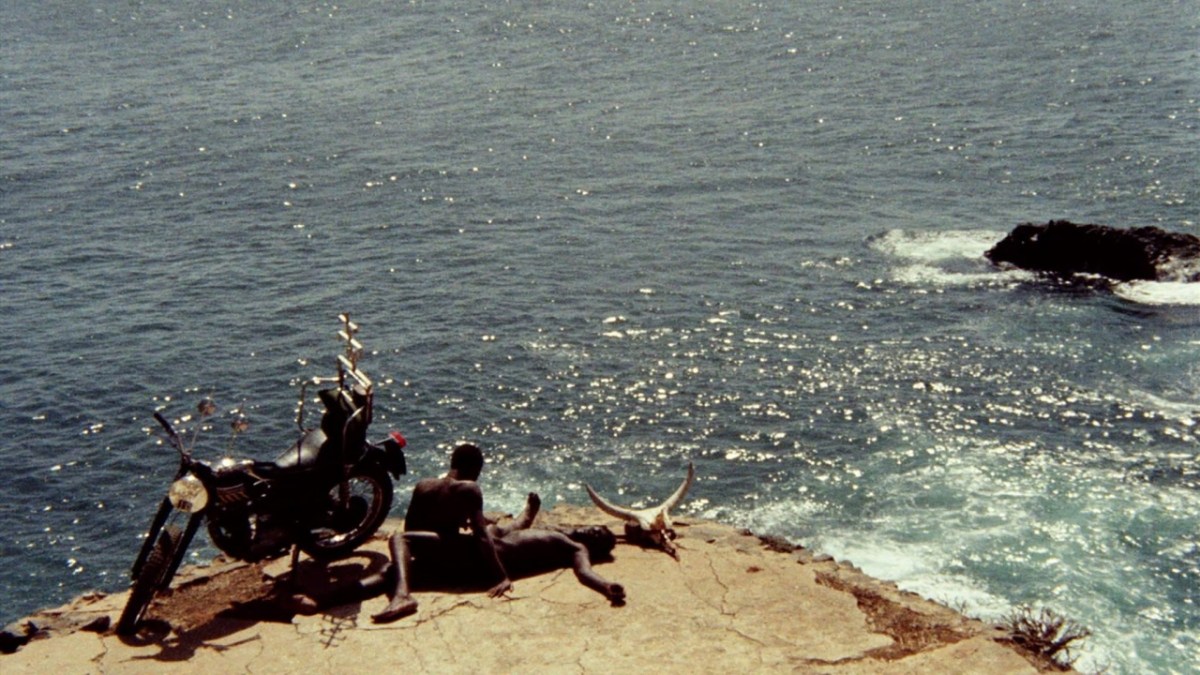
Mambety’s iconic piece of African cinema showcases his talent as a rule-breaking filmmaker, marked by a transcultural soundtrack and brilliant use of associative montage, as a couple attempt to steal enough money to leave Senegal for France.
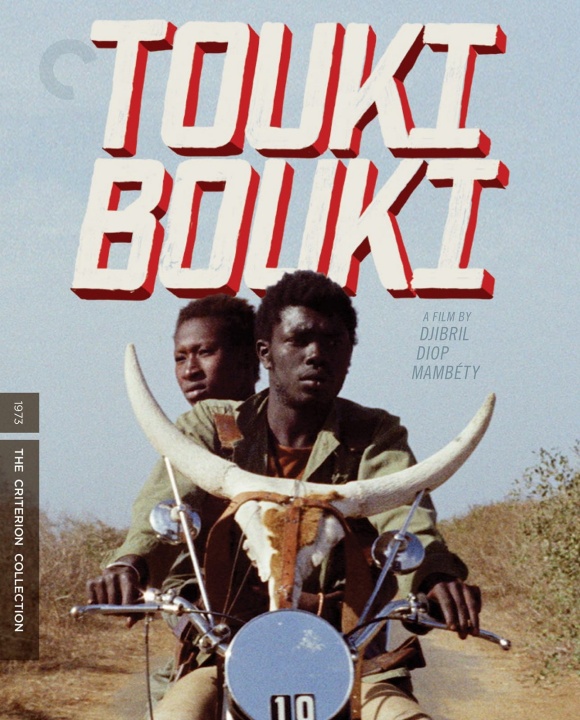
Review #3,085
Dir. Djibril Diop Mambety
1973 | Senegal | Drama | 89min | 1.37:1 | Wolof, Arabic & French
NC16 (passed clean) for some disturbing scenes and nudity
Cast: Magaye Niang, Myriam Niang, Christoph Colomb
Plot: Mory, a cowherd, and Anta, a university student, try to make money in order to go to Paris and leave their boring past behind.
Awards: Official Selection (Cannes)
Distributor/Source: World Cinema Project / Cinegrit
Accessibility Index
Subject Matter: Moderate – Freedom; Identity; Postcolonialism; Tradition & Modernity
Narrative Style: Slightly Complex
Pace: Slightly Slow
Audience Type: Arthouse
Viewed: Criterion Blu-ray
Spoilers: No
(First published on 2 Mar 2015, minor revision on 12 Jun 2026)
World cinema in the truest sense, Touki bouki is lovingly restored by Martin Scorsese’s World Cinema Project on Criterion Blu-ray. As I lay on my couch watching this film, I was struck by the fact that I was experiencing a piece of African cinema in the comfort of my home.
In the annals of African cinema, Touki bouki has long been regarded as one of its most important works. Made by a self-taught filmmaker with no formal training—his name is Djibril Diop Mambety—Touki bouki is a flamboyant feature debut that gives us a taste of the kind of film Godard might have made had he been African.
It is high praise indeed for Mambety, who made this film at the age of just 28 and would only complete one more feature, Hyenas (1992), which competed for the Palme d’Or at Cannes, before his untimely passing in 1998.
“And what can we buy here? Masks?”
Bereft of any conventional sense of plotting, Touki bouki is free-spirited, slightly experimental, and, if anything, an evocation of Mambety’s preoccupation with the quest for freedom. The film centres on a couple attempting to steal enough money to leave Senegal for France. That’s really all you should know, because there is scarcely a substantial plot to speak of.
In the tradition of the early films of the French New Wave, and perhaps even as an unlikely companion piece to Malick’s Badlands (also released in 1973), Touki bouki possesses ambiguous, poetic, and mystical qualities that express a desire for flight—to leave tradition, rurality, and one’s destined path behind, in pursuit of individual liberty, and even the temptation of crime.
In the process, Mambety also champions his land and the innate richness of its people, culture, and music. African tribal drums are interlaced with avant-garde jazz, classical music, and catchy French pop, all contributing to an extraordinary transcultural soundtrack.
Together with its heavy use of associative montage, where recurring images are spliced together to develop meaning through rhythm and movement, Touki bouki is hypnotic, kinetic, and quite simply one of world cinema’s most fascinating works, made by an outrageously talented filmmaker who knew no rules or boundaries.
Grade: A
Trailer:
Music:


[…] Touki bouki (1973) […]
LikeLike