








A Lithuanian woman decides to divorce her husband the day before the Russian invasion of Ukraine, in this realistic Sundance Directing Award winner that finds striking resonance in the collision between the personal and political, focusing on one (privileged) family in crisis.

Review #3,081
Dir. Andrius Blazevicius
2026 | Lithuania | Drama | 108min | 1.85:1 | Lithuanian, English & Russian
M18 (passed clean) for some homosexual content
Cast: Zygimante Elena Jakstaite, Marius Repsys, Amelija Adomaityte, Indre Patkauskaite, Gintare Parulyte
Plot: Set in Vilnius in 2022, high-flying executive Marija chooses the worst moment to discuss divorce with husband Vytas – one day before Russia’s full-scale invasion of Ukraine.
Awards: Won Directing Award – World Cinema Dramatic (Sundance)
International Sales: New Europe Film Sales
Accessibility Index
Subject Matter: Moderate – Divorce; Family in Crisis; Russia-Ukraine War; Refugee & Activism
Narrative Style: Straightforward
Pace: Slightly Slow
Audience Type: Slightly Arthouse
Viewed: Screener – as part of Singapore Film Society Showcase
Spoilers: No
This is a quiet gem from the 2026 Sundance Film Festival, where it won the Directing Award in the World Cinema Dramatic category. It’s also a film that I didn’t know I needed, and on two fronts: the personal and the political.
At the personal level, I’ve been single since 4 Dec 2016, when my ex broke up with me over different goals in life. I still remember it very vividly because it was the night when I returned from a media preview of La La Land.
Breaking up is very difficult for people who have experienced it. I can’t imagine how much more devastating divorce is, especially when it comes out of the blue, with no clear inciting incident.
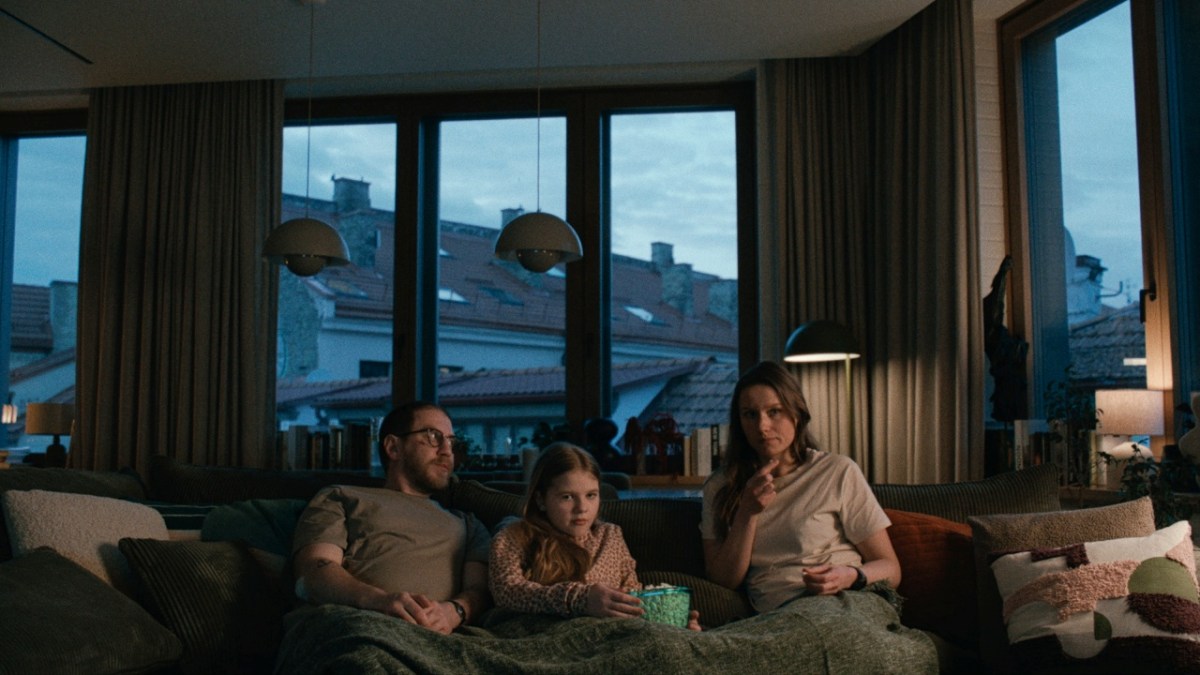
Ask Vytas, whose wife, Marija, decides life isn’t exciting anymore, and wants to separate but still keep their child and home. She earns big bucks as a manager in a popular ad agency, whereas Vytas, a famous filmmaker, seems to have lost his mojo and is bereft of creative inspiration.
But he’s comfortable as a predictable and reliable house-husband, so imagine his shock when he is asked to move out. I’m glad I didn’t get a taste of marriage, and as such, the notion of divorce isn’t even in my vocabulary. How to Divorce During the War resonated with me somewhat in this way i.e. Vytas’s experience as a ‘what could have been’ cautionary tale.
“We are not at war. We are going to be fine.”
As the title also asserts, this is also about war, specifically the war in Ukraine. Although set in Lithuania, it is geographically very close—so imagine the shock on the faces of every Lithuanian when Russia invaded Ukraine in 2022. For Vytas and Marija, it is double the whammy, because the notion of divorce was incepted the day before the invasion.
So, as war breaks out nearby, and as Ukrainian refugees start finding their way into other European countries, including Lithuania, the couple—who are staunchly pro-Ukraine—must find a way to navigate the political with the professional and the personal.
A work that shows us the double-edged sword of millennial activism, and how disruptive world events can make people, for better or worse, take sides, How to Divorce During the War doesn’t paint things as black or white; in fact, one might marvel at how balanced and realistic the screenplay is. It eschews dramatic posturing and solely focuses on one (privileged) family in crisis.
I think what best encapsulates the film’s tone is its sound design, which may be described as the tempered striking of metallic percussive keys that create dissonant, ‘ice-block’-esque sounds, something that might not feel out of place on a Ryuichi Sakamoto or Nils Frahm album.
Like ice in shifting currents of emotional and intellectual terrain, they float and collide, all the while trying to resist melting when heat comes from within and elsewhere.
Grade: B+
Trailer:

