

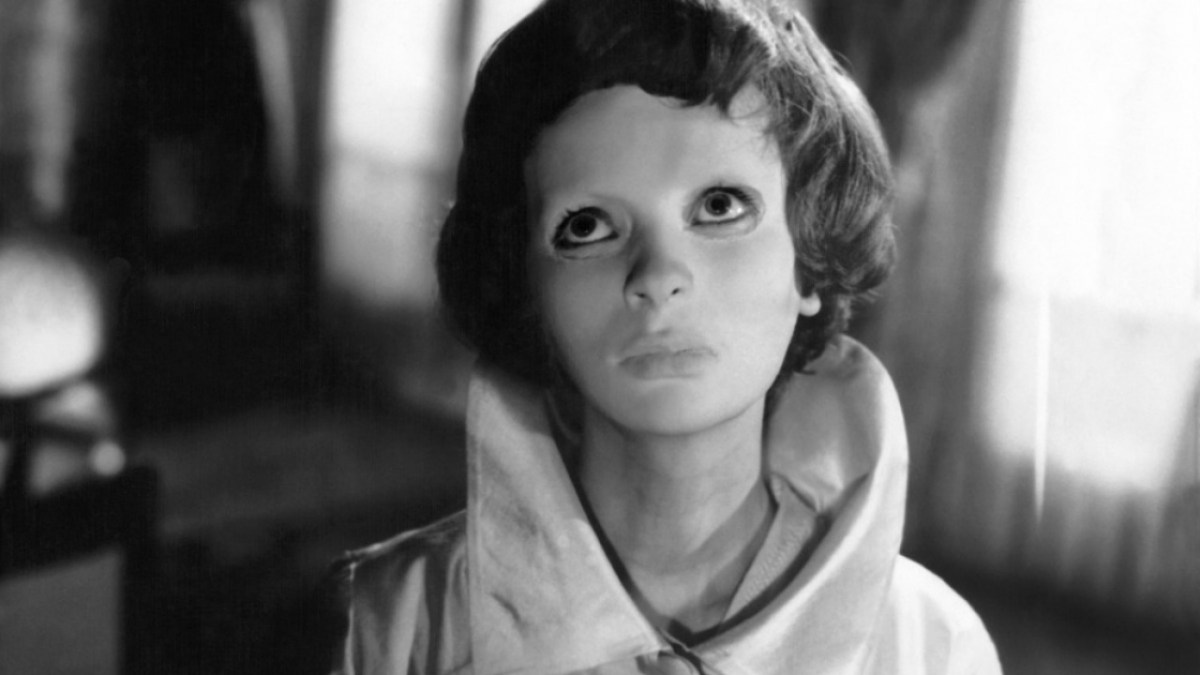
A haunting blend of morbid realism and the fantastique, Franju’s cult French psychological horror follows a surgeon who, with an accomplice, lures and kills young women for their facial skin, as he attempts to transplant it onto his disfigured daughter.
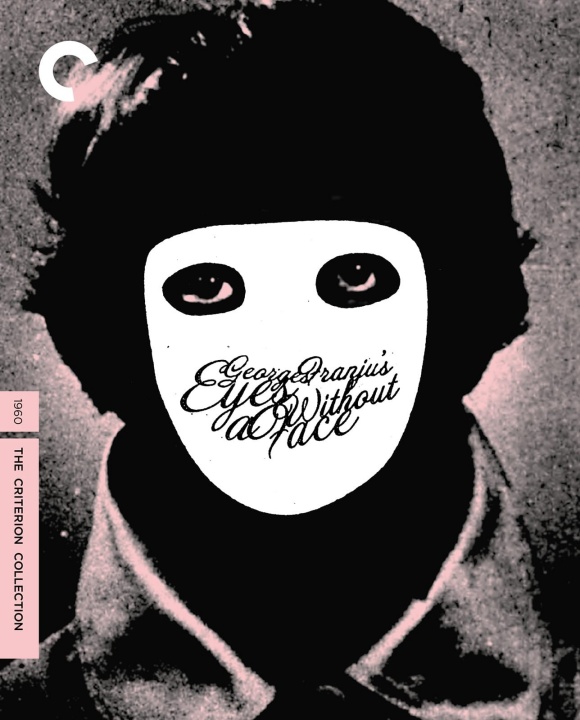
Review #3,077
Dir. Georges Franju
1960 | France | Drama, Horror | 90min | 1.66:1 | French
PG13 (passed clean) for some disturbing scenes
Cast: Pierre Brasseur, Alida Valli, Édith Scob, Juliette Mayniel, Alexandre Rignault
Plot: A surgeon causes a car accident, which leaves his daughter disfigured, and goes to extreme lengths to give her a new face.
Awards: –
Distributor/Source: Gaumont
Accessibility Index
Subject Matter: Slightly Dark – Mad Surgeon; Father-Daughter Relationship; Medical Experiment; New Identity
Narrative Style: Straightforward
Pace: Slightly Slow
Audience Type: Slightly Arthouse/Cult
Viewed: Criterion Blu-ray
Spoilers: No
Probably the most infamous psychological horror film to come out of France at the time, Eyes Without a Face is also Georges Franju’s best-known picture and only his second feature.
An eerie work of realism that has elements of the fantastique (not ‘fantasy’ in the English literary sense), Eyes blurs the lines between logic and the impossible as a subversion of the ‘mad scientist’ trope.
Here, a renowned surgeon, responsible for his daughter’s disfigurement in a car accident, turns her into a medical experiment, seeking to restore her face by luring young women, with the help of an accomplice, and killing them for their skin.
Morbid and deeply immoral, the film doesn’t dwell solely on the ‘cutting edge’ surgeon’s grotesque pursuits, though its centrepiece surgical sequence offers a startlingly explicit vision of what a ‘face-lift’ entails.
Instead, the daughter—most often seen behind a blank mask—emerges as the film’s most anxious, confused, and ultimately human figure. Like the masks of Japanese noh theatre, her expressionless visage invites projection, becoming an empty canvas for emotion.
“My face frightens me. My mask frightens me even more.”
She drifts like a ghost, hidden from the world, her identity erased, suspended in a liminal state of waiting and becoming. In this sense, she becomes the film’s purest embodiment of the fantastique.
Questions of identity and the face have since surfaced in modern films ranging from Face/Off (1997) and the Mission: Impossible series to Almodovar’s The Skin I Live In (2011), placing Franju’s work within an early lineage.
Yet what resonates most are its mysterious, enigmatic qualities—closer in spirit to Clouzot’s Diabolique (1955) or Hitchcock’s Vertigo (1958), both adapted from novels by the duo Boileau-Narcejac, who were later invited to co-write Eyes, itself an adaptation.
Shot with striking black-and-white cinematography, Eyes is also quite a feast for the eyes —particularly if you have a fondness for those elegant vintage Citroën cars.
Franju frames them with a poetic grace that contrasts sharply with the ugliness of human action, recalling his earlier documentary short, Blood of the Beasts (1949), which juxtaposed the beauty of Parisian life with the brutality of slaughterhouses, becoming a veiled allegory for the Holocaust.
That same tension—between elegance and horror—runs through Eyes Without a Face.
Grade: A-
Trailer:
Music:

