



A lonely OB-GYN in a rural Georgian hospital faces allegations of malpractice in Kulumbegashvili’s brutally slow-paced, if quietly devastating, sophomore feature—a Haneke-esque moral inquiry marked by hypnotic long takes and sublime use of film language.
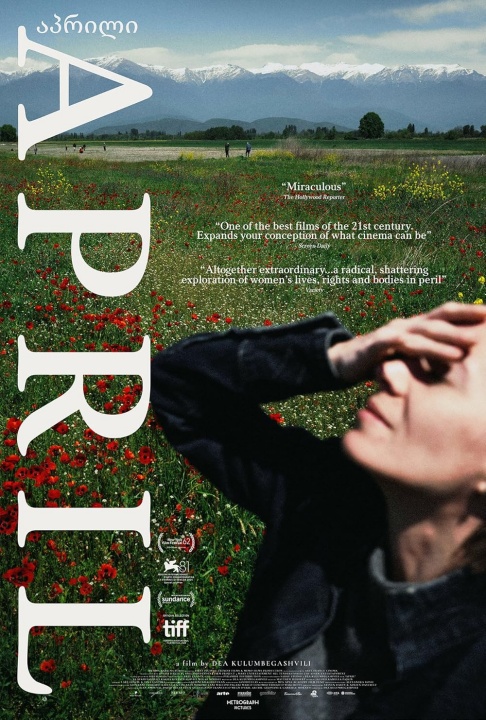
Review #3,076
Dir. Dea Kulumbegashvili
2024 | Georgia | Drama | 134min | 1.33:1 | Georgian
M18 (passed clean) for disturbing scenes and nudity
Cast: Ia Sukhitashvili, Kakha Kintsurashvili, Merab Ninidze, Roza Kacheishvili, Ana Nikolava
Plot: Nina, an obstetrician-gynecologist working in the only hospital of a provincial town in Georgia, is unconditionally devoted to her patients, even if that means crossing the line legally or socially. But after she is accused of negligence, she will be forced to question her choices.
Awards: Won Special Jury Prize & Nom. for Golden Lion (Venice); Nom. for People’s Choice Award (Toronto)
International Sales: Goodfellas
Accessibility Index
Subject Matter: Slightly Mature – Medical Profession; Care for Patients; Moral Quandary; Abortion
Narrative Style: Slightly Complex
Pace: Slow
Audience Type: Arthouse
Viewed: MUBI
Spoilers: No
With its first three scenes, April already tells us exactly what kind of film it intends to be. A naked being—human yet alien—wanders through a dark oblivion, loosely recalling Jonathan Glazer’s Under the Skin (2013). After the title card, we move to pouring rain and howling thunder, bathed in a melancholy blue.
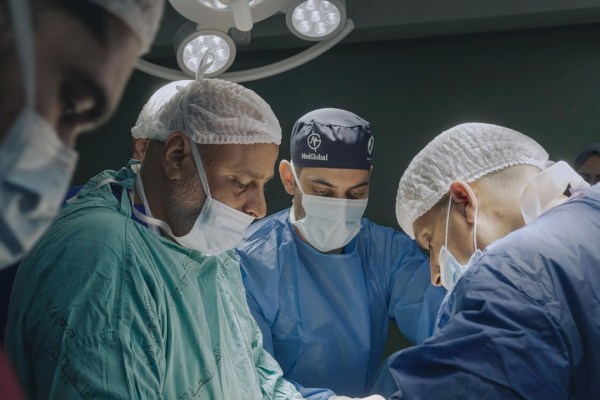
Then, a hard cut to an explicit childbirth in an operating theatre. (It is only the second time I have seen a live vaginal birth in cinema—the first being years ago in Nine Months (1976), from Marta Meszaros, the godmother of Hungarian cinema.)
All are long takes in a film built on long takes, marked by brutally slow pacing and a stillness that stretches the characters’ existence into… well, oblivion.
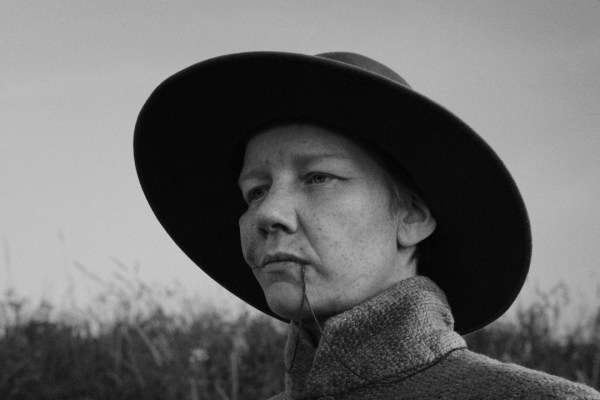
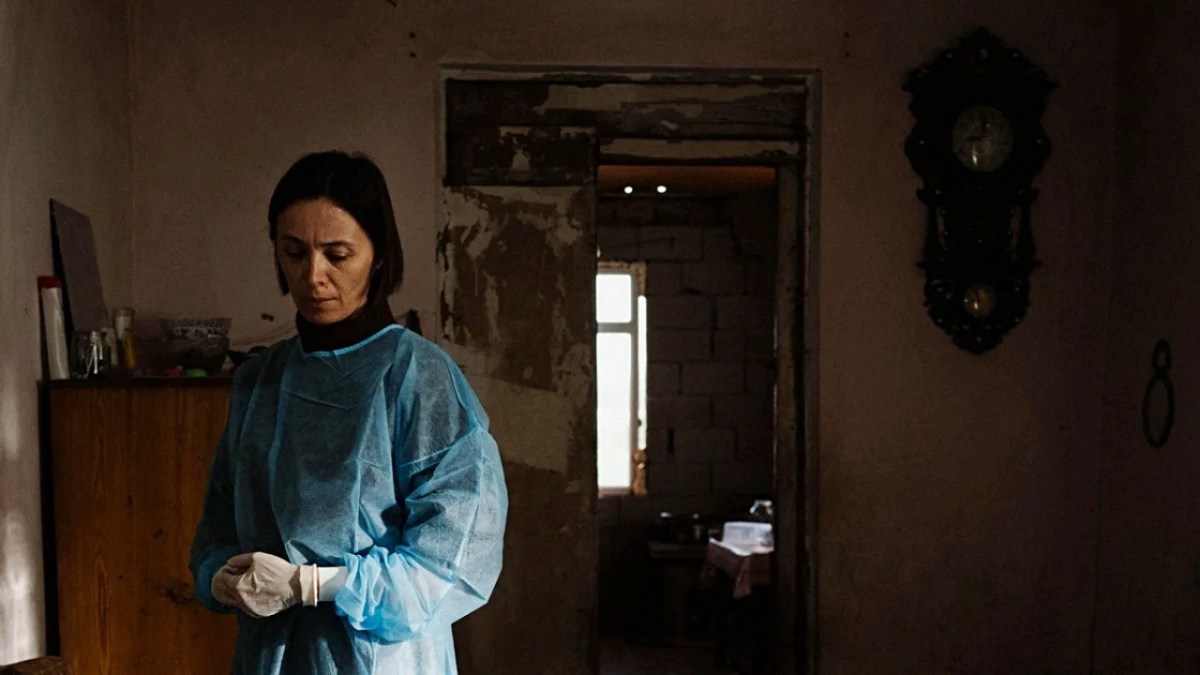
Nina is an OB-GYN who works in a rural Georgian hospital. Probably the most skilled in her line of work, she faces allegations of malpractice after a newborn’s death. Although under investigation, she continues her noble work in delivering babies—and clandestinely administering abortion (illegal in these parts) to those who desperately need it.
Ia Sukhitashvili, who plays her with a quiet dignity and resoluteness, is magnetic, and despite speaking very little, she—a single woman—tries to live by her values, even when she is stricken by bouts of loneliness.
“Other than my job, I have nothing to lose.”
In arguably April’s most mesmerising segments, she looks for casual sex by driving around the dimly lit roads surrounding her village. The camera adopts her point of view as her head ‘pans’ to scout for potential suitors, incidentally also capturing the breathtaking sunset landscape that dissolves into night.
Kulumbegashvili also adds Nina’s breath sounds, by turns anxious and relaxed, giving these shots a touch of sublimity. I must say I haven’t quite experienced this kind of film language before, a testament to the director’s emergence as a major force in filmmaking with just her second feature, after 2020’s Beginning.
As storm clouds threaten torrential rain, this bleak-as-hell, Haneke-esque work offers moral strength amid profound personal and professional uncertainty.
Set against legislation that can’t protect women from sexual abuse and unwanted pregnancies, April eschews the politics of posturing for the medical, for it is the latter’s sanitised objectivity (and by extension, Kulumbegashvili’s clinical approach to filmmaking) that could unbind, destigmatise, and salvage the human soul.
Grade: A-
Trailer:

