





Arguably the Dardennes’ most important film with a searing performance by debutant Emilie Dequenne, though its nauseating vérité style takes getting used to.

Dir. Jean-Pierre & Luc Dardenne
1999 | Belgium | Drama | 93 mins | 1.66:1 | French
PG (passed clean) for language
Cast: Emilie Dequenne, Fabrizio Rongione, Anne Yernaux, Olivier Gourmet
Plot: Young and impulsive Rosetta lives with her alcoholic mother, and moved by despair, she will do anything to maintain a job.
Awards: Won Palme d’Or, Best Actress & Prize of the Ecumenical Jury – Special Mention (Cannes)
International Sales: ARP
Accessibility Index
Subject Matter: Moderate
Narrative Style: Straightforward
Pace: Slightly Slow
Audience Type: Slightly Arthouse
Viewed: Criterion Blu-ray
First Published: 25 Apr 2018
Spoilers: No
The Dardennes’ follow-up to La promesse (1996) doesn’t quite hit the heights of their breakthrough work, but it is arguably the duo’s most important film, and on hindsight, it further cemented their imitable verite style, not to mention giving it a dose of artistic and aesthetic legitimacy at the turn of the century, and inspiring countless other filmmakers to follow suit.
For instance, the raw, social realist likes of Cristian Mungiu’s 4 Months, 3 Weeks and 2 Days (2007) and Andrea Arnold’s Fish Tank (2009) owe some debt to the Dardennes.
Their previous documentary filmmaking experience has certainly seeped into their modus operandi, and in Rosetta, it is the clearest indication of their methodological intent.
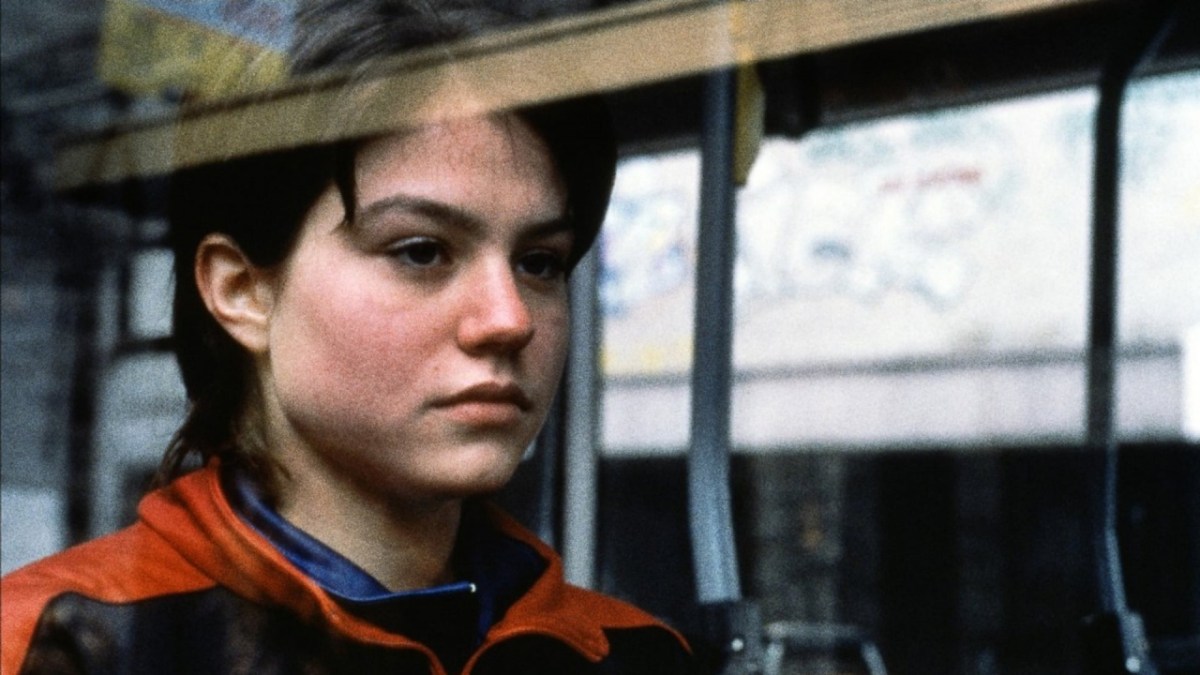
Shot as if it is tailing its eponymous character like a pesky fly buzzing around her head, the Dardennes’ camera almost never leaves Rosetta, played with such vigour and searing intensity by a young Emilie Dequenne in her first-ever acting role (she won Best Actress at the Cannes Film Festival).
Dequenne has a naturalistic face that shows a mix of grit and vulnerability, and such is her physical performance characterised by lots of running and heavy lifting that you can feel her exhaustion.
“Your name is Rosetta. My name is Rosetta. You found a job. I found a job. You’ve got a friend. I’ve got a friend. You have a normal life. I have a normal life. You won’t fall in a rut. I won’t fall in a rut. Good night. Good night.”
She works hard to find a job to support her alcoholic mother—they live in a trailer in a trailer park called Grand Canyon, certainly not a wonder of the world in these parts, but a marvel of utter political inaction, not least a sign of the working-class being forced to the edge of their thinning existence.
Because the camera completely privileges Rosetta’s immediate experience, it is difficult not to be sucked into her undignified existence (much like how Laszlo Nemes did so to similar nauseating effect in 2015’s Son of Saul), yet her determination and courage to face life’s difficulties also hearten us in the process.
Rosetta won the Palme d’Or at Cannes, an unexpected surprise at that time when more established masters had films that were in serious reckoning, for instance, Almodovar’s All About My Mother (1999). The Dardennes’ work here is not always compelling, though for wherever it lacks or lags, it is frequently compensated by Dequenne’s performance.
More politically liberal critics have called the film out for having a working-class protagonist see labour as an antidote to suffering and the path to a righteous and normal life.
But whatever one could glean from Rosetta, I think most would agree that it is a bleak parable, and for as long as there is unacceptable youth unemployment in the world, this will continue to be the Dardennes’ most outwardly socially-conscious work.
Grade: A-
Trailer:
 Eternality Tan
[…] on to represent Belgium cinema on the world stage, winning two Palme d’Ors from Cannes with Rosetta (1999) and The Child (2005), and leaving a body of work that have inspired countless filmmakers […]
LikeLike
[…] performance that is as organic and heartbreaking as Emilie Dequenne’s in the Dardennes’ Rosetta (1998). (Incidentally, both films were winners of the Cannes Palme d’Or and Best Actress […]
LikeLike
[…] is an extraordinary work of hard-hitting social realism that recalls the likes of the Dardennes’ Rosetta (1999) and Mungiu’s 4 Months, 3 Weeks and 2 Days […]
LikeLike