









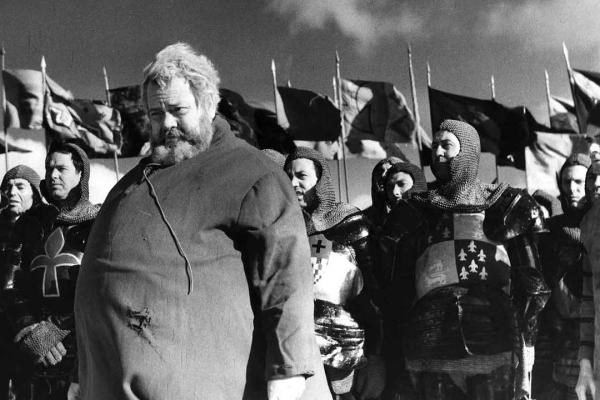
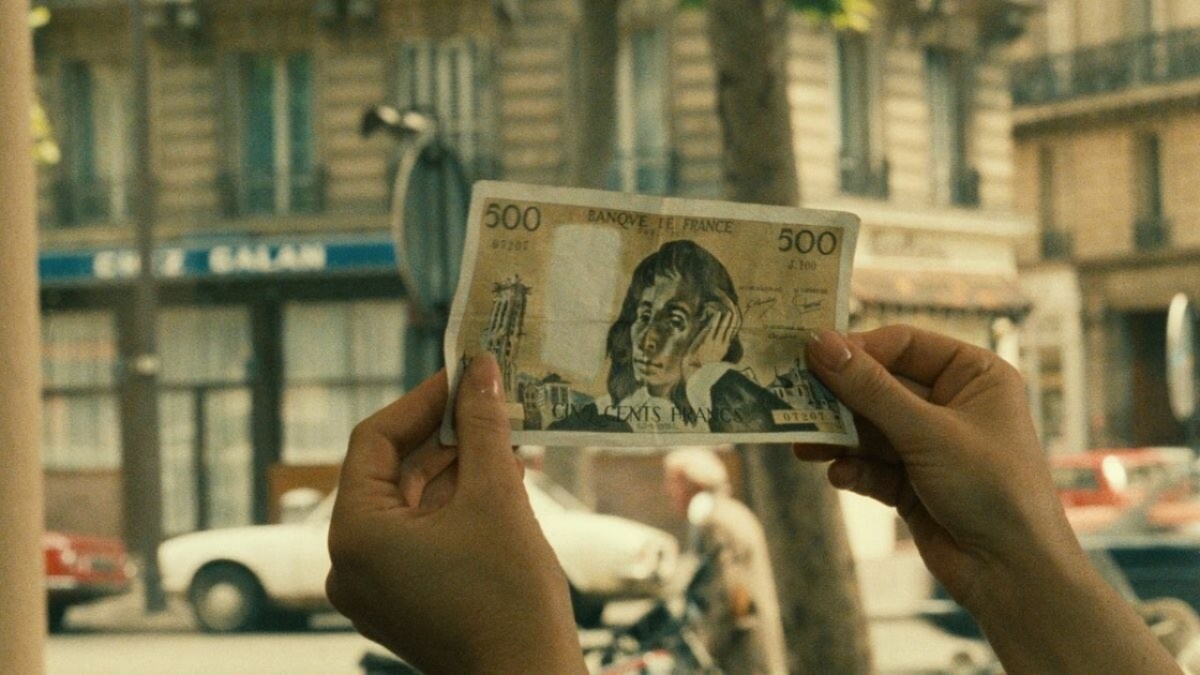
Bresson’s acrid final feature may be seen as a ‘counter-feit/fict-ion’, exploring the transactionality of exploitation through an anti-narrative, as a fake bill sparks an irreversible chain of events.
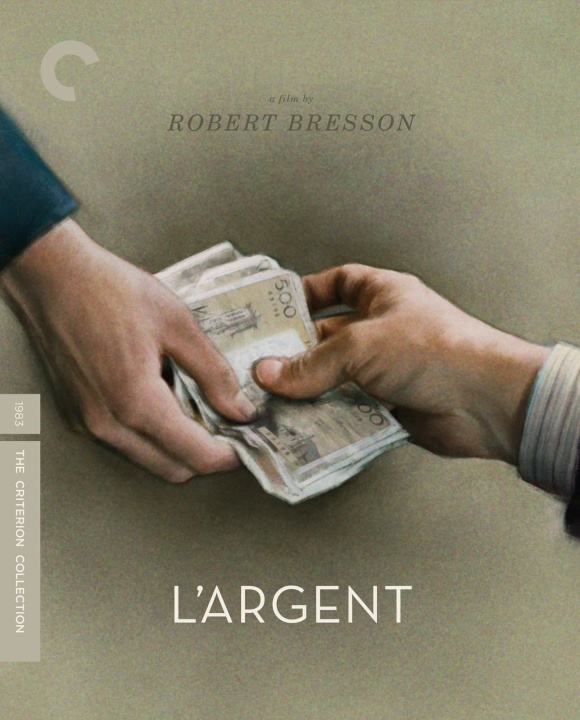
Review #2,980
Dir. Robert Bresson
1983 | France | Drama, Crime | 84min | 1.66:1 | French
Not rated – likely to be NC16 for some nudity
Cast: Christian Patey, Vincent Risterucci, Sylvie Van Den Elsen, Michel Briguet, Caroline Lang
Plot: A forged 500-franc note is passed from person to person and shop to shop, until it falls into the hands of a genuine innocent who doesn’t see it for what it is—which will have devastating consequences on his life.
Awards: Won Best Director & Nom. for Palme d’Or (Cannes)
Source: MK2
Accessibility Index
Subject Matter: Moderate – Unintended Consequences; Counterfeit Money; Injustice
Narrative Style: Straightforward
Pace: Slightly Slow
Audience Type: General Arthouse
Viewed: Criterion Blu-ray
Spoilers: No
A counterfeit bill created as a teenage prank is passed around until it very quickly falls into the hands of a young family man making an honest living, whose life will change irreversibly and who will make irreversible decisions that impact others.
It is a work of spiralling self-destruction caused by very bad luck and very conniving people. It is also Robert Bresson’s last feature, who leaves us with a film that is so acrid that it was purported to be the one from the French auteur’s body of work to have influenced resident nihilist Michael Haneke the most.
Based loosely on a novella by Tolstoy, L’argent sees Bresson strictly adopting the principles of filmmaking that he had devised and followed for much of his career.
Through economical editing and purposeful, sharp visual compositions, every minimalist shot is stripped to its pure function, not only moving the story along efficiently but also immersing the audience in its world of ‘stillness vs. movement’ and ‘silence vs. sound’.
While wads of cash are the central visual motif of L’argent, particularly how they are exchanged from hand to hand, it is the startling sounds of cash registers, ATMs and prison gates opening and shutting that create a sense of foreboding.
“You have me on your conscience. You have to answer for that now.”
The entire film is indeed about locking oneself physically and metaphorically in a state of ‘counter-fiction’, or more precisely, ‘counterfeit-ion’, if I may describe it that way.
It is counter-fiction in that Bresson is not interested in telling the story with dramatic embellishments (case in point: how he shoots a botched bank robbery reveals his lack of interest in spectacle) or by way of nuanced performances (actors are mechanical, just the way he likes it); instead, he relies on an almost effortless, seemingly nonchalant, form of ‘passing’.
Like the fake bills produced and passed around, actors ‘pass off’ as their characters, revealing the artifice of its self-contained world, hence operating as a ‘counterfeit-ion’, with Bresson exploring the transactionality of exploitation. As the saying goes, money is the root of all evil.
With L’argent, physical currency becomes a social disease to be passed on and circulated; likewise, humans take advantage at the expense of others, with nary an ounce of moral responsibility, until the burdening guilt becomes far too heavy to contain within Bresson’s modus operandi. By then, the film succeeds with pure irony.
Grade: A-
Promo Clip:

