




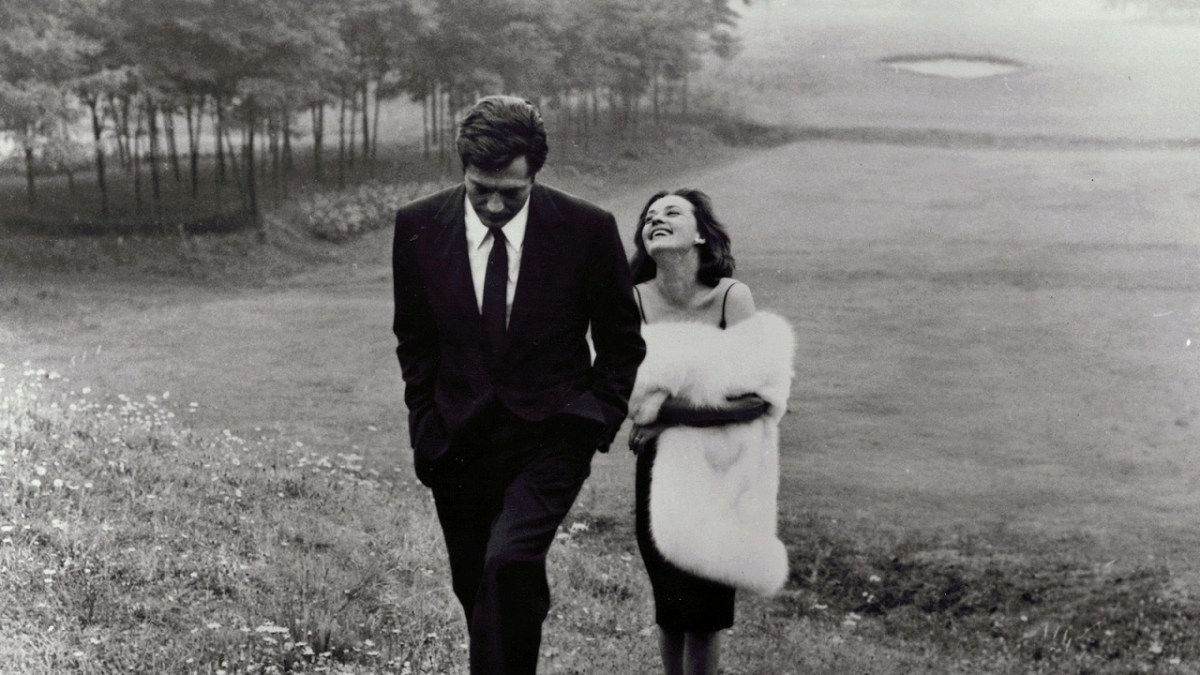
Words have little meaning but faces bear the truth in Antonioni’s remarkable treatise on modern alienation and ennui as it follows a well-to-do couple facing a sinking marriage on an afternoon and night out.
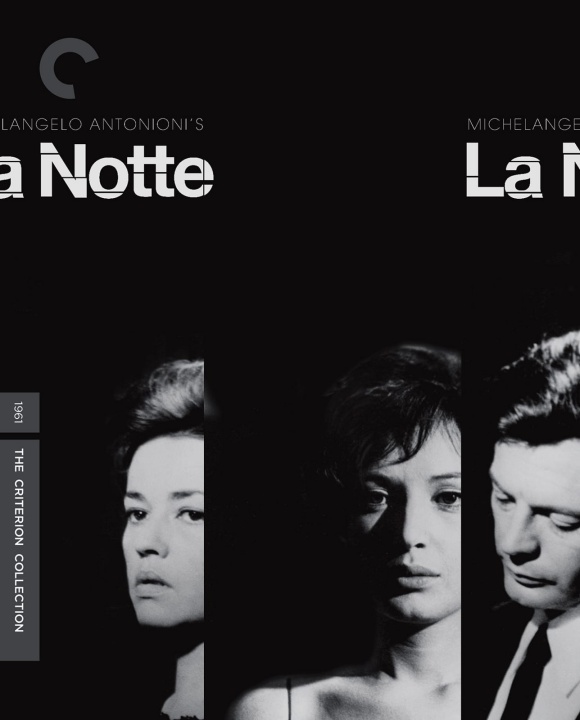
Review #2,794
Dir. Michelangelo Antonioni
1961 | Italy | Drama | 122 min | 1.85:1 | Italian
PG (passed clean)
Cast: Marcello Mastroianni, Jeanne Moreau, Monica Vitti
Plot: In Milan, Lidia storms out of a gathering held to honour her husband, Giovanni, who has just written a novel. Distressed at the news that her friend Tommaso has a terminal illness, Lidia begins roaming the streets, questioning her marriage.
Awards: Nom. for Golden Bear (Berlinale)
Source: Pretty Pictures
Accessibility Index
Subject Matter: Moderate – Marital Crisis; Alienation
Narrative Style: Slightly Complex
Pace: Slightly Slow
Audience Type: General Arthouse
Viewed: Criterion Blu-ray
Spoilers: No
After the critical success of L’avventura (1960) elevated Italian auteur Michelangelo Antonioni to even greater heights, he followed up with, some say, an even more formidable work in La notte (or ‘The Night’).
Headlined by Marcello Mastroianni and Jeanne Moreau, with a supporting turn by Antonioni early ‘60s regular Monica Vitti, the narrative of La notte happens over an afternoon, evening, and throughout the night as a new dawn emerges.
In less than 24 hours, Antonioni tells us so much about Giovanni and Lidia, a couple whose marriage is sinking to some kind of unsalvageable bottom.
They force themselves out of their luxurious apartment by attending Giovanni’s book launch (Lidia would leave halfway to explore Milan on her own in some of the film’s most beautiful ‘solo character’ stretches), a nightclub, and later in the film’s titular centerpiece, an extended night out to a wealthy industrialist’s crowded house party.
“So many things become clear when you’re all alone.”
With so few words spoken between them, but so much more with friends and new acquaintances, including Vitti’s Valentina, whom Giovanni finds himself salaciously attracted to, the performances of Mastroianni and Moreau are highly measured and reliant on subtle facial expressions of annoyance, frustration and loneliness.
As much as La notte is about a present moment in a couple’s relationship, it is also about the kind of future they clearly do see but can never articulate (to each other). Much like the prospect of modernity slowly but surely changing the face of Milan with newer modernist buildings standing side by side with the brutalist structures of old.
Antonioni’s ‘architectural expressions’ in La notte, for instance, the contours of buildings, the expansive urbanscape, or even calibrated interiors could be seen as modulating humanity’s (by way of Giovanni and Lidia) anxieties over a foreboding future where nothing quite lasts.
A treatise on alienation and ennui from the perspective of the intellectually and financially blessed, La notte poses the ultimate first-world problem: how can all that one has feel so empty?
Grade: A-
Trailer:
Music:


Monica Vitti, a vision so grand,
With a touch, she’d make hearts expand.
In the heat of the night,
She’d ignite pure delight,
Leaving traces like prints in the sand.
LikeLiked by 1 person