




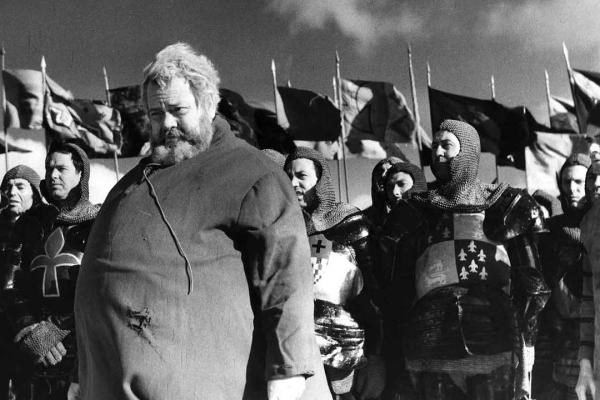






Powerful, poetic and sublime, this could be Pasolini’s magnum opus and arguably the greatest film about the life of Jesus Christ.

Review #1,086
Dir. Pier Paolo Pasolini
1964 | Italy | Drama/Biography/History | 131 mins | 1.66:1 | Italian
PG (passed clean)
Cast: Enrique Irazoqui, Margherita Caruso, Susanna Pasolini
Plot: Pasolini’s version of Matthew’s Gospel was shot in natural settings with non-professional actors, forsaking mythic grandeur in favor of a depiction that emphasizes the political radicalism of Christ’s life, and with a visual style that drew from documentary and Renaissance painting alike.
Awards: Won OCIC Award and Special Jury Prize (Venice); Nom. for 3 Oscars – Best Art Direction, Best Costume Design, Best Adapted Music
Source: Compass Film
Accessibility Index
Subject Matter: Moderate – Christianity, Faith, Politics
Narrative Style: Slightly Complex
Pace: Slightly Slow
Audience Type: General Arthouse
Viewed: The Arts House – Pasolini Retrospective
First Published: 8 Oct 2014
Spoilers: No
There’s something uniquely powerful in The Gospel According to Matthew, arguably the greatest film about the life of Jesus Christ, and possibly the most poetic.
Made only three years after Italian poet-turned-director Pier Paolo Pasolini began his filmmaking journey with Accattone (1961) and Mama Roma (1962), Gospel has often been regarded as perhaps his magnum opus, even if in retrospect it sticks out as an anomaly in the director’s short, impressive but ultimately provocative body of work.
Named as one of forty-five ‘great films’ ever made, by the Vatican no less, Gospel is a somewhat unorthodox rendition of the story of Christ. Pasolini, so often critical of the Church and the State in his other films like The Decameron (1971), imbues a sense of warmth, gentle grace and historicity to the narrative.
The screenplay, full of vigour and wisdom, functions as a poem for all ages; it is a hymn to life, but not without its well-documented suffering.
According to Pasolini, he was an atheist but had nostalgia for a belief. His vision is not one of epic grandeur, though his painterly imagery might suggest otherwise.
Instead, Gospel works as a meditation, accompanied by classical pieces from Bach and others, with some additional evocative Congolese ethnic music. It is at once a religious experience and a cinematic one.
“Many are called, but few are chosen.”
For me, as a non-Christian, I find the film superbly crafted, but more importantly, it feels inclusive and accessible. The things I have heard about Christ’s story – his birth, journey, healing powers, and ultimately his crucifixion and resurrection – are chronicled in Gospel.
There’s even an extraordinary scene of Jesus (as played by Spanish economics student Enrique Irazoqui, who met Pasolini at a political event) walking on water.
The balance of poeticism and, in some sequences, documentary-like realism by Pasolini serves the film’s elemental yet immersive style.
Whether Gospel is a faithful depiction of its source, I’m in no position to comment. But it does appear that Christ is being portrayed as a revolutionary, with a strong cause and a stoic determination to fight for social justice. Pasolini’s well-documented Marxist beliefs also add layers to the narrative.
Through Irazoqui’s dramatic, sometimes intense, performance, it is easy for any person (or screen character) to fall into two camps – a believer in a profound man of wisdom, or a skeptic of a false prophet.
Perhaps this divide is still symbolic today. In any case, Pasolini sees Christ as a loving man who has humanity’s interests at heart. Gospel remains faith-affirming, if not life-affirming. If you love deeply, you sacrifice deeply.
Grade: A+
Trailer:
Music:
 Eternality Tan
[…] film, Pasolini’s The Gospel According to St. Matthew (1964), while no doubt a great picture, isn’t as thoroughly enjoyable, though it is no less […]
LikeLike
[…] Gospel According to St. Matthew, The (1964) […]
LikeLike
[…] to Pasolini’s earlier work, including a significant use of Luis Bacalov’s spiritual music from The Gospel According to St. Matthew […]
LikeLike
[…] I feel it doesn’t come close to some of his best films like The Gospel According to St. Matthew (1964) or The Decameron (1971), Hawks and Sparrows is at least an interesting one, an experiment of […]
LikeLike