






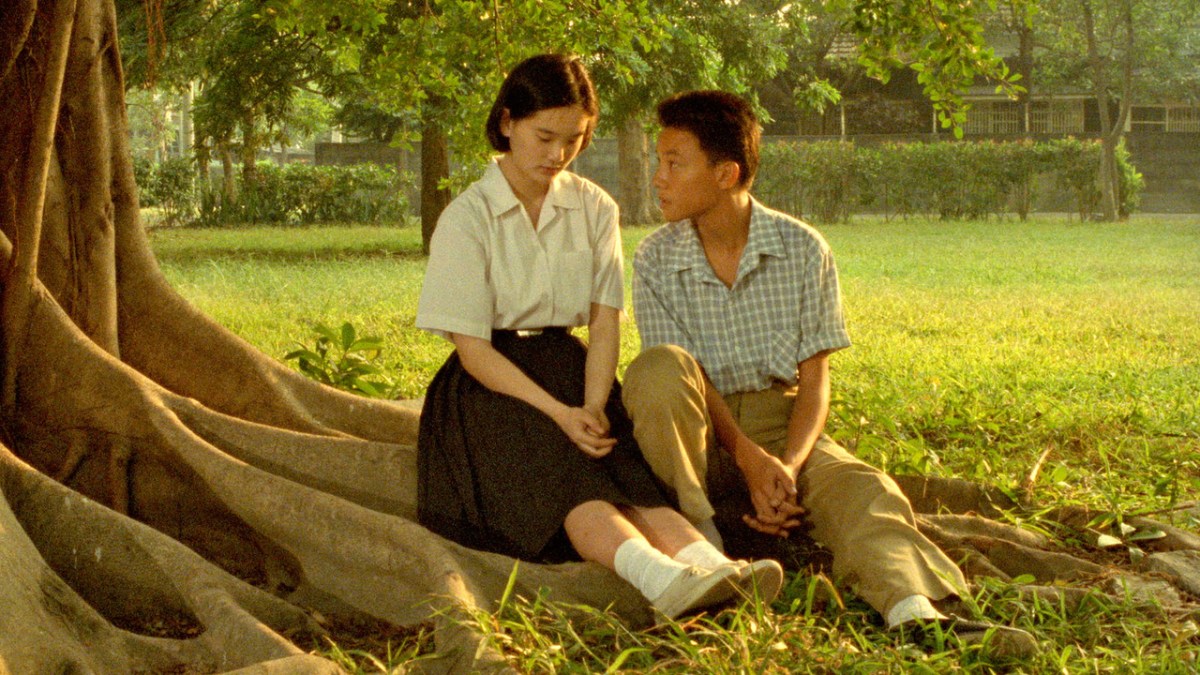
Yang’s sweeping masterpiece and deeply affecting picture is one of the greatest films ever made, dissecting 1960s Taiwanese society through the eyes of its youths and street gangs in search of collective identity and individual meaning.
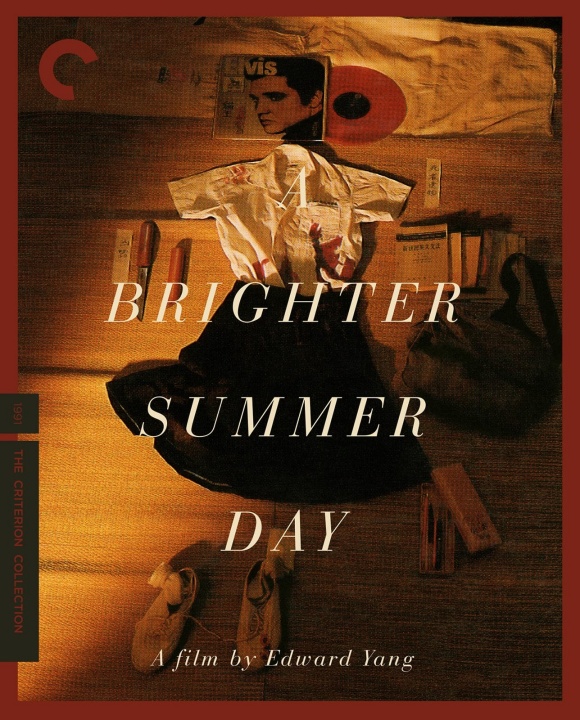
Review #600
Dir. Edward Yang
1991 | Taiwan | Drama, Crime, Romance | 237min | 1.85:1 | Mandarin, Min Nan, Shanghainese & English
NC16 (passed clean) for violence and coarse language
Cast: Chang Chen, Lisa Yang, Chang Kuo-Chu
Plot: After failing a test, innocent boy Xiao Si’r must attend night school. There, two rival gangs constantly clash. Xiao Si’r stays away from the gangs’ actions—until the day he meets Ming and falls in love with her. But Ming is the girlfriend of Honey, the leader of one of the two gangs.
Awards: Official Selection (Toronto & Berlinale); Won 2 Golden Horses – Best Feature Film & Best Original Screenplay; Nom. for 10 Golden Horses – Best Director, Best Leading Actor (x2), Best Leading Actress, Best Supporting Actress (x2), Best Cinematography, Best Art Direction, Best Costume Design & Makeup, & Best Sound Recording
Source: Kailidoscope
Accessibility Index
Subject Matter: Moderate – Taiwanese Society & History; Youth Gangs; Coming-of-Age
Narrative Style: Complex
Pace: Slightly Slow
Audience Type: Slightly Arthouse
Viewed: National Museum of Singapore (as part of the Edward Yang Retrospective)
First Published: 13 Mar 2011
Spoilers: No
I am absolutely amazed by this film. A Brighter Summer Day is arguably the greatest of Edward Yang’s films, a masterpiece of Taiwanese cinema, and a treasure for all cineastes.
Running at an uncompromising four hours in length, this ambitious epic dissects 1960s Taiwanese society through the eyes of its youths, many of whom were embroiled in street gangs as they attempted to search for a collective identity and find individual meaning in a new land besieged by the ramifications of major social and political changes caused by the civil war defeat by the Chinese Communists in 1949.
Based on a true incident in which a murder shook the country, A Brighter Summer Day makes use of that incident not as a stepping stone to explore the ills of Taiwanese society, but as a powerful exemplification of the culmination of all the social unrest and civil strife till that point that releases itself in one fatal, inevitable swing of a knife, an action that becomes immortalised in Yang’s deeply affecting picture about the coming-of-age of an entire generation of ‘rebels’ that defined Taiwan in the 1960s.
A Brighter Summer Day stars Chang Chen in his acting debut, playing the lead protagonist. Flanked by dozens of young, non-professional actors, he gives a composed performance that portrays his character, Xiao Si’r, as a quiet and innocent night school student, forced into circumstances that slowly erode his worldview into one of perpetual darkness.
Ironically, the English title of the film sounds optimistic and, to some extent, idealistically utopian. But it is really a strong juxtaposition to what occurs in the film, in which Yang’s provocative visuals successfully reveal the violence and crime that plague the streets of Taiwan.
“A person who’ll apologise for wrongs he didn’t commit is capable of all sorts of terrible things.”
Yang’s strong attention to detail and perfectionist style make A Brighter Summer Day a joy to watch. He uses the camera creatively, employing unorthodox angles shot from, for instance, the point-of-view of characters under a bed or looking down onto a stage.
Occasionally, he would pan the camera to a plain wall as characters converse nearby, letting viewers imagine their facial expressions. The use of light (or lack of it) is also superb, most evidently in the violent confrontation between separate gangs shot in almost complete darkness.
The film’s cinematography switches effortlessly from the gritty portrayal of the rough nightlife of young troublemakers to the poetic when Xiao Si’r and his girlfriend, Ming (Lisa Yang), spend time together.
One particular scene is etched in my memory – that of Xiao Si’r and Ming enjoying each other’s company in the countryside as soldiers in the distance practice their drills. An old bicycle with a rusty metallic bell is placed prominently in the frame – subtly reminiscent of Ozu’s Late Spring (1949) – suggesting a blissful romance that may or may not blossom.
Despite its length, A Brighter Summer Day engages tremendously through Yang’s darkly comic dialogue that not only pulls in a fair share of laughs, but also, and more importantly, showcases his astute observation of human interaction, be it in a family setting or in a wider social environment.
While Yi Yi (2000) remains to be Yang’s most lasting legacy, well, at least in the eyes of those who know this surprisingly under-appreciated director, it is this rare four-hour director’s cut that is his masterpiece.
Grade: A+
Trailer:
Music:
 Eternality Tan
[…] Yang’s lesser-known two films made in between A Brighter Summer Day (1991) and Yi Yi (2000) have seen new 4K restorations touring around the globe at various […]
LikeLike
[…] in between Taipei Story (1985) and A Brighter Summer Day (1991), The Terrorizers marks the artistic levelling up of Edward Yang as a filmmaker, who would […]
LikeLike
[…] light of Yang’s future masterpieces, A Brighter Summer Day (1991) and Yi Yi (2000), Taipei Story can feel like a minor offering in comparison but there […]
LikeLike
[…] his even longer Yi Yi (2000) and A Brighter Summer Day (1991), both legitimate masterworks that earn their lengths, That Day, on the Beach is easily a […]
LikeLike