







McElwee’s intended docu-travelogue about General Sherman’s American Civil War campaign turns into a narcissistic look at his faltering romantic exploits with the Southern women around him, yet its unabashed subjectivity feels surprisingly fresh and compelling.

Review #2,858
Dir. Ross McElwee
1985 | USA | Documentary, Biography | 157 min | 1.37:1 | English
Not rated – likely to be NC16 for some sexual references and partial nudity
Cast: –
Plot: Ross McElwee sets out to make a documentary about the lingering effects of General Sherman’s march of destruction through the South during the Civil War, but is continually sidetracked by women who come and go in his life, his recurring dreams of nuclear holocaust, and Burt Reynolds.
Awards: Won Grand Jury Prize (Sundance)
Source: First Run Pictures
Accessibility Index
Subject Matter: Moderate – General Sherman & American Civil War; Love Life; Life in the South
Narrative Style: Slightly Complex
Pace: Slightly Slow
Audience Type: Slightly Arthouse
Viewed: Le Cinema Club
Spoilers: No
Considered a milestone in the history of American documentary filmmaking, Sherman’s March may look somewhat dated to some (well, not for me as I love the look of its 16mm) but it is an exceptional example of a time capsule of ‘80s American suburbia.
More significantly, it is an intimate document of a filmmaker trying to explore a subject that fascinates him, in this case, General William Tecumseh Sherman and his scorched-earth ‘March to the Sea’ campaign during the American Civil War.
The catch, however, is that Ross McElwee, the guy with the camera, becomes so distracted by the women around him that the intended docu-travelogue becomes a narcissistic look at his mildly lustful—and faltering—romantic exploits in finding a potential suitor. In composition writing, this is considered writing terribly out of point and a straight F.
Yet, despite the controversy over the ‘misuse’ of funds and sheer personal indulgence on display, McElwee’s work has withstood the test of time, revealing in verite style, life in the South, particularly in the Carolinas and Georgia.
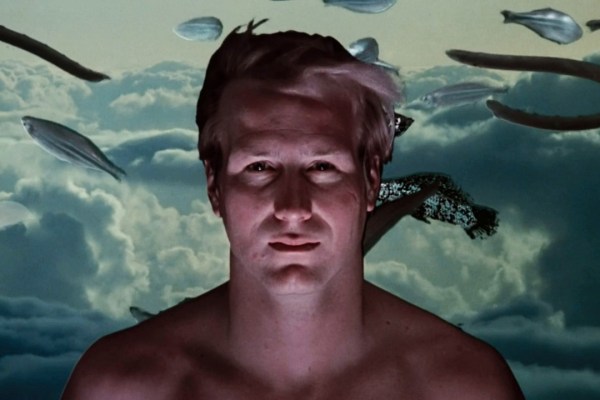
“When things are going well for me, the missiles gather dust in their silos. But when things are going badly, they take to the skies by the thousands night after night.”
Furthermore, its unabashed subjectivity feels surprisingly fresh and despite some initial trepidation about whether I would make it through a film of this nature, I found it very compelling.
Maybe it’s McElwee’s anything-goes narration, where he shares his frank inner thoughts about those women that he meets, regrets, guilt and fears (of nuclear annihilation). And when he momentarily has nothing else to offer, he goes back to tracing Sherman’s historical route.
With finite rolls of film and a somewhat self-defeating spirit, McElwee’s process of making Sherman’s March may also be thought of as self-therapy for the filmmaker.
Whether he gained anything positive psychologically, however, is beside the point, when viewers through his work have the opportunity to be reassured that everyone has, at some point in his or her life, been confused, lonely and single—and that it is perfectly okay.
Grade: A-
Trailer:

