

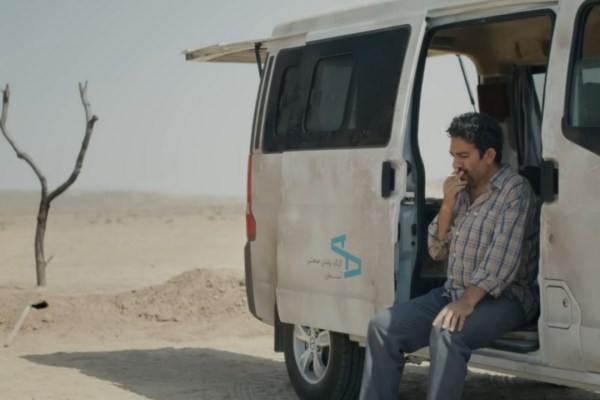




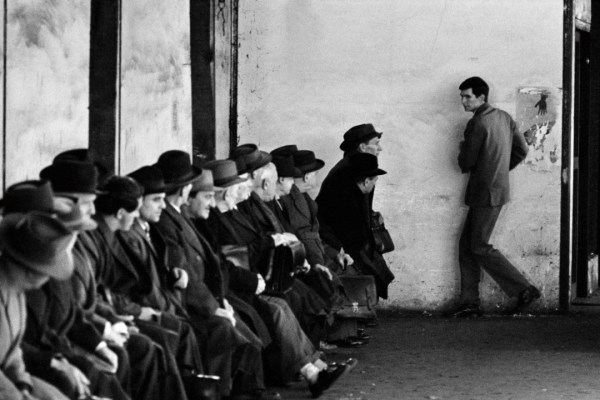
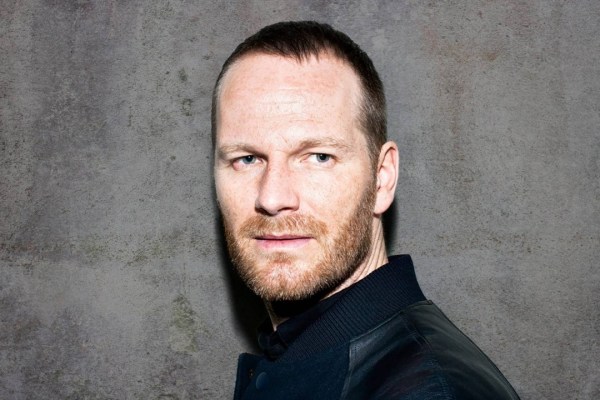
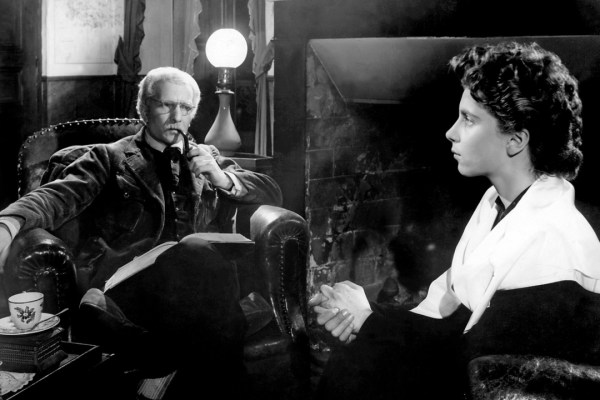
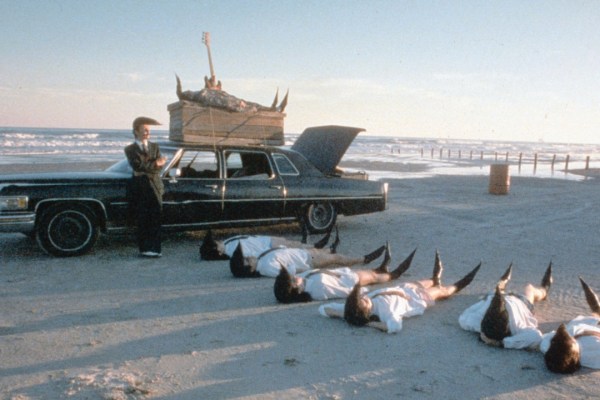

Kieslowski’s often overlooked middle installment of the famed trilogy may be one of his most mischievous if perverse films as a downtrodden, recently divorced Polish man plans an elaborate revenge plot against his French ex-wife.
Review #2,626
Dir. Krzysztof Kieslowski
1994 | Poland, France | Drama, Comedy | 91 min | 1.85:1 | Polish, French & English
M18 (passed clean) for some sexuality and language
Cast: Zbigniew Zamachowski, Julie Delpy, Janusz Gajos
Plot: After his wife divorces him, a Polish immigrant plots to get even with her.
Awards: Won Silver Bear – Best Director & Nom. for Golden Bear (Berlinale)
Distributor: MK2
Accessibility Index
Subject Matter: Moderate – Divorce; Immigrant Identity; Revenge
Narrative Style: Slightly Complex
Pace: Slightly Slow
Audience Type: Slightly Arthouse
Viewed: Criterion Blu-ray
Spoilers: No
I wished there was more Julie Delpy in this, but Three Colors: White is not really about her character, Dominique, who divorces her husband, Karol, because the marriage wasn’t consummated.
It is a ridiculous reason but under Polish auteur Krzysztof Kieslowski’s assured hands, the film becomes more than a twisted story about husband and wife—allegorically, it is about Western and Eastern Europe, the asymmetrical flows of capital, the inability to co-exist and the uncertainty of progress.
As the middle installment of his famed ‘Three Colors’ trilogy, White has often been overlooked by critics as being Kieslowski-lite when in fact, it may just be one of his most mischievous works, imbued with little moments of perversity.
Downtrodden and with nary a franc in his name, Karol returns to Poland and after some time, begins conceiving an elaborate revenge plot against his French ex-wife. Plot-wise, it might seem rather ludicrous even as it heads towards an unexpectedly affective denouement.
“Soon every policeman in Paris will be looking for you.”
Perhaps the film works best when we think about the French Revolutionary ideal of ‘Equality’, which the colour white is based on. It is an ideal of course, which suggests that reality is far from that.
For instance, the standard of living in Poland is much lower than in France, or that immigrants don’t feel at home living abroad, or on a more personal level, no two humans feel the same.
With the film’s theme of love and revenge, Kieslowski even suggests that harming a person that has harmed you is another, albeit warped, way of thinking about seeking equality.
While not as thematically unified or powerful as Blue (1993) or Red (1994), White has its little charming quirks that are pretty much absent in the other films.
Grade: A-
Trailer:
Music:
 Eternality Tan