








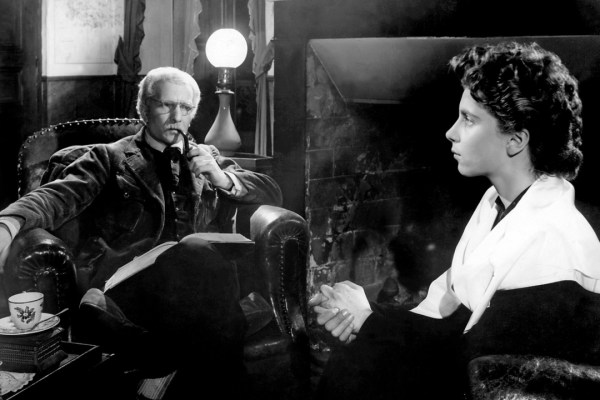

One of Russell’s top-tier films, this sensual adaptation of D.H. Lawrence’s novel takes both lofty and earthy notions of ‘love’ into an ever-deepening spiral of psychosexual complications and provocations.

Review #2,723
Dir. Ken Russell
1969 | UK | Drama, Romance | 131 min | 1.75:1 | English
Not rated – likely to be R21 for sexual scenes, nudity and mature themes
Cast: Alan Bates, Oliver Reed, Glenda Jackson, Jennie Linden, Eleanor Bron
Plot: Growing up in the sheltered confines of a 1920’s English coal-mining community, free-spirited sisters Gudrun and Ursula explore erotic love with a wealthy playboy and a philosophical educator, with cataclysmic results for all four.
Awards: Won 1 Oscar – Best Leading Actress & Nom. for 3 Oscars – Best Director, Best Adapted Screenplay & Best Cinematography
Distributor: MGM
Accessibility Index
Subject Matter: Slightly Mature – Love, Intimacy & Connection; Gender
Narrative Style: Slightly Complex
Pace: Slightly Slow
Audience Type: Slightly Arthouse
Viewed: Criterion Blu-ray
Spoilers: No
A meeting of daring minds, Women in Love showcases the collaboration between one of British cinema’s most radical filmmakers and the work of D.H. Lawrence, a writer often misunderstood during his time.
In the early 20th century, Lawrence was frequently dismissed as a ‘tasteless pornographer,’ yet his revered reputation today challenges such notions.
It’s fitting that Ken Russell, a rebellious newcomer in search of a third feature film to helm, would be drawn to directing an adaptation of Lawrence’s controversial novel, delving into the complexities of ‘love’ in its various forms.
One of Russell’s top-tier films and a subject of controversy itself when it was released, Women in Love may be described as sensual and erotically-charged as four characters attempt to navigate matters of the heart through both primal and intellectual means.
“Try to love me a little more and want me a little less.”
The film’s most talked-about scene has got to be two men (Alan Bates and Oliver Reed no less) engaging in a perhaps way-too-friendly nude wrestling exercise— it became one of the first more mainstream movies to break the taboo of showing male frontal nudity.
Naturally, the allusion to the theme of gay relationships also comes to the fore. But Russell’s film isn’t a decidedly queer one; instead, it explores both lofty and earthy notions of ‘love’ in a small industrial English town at the cusp of modernity.
Through the exploits of not just Bates and Reed’s characters who represent the ‘thinker’ and ‘industrialist’ respectively, but also the Brangwen sisters (Glenda Jackson in an Oscar-winning performance and Jennie Linden) who fall in love with them, albeit in two contrasting ways, we begin to appreciate the film’s frankness in its exploration of sexuality and existential crisis.
Experiencing Women in Love is like being tossed into an ever-deepening spiral of psychosexual complications—can destructive relationships afford opportunities for personal liberation, and can human beings find fulfilment with only one type of abiding love?
Grade: A
Trailer:
Music:
 Eternality Tan