


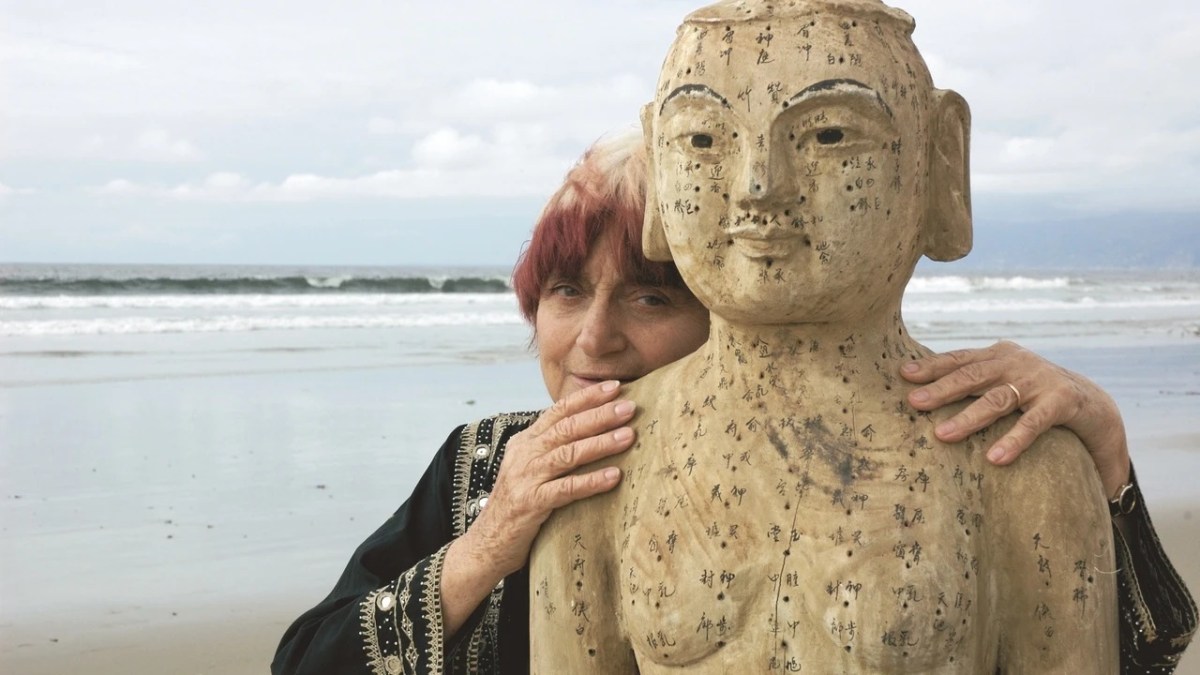
A fervent, playful self-portrait that sees a bubbly yet wistful Varda at her most inventive, crafting a near-formless cinematic salute that reimagines what personal documentary filmmaking can be.
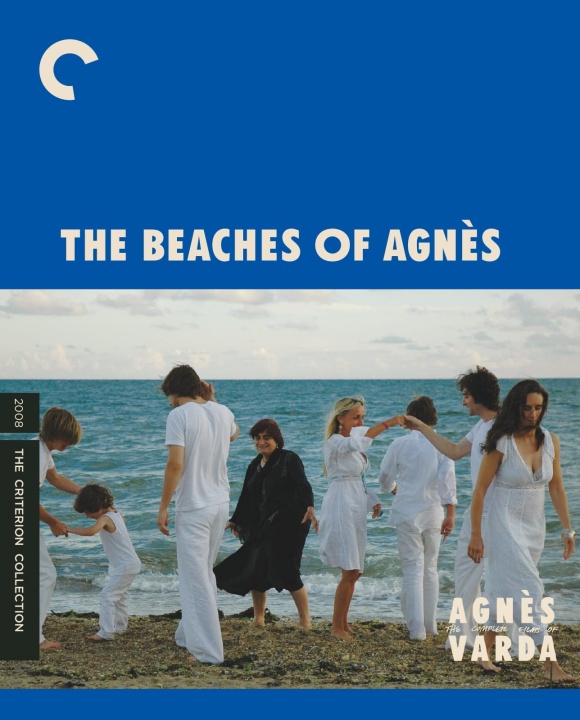
Review #3,067
Dir. Agnes Varda
2008 | France | Documentary, Biography | 112min | 1.85:1, 1.37:1 & 1.66:1 | French & English
Not rated – likely to be M18 for nudity
Cast: –
Plot: Returning to the beaches that have been part of her life, Agnès Varda invents a kind of self-portrait-documentary. Agnès stages herself among excerpts of her films, images and reportages; weaving public and private struggles, loves and friendships, films and people, and the history of French cinema.
Awards: Nom. for Queer Lion (Venice)
Source/Distributor: Cine-Tamaris
Accessibility Index
Subject Matter: Moderate – Self-Portrait; Art & Identity; Past & Present
Narrative Style: Slightly Complex – Free-Form
Pace: Slightly Slow
Audience Type: Slightly Arthouse
Viewed: Criterion Blu-ray
Spoilers: No
Welcome to the fervent and fertile mind of Agnes Varda, the fairy godmother of the French New Wave, whose The Beaches of Agnes is so hard to pin down that it is at once a fantastic starting point for cinephiles new to her body of work, and just as fantastic a cinematic salute that celebrates all that is wondrous about this most brilliant of artists.
I regard her more as an artist than a filmmaker because while she is a woman with many stories to tell, within her heart lies an insatiable desire to create. And create she does—wildly, solemnly, intuitively—with nary a care in the world.
Yet her documentary self-portrait at 80 invites us to play with her, and to shed a tear or two as she reminisces about her time with her late husband, fellow filmmaker Jacques Demy. Beaches was meant to be her final gift to the world, but Varda would live another decade, notably co-directing the Oscar-nominated Faces Places (2017) with JR.
“I’m playing the role of a little old lady, telling her life story.”
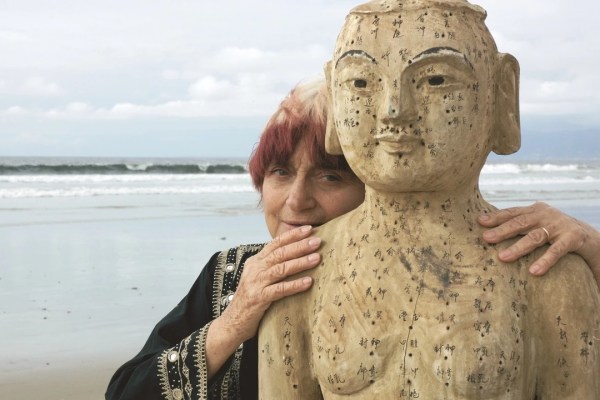
The beach has long been a source of inspiration to Varda, and in one cheeky sequence that might be the film’s most memorable segment, she builds a makeshift “beach office” in the middle of the road, where she and her Cine-Tamaris colleagues temporarily work… until real rain falls and origami birds come out.
Frequently bubbly but occasionally wistful, Varda inserts generous servings of film clips from her key works, not only showing the breadth of her artistic preoccupations, but also her chameleon-like ability in adapting to: [1] new technology (such were the limitless affordances of the digital camera when she made The Gleaners and I at the turn of the century); [2] new milieu (such were the eye-opening shorts and features made when Varda and Demy temporarily relocated in California); and [3] new ways of thinking, particularly the emergent politics of feminism best exemplified by the masterful One Sings, the Other Doesn’t (1977), which could be my favourite of hers.
One thing’s for sure, every film of hers doesn’t seem to have any precedent—she approaches each new project with the uncanny ability in moulding it into its necessary, novel form. With Beaches, she achieves close to formlessness by being endlessly creative, once again changing how we might imagine personal documentary filmmaking can be.
Grade: A-
Trailer:
Music:
 Eternality Tan