





Varda’s first feature in colour, one that screams vibrant, cheery optimism from the get-go, becomes an ironic, if unsettling, take on happiness, set against gender inequality, as a husband in a truly happy marriage begins an extramarital affair.
Review #3,045
Dir. Agnes Varda
1965 | France | Drama, Romance | 80min | 1.66:1 | French
Not rated – likely to be NC16 for some nudity and sexual references
Cast: Jean-Claude Drouot, Claire Drouot, Olivier Drouot, Sandrine Drouot, Marie-France Boyer
Plot: A young husband and father, perfectly content with his life, falls in love with another woman.
Awards: Won Special Prize of the Jury & Interfilm Award – Recommendation (Berlinale)
Source: Cine-Tamaris
Accessibility Index
Subject Matter: Moderate – Marriage & Family; Extramarital Affair; Happiness; Gender Issues
Narrative Style: Straightforward
Pace: Slightly Slow
Audience Type: Slightly Arthouse
Viewed: Criterion Blu-ray
Spoilers: No
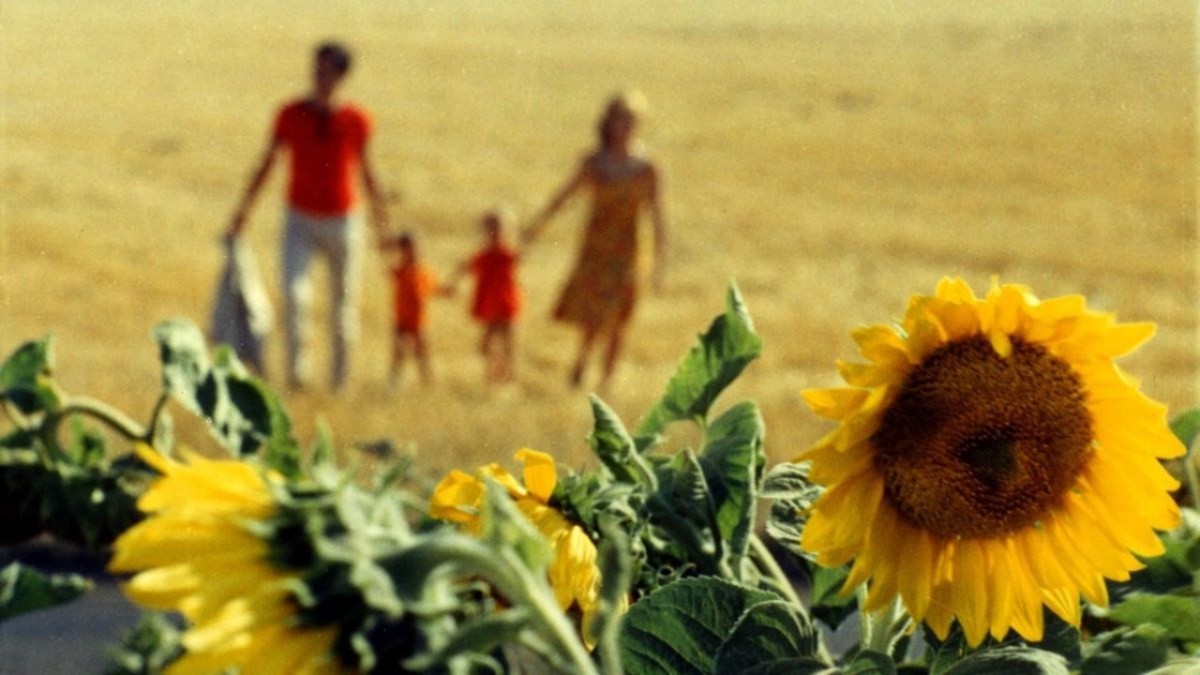
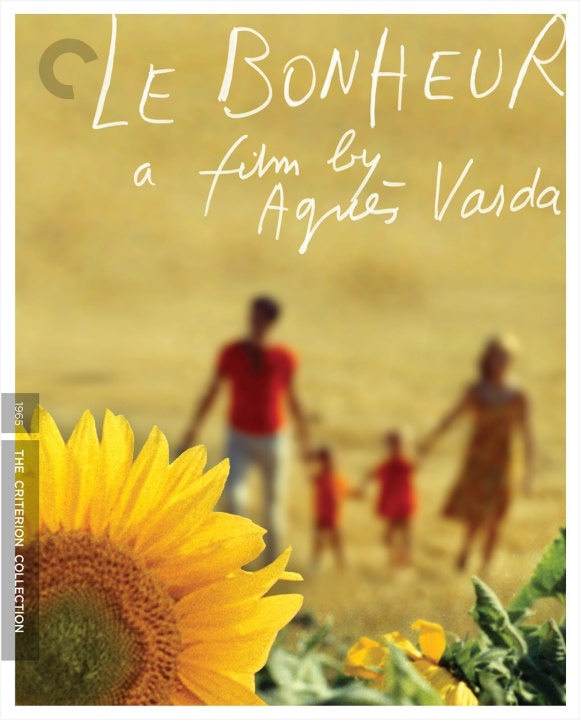
Agnes Varda’s first feature in colour after Le Pointe Courte (1955) and Cleo from 5 to 7 (1962), Le bonheur (or ‘Happiness’) screams vibrant, cheery optimism from the get-go, as we encounter a family of four on an idyllic weekend trip to the countryside.
As the couple and their two small kids laze around, content with life, we hear Mozart’s “Adagio & Fugue in C Minor, K. 546” as it playfully serenades them.
The opening titles sequence features quick cuts and close-ups of gigantic sunflowers—while they look pretty, they seem way too large, like something’s slightly off.
Two decades later, David Lynch would similarly showcase a sense of normalcy in his opening to Blue Velvet (1986), before veering off course.
Varda is more of an ironist; she maintains the same ‘happy’ tone throughout her 80-minute piece, even when things depicted onscreen suggest otherwise.
With Le bonheur, she not only questions the notion of ‘happiness’, but sets it against the theme of gender inequality. The man is deeply in love with his wife, yet in his strategic ‘detours’ to the post office, we see him flirting with one of the counter women, which turns into an extramarital affair.
“I’ve enough joy for both of you.”
He calls it another type of ‘happiness’, one that amplifies his original happiness. Varda, as one of cinema’s proto-feminists, provokes us to think: Why is it that a man can so easily love two women at the same time, outside of his proclivity for sex? Why are women so easily replaceable as objects of a man’s happiness?
There is a wonderfully instructive sequence where we see the townspeople dancing, with Varda using a large tree to seamlessly ‘interrupt’ pans from left to right and vice versa, as couples change partners with each ‘cut’.
Le bonheur paints everything with such a buoyant mood that all these serious thematic inquiries become sharper in contrast.
While I didn’t quite feel much emotionally for the film or characters (which I recognise is Varda’s way of expressing indifference towards what’s onscreen), it is her deliberate treatment—visually, tonally, and aurally—that leaves the greatest impression, so much so that it disturbs the mind.
In fact, the final time we hear Mozart again in its entirety, we are already in a much more unsettled state, with that short, interweaving fugue rhythm mimicking the ironic posing of one hard question after another.
Grade: A-
Trailer:
Music:
 Eternality Tan
[…] Bonheur, Le (1965) […]
LikeLike