


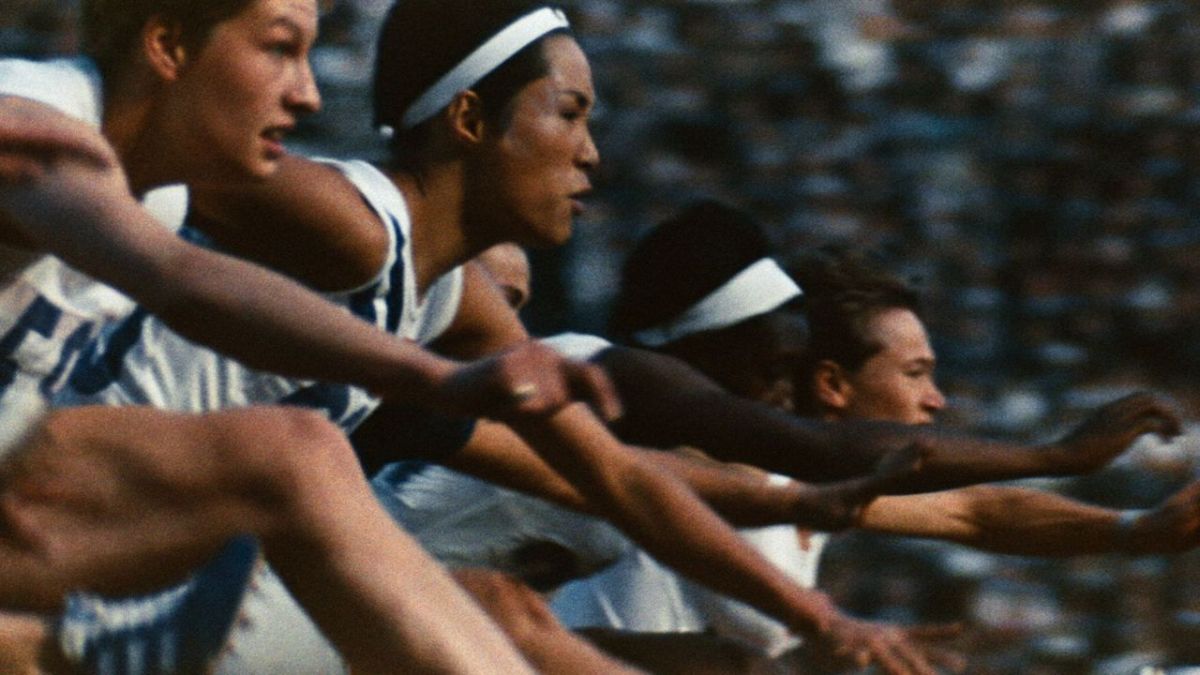
Ichikawa’s marvellous coverage of the 1964 Olympic Games is one of the all-time finest sports documentaries, at times poetic and abstract, and always interested in the bodies, faces and movements of athletes and spectators rather than who wins or loses.
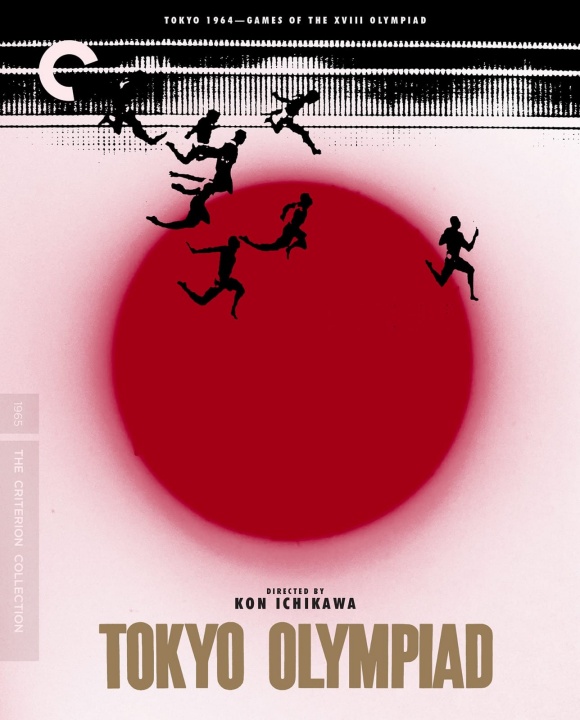
Review #2,927
Dir. Kon Ichikawa
1965 | Japan | Documentary, Sports | 168min | 2.35:1 | Japanese
Rating exemption – would be considered G
Cast: –
Plot: Kon Ichikawa examines the beauty and rich drama on display at the 1964 Summer Games in Tokyo, creating a record of observations that range from the expansive to the intimate.
Awards: Won Flaherty Documentary Award & UN Award (BAFTAs); Official Selection (Cannes)
Source: International Olympic Committee
Accessibility Index
Subject Matter: Light – Olympics; Sports; Perseverance & Competitiveness
Narrative Style: Straightforward
Pace: Normal
Audience Type: Slightly Mainstream
Viewed: Criterion Blu-ray
Spoilers: No
Yoshinori Sakai, the Olympic flame torchbearer for the 1964 Tokyo Games, was born in Hiroshima the day the atomic bomb was dropped. We see him and numerous national contingents of athletes in the prologue of Kon Ichikawa’s marvellous sports documentary.
A notable absence is China, which boycotted the Games due to Taiwan’s participation. This was also in the middle of the Cold War, and the US would catastrophically put its soldiers on Vietnam soil only a year later.
All these and more came into my mind as I saw the presence (and absence) of flags being paraded during the Games. Most would argue to diverge sports from politics, but it is difficult when you see a USSR athlete competing with an American.
But this is precisely why Tokyo Olympiad is so interesting to me—not just the blood, sweat and tears of the competitors as humanised by Ichikawa’s team of camera operators, which included the famed Kazuo Miyagawa (Rashomon, 1950; Ugetsu, 1953), but also the historical significance of this part of the 20th century.
“Who knows how this race will turn out?”
At nearly three hours long, but already severely reduced from more than 70 hours of footage, Ichikawa’s film feels poetic and abstract at times. He is interested in the bodies, faces and movements of people, even the spectators who lined the street in a bid to catch glimpses of marathon runners.
Obviously, the Japanese folks who backed the film disliked its outcome, with Ichikawa cheekily retorting that he couldn’t reshoot because his ‘cast’ had left the country.
So, here we have a miracle of a film, one that has become a reliable barometer of the niche genre of sports documentaries over the decades.
My favourite segment of Tokyo Olympiad is the women’s volleyball final—I’ve never seen a filmmaker capture the tension and thrills of a nail-biter this cinematically.
Grade: A
Promo Clip:
 Eternality Tan