





Structured around the Chinese wedding, baby shower and funeral, Yang’s final masterpiece dissects the relationships surrounding one extended middle-class family as life’s endless wisdoms grace and elude them.
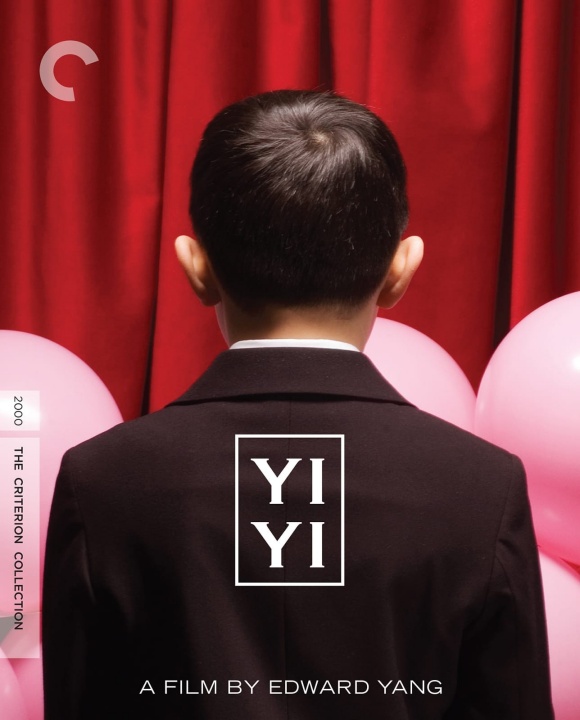
Review #550
Dir. Edward Yang
2000 | Taiwan | Drama | 173min | 1.85:1 | Mandarin
NC16 (passed clean) for some coarse language and nudity
Cast: Wu Nien-Jen, Elaine Jin, Issei Ogata, Kelly Lee, Jonathan Chang
Plot: Each member of a family in Taipei asks hard questions about life’s meaning as they live through everyday quandaries. NJ is morose: his brother owes him money, his mother is in a coma, his wife suffers a spiritual crisis when she finds her life a blank and his business partners make bad decisions.
Awards: Won Best Director and Nom. for Palme d’Or (Cannes)
Source: Atom Films
Accessibility Index
Subject Matter: Moderate – Meaning of Life; Family; Relationships
Narrative Style: Complex
Pace: Slightly Slow
Audience Type: Slightly Arthouse
Viewed: Criterion Blu-ray
First Published: 8 Sep 2010
Spoilers: No
The passing of a great filmmaker is always greeted with sadness. Edward Yang was no exception. One of the most influential Taiwanese filmmakers, Yang belonged to a class of film directors whose films resonated strongly with the society he lived in.
He made a number of pictures during the 1990s, but his most lasting legacy was Yi Yi, a film released at the turn of the century (or millennium if you will), which through the perspective of a single, but extended, middle-class Taiwanese family, provided viewers with an honest and insightful reflection of living in a modern, technological age.
Structured around three very important cultural ceremonies, namely the wedding, the baby shower, and the funeral, the film brings as many characters as possible to the fore, and then breaks them up into smaller ‘units’ for an in-depth study of their lives.
This congregation and dissection of characters is the reason Yang’s film is essential viewing for anyone who wishes to see a slice of themselves on screen, portrayed to a very realistic effect.
Expertly developed, the elaborative narrative may seem deceptively complex but it is really just a series of simple observations of daily occurrences spliced together on film.
Shot with honest objectivity, Yang’s film sometimes also spotlights the subjective emotions of certain characters, most notably that of Yang Yang (a somewhat reserved boy with a camera), his school-going sister (who discovers the fleeting emotion of love for the first time), and their morally-guided father (a mid-level boss of a corporation who meets an old flame).
Of course, in a film like Yi Yi, which spans nearly three hours, these characters are multi-dimensionally developed. So much occurs in their lives that the ups and downs captured in Yang’s film are merely a ‘cross-sectional’ view of their current circumstance.
“I can only see what’s in front, not what’s behind. So I can only know half of the truth, right?”
In quite a number of scenes, director Yang employs long shots to keep viewers a certain distance away from the characters. Although we can hear the (slightly fainter) dialogue, we are unable to observe the subtle facial reactions that would help us to register the feelings of these characters.
In other instances, Yang uses mediated images, like that of a security camera, to capture the movements of the characters, highlighting the increase in surveillance in today’s society.
Yang also makes use of glass panels (of windows, doors, and walls) to create a ‘double-screen’ effect. These glass panels give an added screen to the lens of the camera, further separating the viewer from the actors, forcing upon us the role of a ‘contemplative observer’ as opposed to being a ‘willing participant’ in the lives of these characters.
The dual reflection of objects within and outside these glass panels sometimes produce naturally superimposed images; this is most beautiful during scenes shot at night.
I feel that Yi Yi’s most important message comes from Yang Yang’s camera, which is given to him by his father. He takes pictures of the back of people’s heads, reasoning that these are images that people could never see, and explaining that a person’s view of the world is always halved (i.e. never complete) because of this.
This change in social perspective from an innocent boy after receiving the camera parallels that of the director’s use of the film medium to reveal that life is often treated with so much subjectivity that an objective worldview is sometimes difficult for us to fathom.
In three hours, Yang conveys that message very convincingly. But three hours is never enough for something that often takes us a lifetime to recognize. There is a word for it – it’s called wisdom.
Grade: A+
Trailer:
Music:
 Eternality Tan
[…] Yang’s lesser-known two films made in between A Brighter Summer Day (1991) and Yi Yi (2000) have seen new 4K restorations touring around the globe at various […]
LikeLike
[…] While Yi Yi (2000) remains to be Yang’s most lasting legacy, well, at least in the eyes of those who know this surprisingly under-appreciated director, it is this rare four-hour director’s cut that is his masterpiece. […]
LikeLike
[…] light of Yang’s future masterpieces, A Brighter Summer Day (1991) and Yi Yi (2000), Taipei Story can feel like a minor offering in comparison but there is so much that the […]
LikeLike
[…] his even longer Yi Yi (2000) and A Brighter Summer Day (1991), both legitimate masterworks that earn their lengths, That […]
LikeLike
[…] Terrorizers is certainly not as sprawling and all-encompassing as A Brighter Summer Day or Yi Yi (2000), but it is arguably Yang’s most complex […]
LikeLike
[…] the story, there’s also a wedding. As such, Huo’s work also reminds me of Edward Yang’s Yi Yi (2000), with its weddings and funerals, even though the latter is set in modern Taipei and tackles […]
LikeLike