






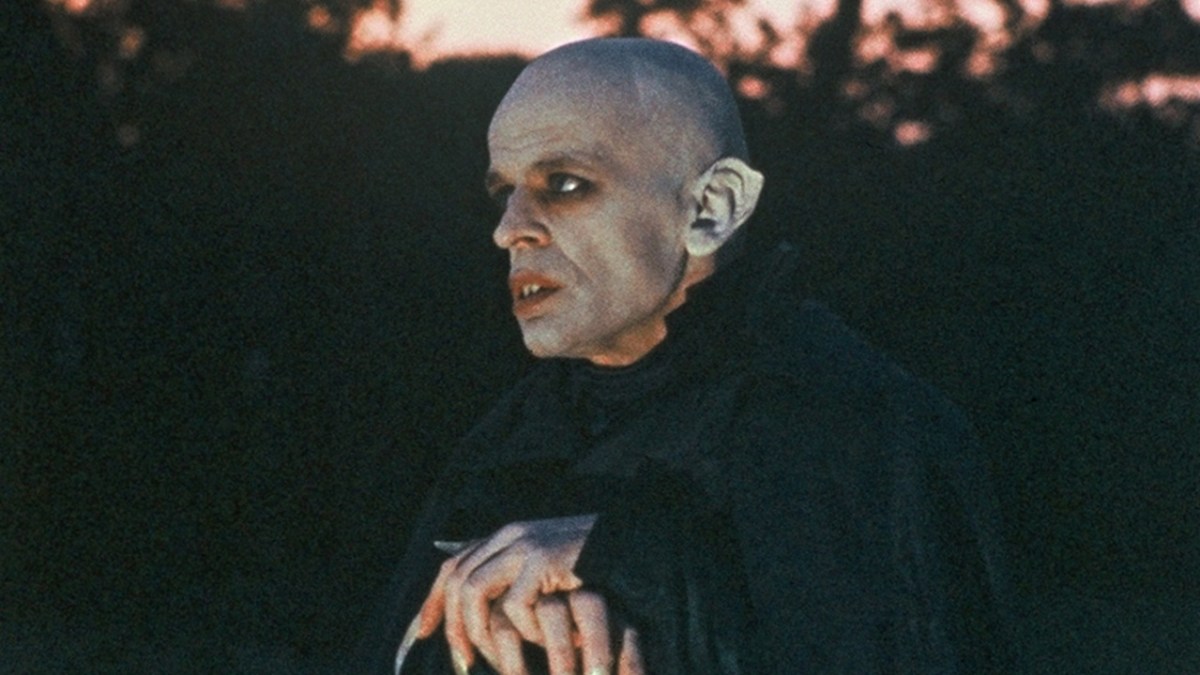
Herzog’s take on the Count Dracula story may not offer any narrative surprises, but as a moody work of restrained horror marked by an oddly calm sense of foreboding, it exudes an earthier and organic feel.
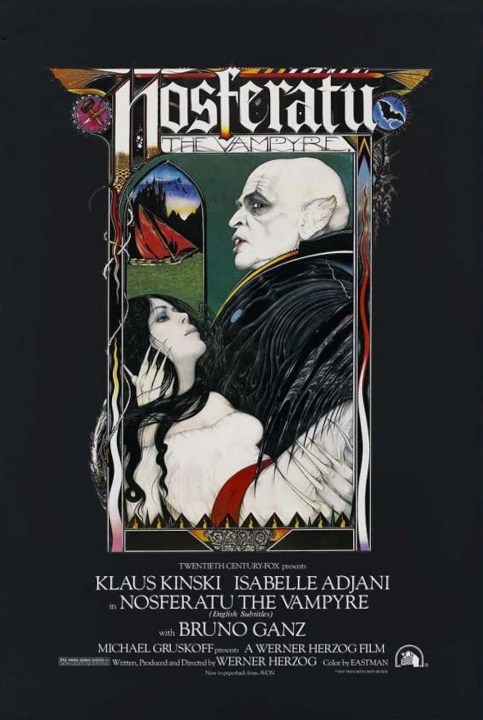
Review #2,895
Dir. Werner Herzog
1979 | West Germany | Drama, Horror | 107min | 1.85:1 | German, English & Romany
PG (passed clean) for some disturbing scenes
Cast: Klaus Kinski, Isabelle Adjani, Bruno Ganz
Plot: A real estate agent leaves behind his beautiful wife to go to Transylvania to visit the mysterious Count Dracula and formalize the purchase of a property in Wismar.
Awards: Won Silver Bear – Outstanding Single Achievement in Production Design & Nom. for Golden Bear (Berlinale)
Source: Werner Herzog Filmproduktion
Accessibility Index
Subject Matter: Moderate – Vampire; Existential Loneliness
Narrative Style: Straightforward
Pace: Slightly Slow
Audience Type: Slightly Arthouse
Viewed: The Projector Cineleisure (as part of the German Film Festival)
Spoilers: No
You may be shocked to see so many rats in this film, but according to director Werner Herzog, these rodents were far more well-behaved than Klaus Kinski, who was infamous for his on-set tantrums.
Kinski played the titular character, spending hours every day in grotesque makeup that even frightened him. Despite being immortal, Count Dracula cuts an extremely lonely figure in search of elusive love and companionship.
When a man (Bruno Ganz) is summoned to his eerie castle in Transylvania to conclude a property deal (the Count wants a move to a town in Germany), things go south, with Mr. Vampire himself infatuated with that man’s wife.
She is played by a tormented Isabelle Adjani who would, two years later, be traumatised even further in the Polish cult horror Possession (1981).
Herzog does take a narrative leaf out of Murnau’s OG silent classic from 1922, but the German director’s stylistic fingerprints are all over, particularly his organic camerawork shot in the heart of nature that wouldn’t have looked out of place in Aguirre, the Wrath of God (1972) or Fitzcarraldo (1982).
“Time is an abyss, profound as a thousand nights.”
This gives his Nosferatu an earthier feel, though the requisite play of light and shadow is also on full display in the scenes of the Count’s dwelling, as well as in his later stealthy bloodsucking exploits in the dead of night.
There are allusions to the Black Plague (well, rats), and the tension between the science of reason and mythological faith occasionally pervades the largely conversation-lite film.
Ultimately, as a horror film, Herzog’s work does satisfy, though its restraint and deliberate pacing will be appreciated more by seasoned cinephiles than the casual moviegoer.
With an unsettling, sometimes cheekily idyllic, score by Popol Vuh, Herzog’s favourite at the time, Nosferatu the Vampyre evokes a sacrilegious if oddly calm sense of foreboding throughout.
Grade: B+
Trailer:
Music:
 Eternality Tan
[…] notably Murnau’s eerie silent classic from 1922 and Herzog’s more naturalistic and organic 1979 version (both superior to […]
LikeLike