
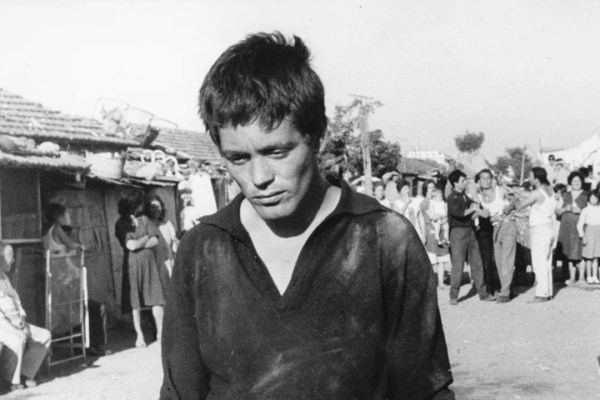





A work of slow and restrained beauty as Morita’s Meiji era melodrama, about a man who is still in love with a woman who has married his close friend, compels with its effective performances and deliberate mise-en-scene.

Review #2,880
Dir. Yoshimitsu Morita
1985 | Japan | Drama | 130 min | 1.75:1 | Japanese
PG (passed clean)
Cast: Yusaku Matsuda, Miwako Fujitani, Kaoru Kobayashi, Morio Kazama, Chishu Ryu
Plot: Daisuke is supposed to be out looking for a respectable job and an equally respectable wife. When his friend Hiraoka returns with his wife Michiyo, problems arise.
Awards: Official Selection (Cannes)
Distributor: Toei
Accessibility Index
Subject Matter: Moderate – Love & Pain; Friendship & Romance; Social Conservatism
Narrative Style: Slightly Complex
Pace: Slow
Audience Type: Slightly Arthouse
Viewed: Oldham Theatre (as part of the Yoshimitsu Morita Retrospective by the Asian Film Archive)
Spoilers: No
Although it has faded somewhat into obscurity, And Then is that work of restrained beauty that Yoshimitsu Morita was fully capable of. Such was his versatility that it came after the satirical drama, The Family Game (1983), and the minimalist ‘hitman’ film, Deaths in Tokimeki (1984).
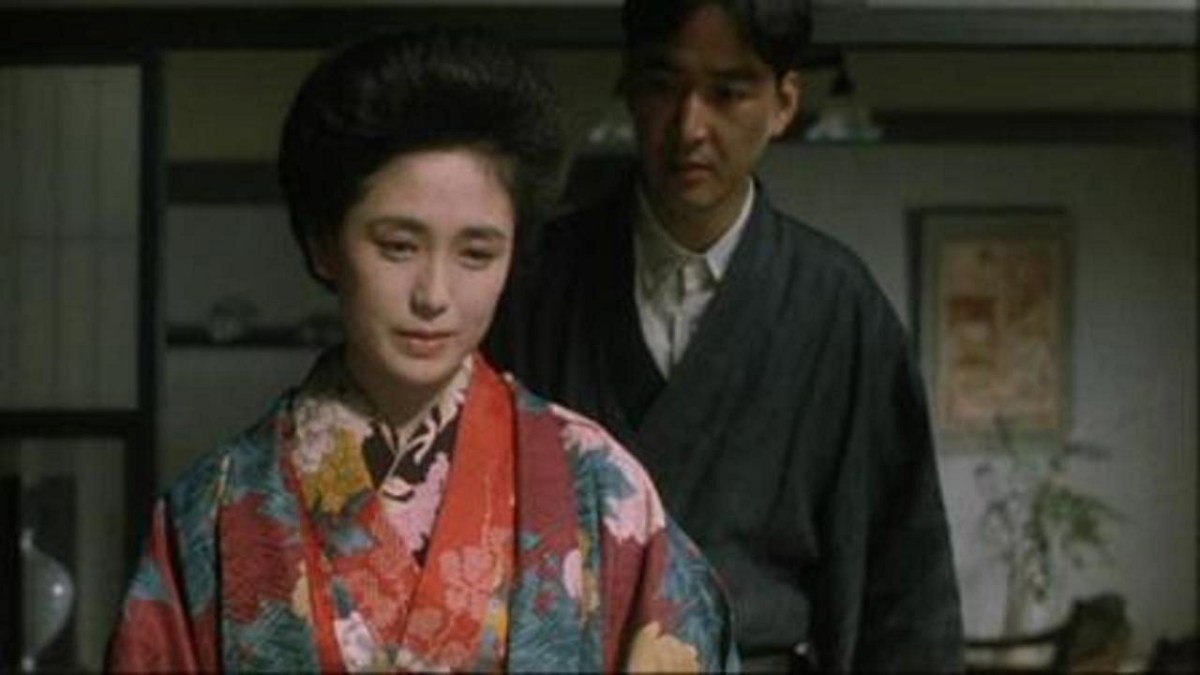
Here, he fashions a period piece set in the tail end of the Meiji era as a man, Daisuke (Yusaku Matsuda, who played the tutor in The Family Game), spends his time on literature and music.
He is at that age where he is urged to marry a woman from a respectable family through matchmaking, but born into a wealthy family, he mostly procrastinates in worldly matters of romance and employment.
Except that he is still in love with Michiyo, a crush from several years ago who returns to his town as the wife of one of his closest friends.
“I wished I had told you.”
As memories of the past are triggered and present longing glances subtly expressed, And Then becomes a film of unspoken thoughts and quiet gestures, reminiscent of the later In the Mood for Love (2000) by Wong Kar-Wai.
Sublime inserts of surrealistic scenes involving a train ride that recur occasionally reveal Daisuke’s active inner mind. His passive exterior, however, mirrors that of Michiyo, who is increasingly alienated by her job-seeking husband.
Unlike Morita’s later provocation Lost Paradise (1997), which explicitly deals with extramarital affairs in the modern world, And Then is its antithesis. If the main characters in both films had swapped their contexts, one wonders if Daisuke and Michiyo would have thrown away all propriety.
Despite its slow pacing in the vein of Ozu, Morita’s film does compel if you can appreciate how effective the performances are and how deliberate his mise-en-scene is, though I find the film more ‘long-winded’ than his other pictures.
Grade: B+
 Eternality Tan
[…] And Then (1985) […]
LikeLike