




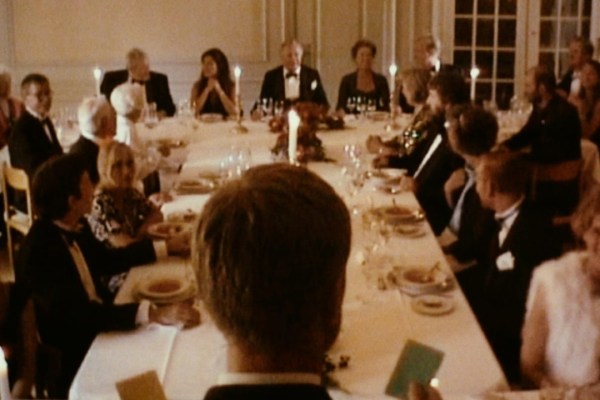

Stunningly shot in black-and-white, Tseden shows immaculate control over his long take, slow cinema-style as a Tibetan sheep herder becomes stuck in a Kafka-esque scenario making his identity card, but an encounter with a hairdresser suggests the possibility of a new life.
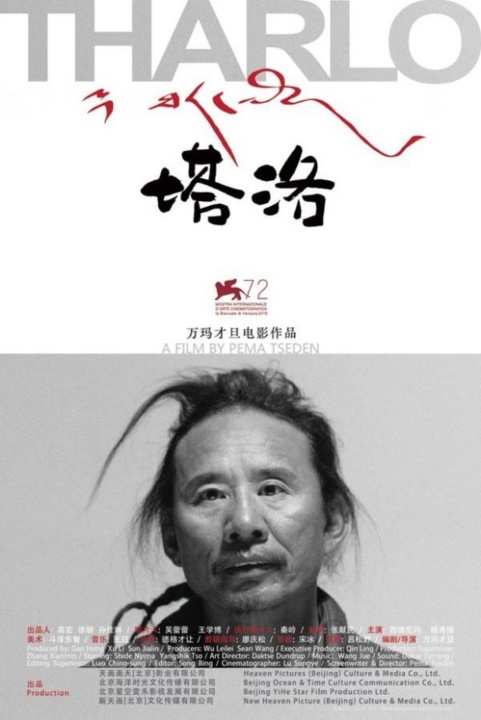
Review #2,856
Dir. Pema Tseden
2015 | Tibet | Drama | 123 min | 1.85:1 | Tibetan & Mandarin
PG (passed clean)
Cast: Shide Nyima, Yangchuk Tso, Jinpa, Tsemdo Thar
Plot: A Tibetan sheep herder goes to town to take a photo for his first identity card, when he meets a girl at the barber’s shop who changes the course of his life.
Awards: Nom. for Orrizonti Award (Venice); Won 1 Golden Horse – Best Adapted Screenplay; Nom. for 3 Golden Horses – Best Feature Film, Best Director, Best Cinematography
International Sales: Asian Shadows
Accessibility Index
Subject Matter: Moderate – New Beginnings; Identity & Existence
Narrative Style: Straightforward
Pace: Slow
Audience Type: General Arthouse
Viewed: Screener (as part of the Pema Tseden Retrospective)
Spoilers: No
I first started with Pema Tseden via the eye-opening Jinpa (2018) and then Balloon (2019), the latter I nearly walked out of when it had its Singapore premiere with the Singapore International Film Festival.
Tharlo brought me back to the late Tibetan filmmaker again and I must say it’s a great film that would be extraordinary to see on the big screen.
Stunningly shot in black-and-white, Tharlo is the art film par excellence, as Tseden shows immaculate control over his style, one characterised by long takes and the rhythm of slow cinema.
Yet, it compels not just with its cinematography (the extreme wide shots of the mountainous landscape are to die for) or the fantastic lead performance by Shide Nyima who plays the titular character, but in the little moments of movement within each scene, which reminds me of the Akira Kurosawa approach.
For instance, as Tharlo converses with a police officer in one scene, we see a kettle of boiling water pouting wisps of steam. Whether steam or a flag waving vigorously in the wind (ala Seven Samurai), these ‘movements’ draw the viewer’s attention to the mise-en-scene.
“Now I have 375. Among them, 133 are wethers, 168 ewes and 74 half-grown lambs.”
Tharlo may be deliberately paced but it is well alive, albeit with melancholy as the lonely lead, who herds sheep, becomes stuck in a Kafka-esque scenario when making his identity card.
He amusingly asks: no one knows who am I, so why do I need to prove who I am? This proof of identity may be a running joke but it also tells of the destabilised Tibetan identity, at odds with continuing Chinese assimilation.
A key sequence occurs in a karaoke room, when an ethnically Tibetan hairdresser on an opportune night out with Tharlo, belts out several Chinese language songs severely out of tune. When she asks him to sing a traditional Tibetan song, the contrast is starkly different.
While this encounter suggests the possibility of a new life of romance and companionship for Tharlo, the ‘spectre’ of Mao Zedong haunts him subconsciously.
A work about human connection and chronic naivety in a contested space of identity and belonging, Tharlo represents a high watermark in Tseden’s filmography.
Grade: A-
Trailer:
 Eternality Tan
[…] Tharlo (2015) […]
LikeLike
[…] Tharlo (2015) Tags: Chinese arthouse filmtharlo […]
LikeLike