






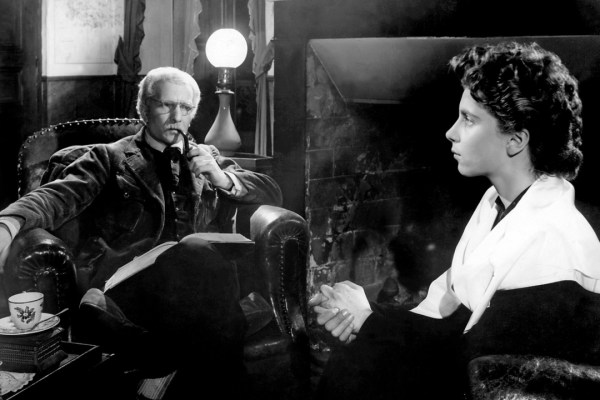
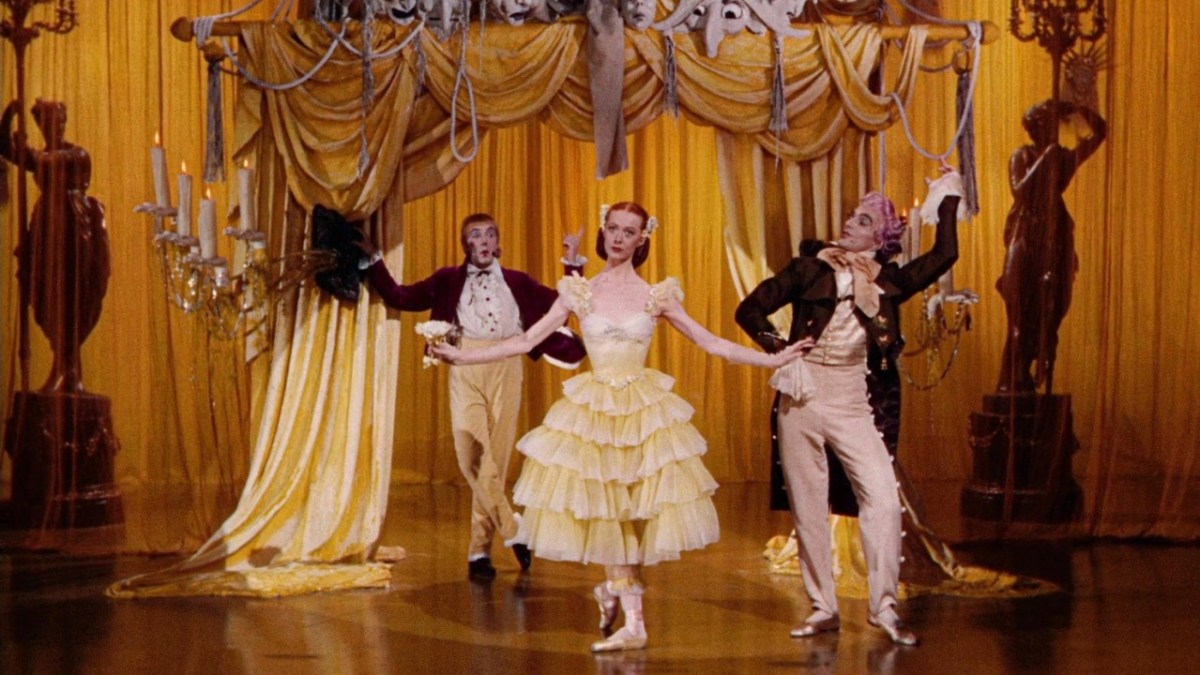
Reductively thought of as a ‘filmed opera’, Powell and Pressburger’s still underappreciated work of marvellous artifice and performative artistry tells of three tales of a poet who has no luck with the women he falls in love with.
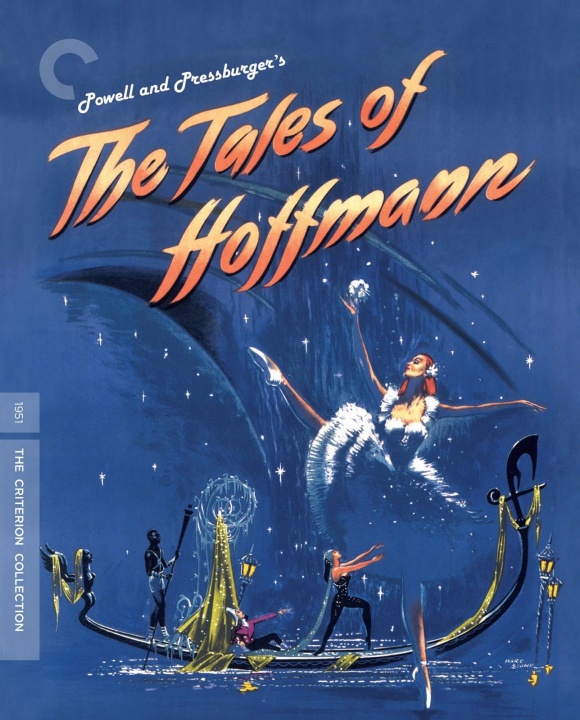
Review #2,816
Dir. Michael Powell & Emeric Pressburger
1951 | UK | Fantasy, Musical, Romance | 137 min | 1.33:1 | English
Not rated – likely to be PG
Cast: Moira Shearer, Robert Rounseville, Ludmilla Tcherina
Plot: A melancholy poet reflects on three women he loved and lost in the past: a mechanical performing doll, a Venetian courtesan, and the consumptive daughter of a celebrated composer.
Awards: Won Silver Bear – Best Musical (Berlinale); Won Special Award &Nom. for Palme d’Or (Cannes); Nom. for 2 Oscars – Best Art Direction-Set Decoration & Best Costume Design
Distributor: Studiocanal
Accessibility Index
Subject Matter: Moderate – Opera & Performance; Luckless Romances
Narrative Style: Straightforward/Triptych
Pace: Slightly Slow
Audience Type: Slightly Arthouse
Viewed: Criterion Blu-ray
Spoilers: No
Probably the last great collaboration between the legendary Michael Powell and Emeric Pressburger, The Tales of Hoffmann is unfortunately not as celebrated as some of their finest works, which are many, including The Life and Death of Colonel Blimp (1943), Black Narcissus (1947) and The Red Shoes (1948).
Maybe because it has been reduced to and negatively connoted as a ‘filmed opera’; however, it is anything but as the duo concocted one of the most visually ravishing works in their canon, utilising a ‘silent cinema’ style with narration and dialogue sung and danced to.
I’ll be honest—I had some trepidation going into this one because I don’t really know how to appreciate opera and actively stay away from it.
But all doubts were erased, albeit after some time into the first story (‘Tale of Olympia’), arguably the most interesting of the three tales that were presented, and it became easier to accept the film for what it was—a marvellous artifice, full of performative artistry and with some of the most inspired uses of visual effects of its era.
“You are so divine.”
All three tales feature Hoffmann (Robert Rounseville who remarkably acted, danced and sang while most of the other performers had a singing double) as a poet who has no luck with the women he falls in love with.
He doesn’t necessarily cut a tragic figure but he is an eternally sad person who unwittingly becomes more accepting of his own fate.
At a time when neorealism became an important cornerstone of cinema’s quest for a new kind of realism, one that reinforced reality as authentic and true-to-life rather than what Mark Cousins called the ‘closed romantic realism’ of Classical Hollywood, The Tales of Hoffmann may have felt quaintly out of place.
Today, one might marvel at its mise-en-scène, production design and elaborate choreography of sights and sounds—it goes beyond merely ‘filmed opera’, and in fact, returns us to a much simpler but just as imaginative time of Georges Méliès.
Grade: B+
Trailer:
Music:
 Eternality Tan