
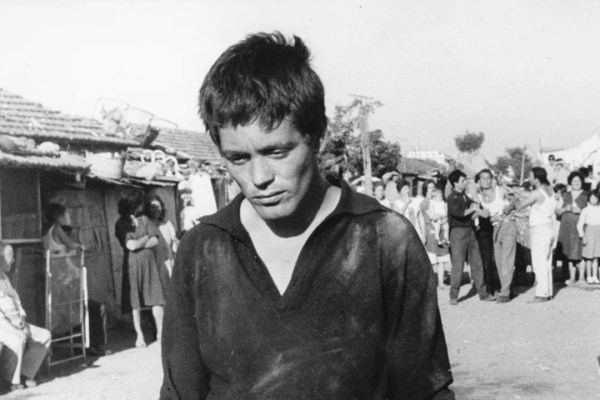





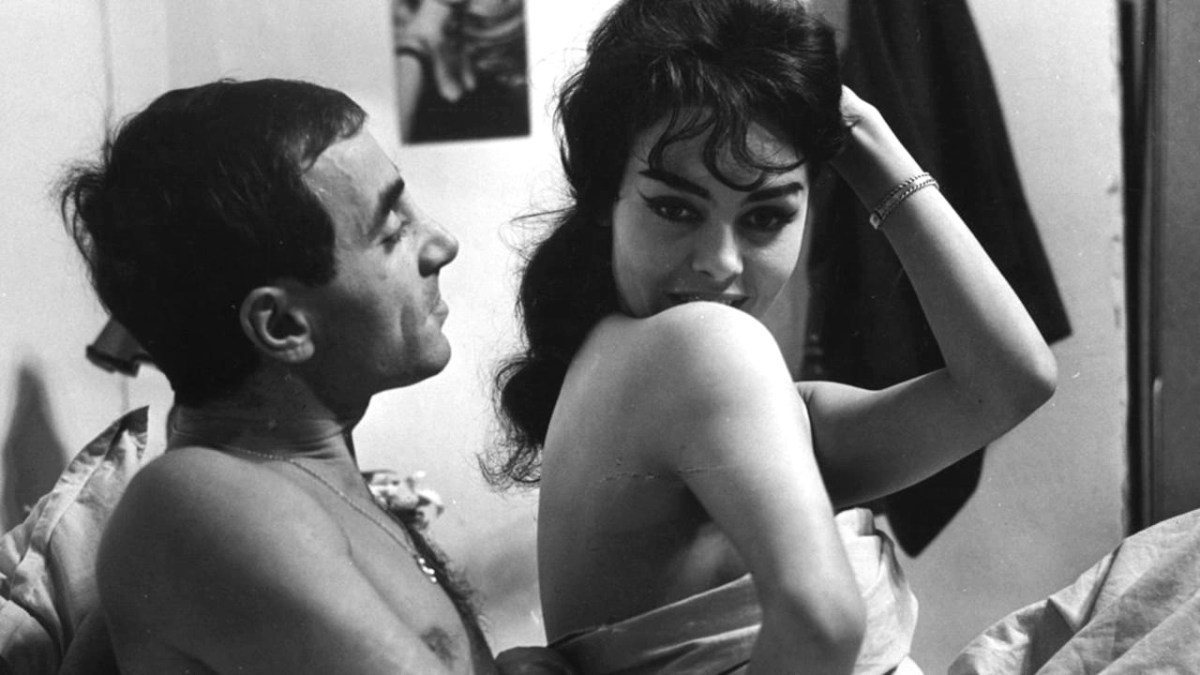
Truffaut’s overlooked sophomore feature, a playful crime-noir, is shot with a rare, improvisational style, about a bit-part piano player who unexpectedly gets embroiled with lowly if persistent gangsters.
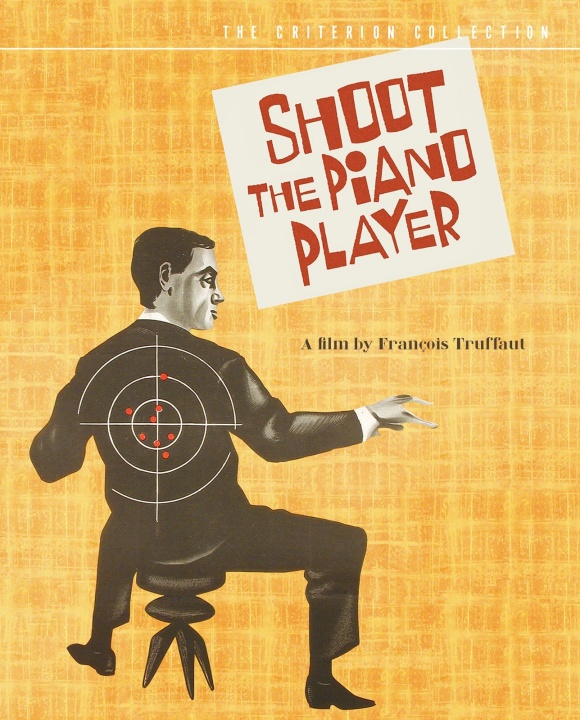
Review #2,815
Dir. Francois Truffaut
1960 | France | Drama, Crime, Romance | 81 min | 2.35:1 | French
Not rated – likely to be NC16 for some nudity and sexual references
Cast: Charles Aznavour, Marie Dubois, Nicole Berger
Plot: Charlie is a former classical pianist who has changed his name and now plays jazz in a grimy Paris bar. When Charlie’s brothers, Richard and Chico, surface and ask for Charlie’s help while on the run from gangsters they have scammed, he aids their escape.
Awards: –
Distributor: MK2
Accessibility Index
Subject Matter: Moderate – Crime & Small-Time Gangsters; Unintended Consequences
Narrative Style: Slightly Complex
Pace: Slightly Slow
Audience Type: Slightly Arthouse
Viewed: MUBI
Spoilers: No
Sandwiched between The 400 Blows (1959) and Jules and Jim (1962), two iconic hits of the French New Wave period, Shoot the Piano Player remains one of the overlooked works in Francois Truffaut’s early filmography.
Although a critical success, it didn’t translate well at the box-office, causing Truffaut to largely abandon in his later pictures the more improvisational style he had so exuberantly shown here.
It may have been adapted from a novel, but Shoot the Piano Player felt like something out of the mind of Jean-Luc Godard. Charlie, a piano player for a popular bar, becomes embroiled in a desperate situation when his estranged brother asks for his help to hide from two lowly if persistent gangsters.
This sparks the narrative which is essentially one long chase sprinkled with revenge scenarios and kidnapping plots. It might seem dark and bleak but there is nothing to take too seriously as Truffaut utilises tropes of the American classical crime noir and treats them in playful, sometimes irreverent ways.
“When you don’t love me anymore, tell me.”
Shoot the Piano Player is also a love story as Charlie becomes smitten with the bar’s waitress, but such is the film’s structural spontaneity that in its most dexterous moment (through a series of quick transitions) the story gracefully if unexpectedly shifts back in time, turning the narrative from one of pseudo-noir to an extended flashback of a forgotten past life—Charlie as a renowned pianist who would sell out concert halls, and a wife who has secrets of her own.
So a burgeoning romance and a fateful relationship combine, deftly paralleling Charlie’s dual identities. Whether a world-class musician or a bit-part player, no piano is large enough to shield him from the sudden unwanted attention (or bullets, for that matter).
Grade: B+
Music:
 Eternality Tan
Great reviews as always. I have not heard of this movie before, but your review has compelled me to check it out. I have always been fascinated with movies capturing the lives of classical composers, and this is one of them. The concept of the film capturing a piano player reminds me about Bradley Cooper’s Oscar-winner film “Maestro”. Both films capture the lives of pianists with strong dedication that are driven to accomplish a goal. So, I will definitely keep “Shoot the Piano Player” on my watchlist. Thanks as always for the strong film recommendations.
Here’s why I loved “Maestro”:
LikeLike