





Occasionally too plotty and maximalist in style for its own good, but it is no doubt a stunning sequel with loads of sci-fi spectacle and intrigue.

Review #2,771
Dir. Denis Villeneuve
2024 | USA | Sci-Fi, Drama, Action | 166 min | 2.39:1 | English
PG13 (passed clean) for sequences of strong violence, some suggestive material and brief strong language.
Cast: Timothee Chalamet, Zendaya, Rebecca Ferguson, Javier Bardem, Josh Brolin, Austin Butler, Florence Pugh, Dave Bautista, Christopher Walken, Lea Seydoux, Stellan Skarsgard, Charlotte Rampling
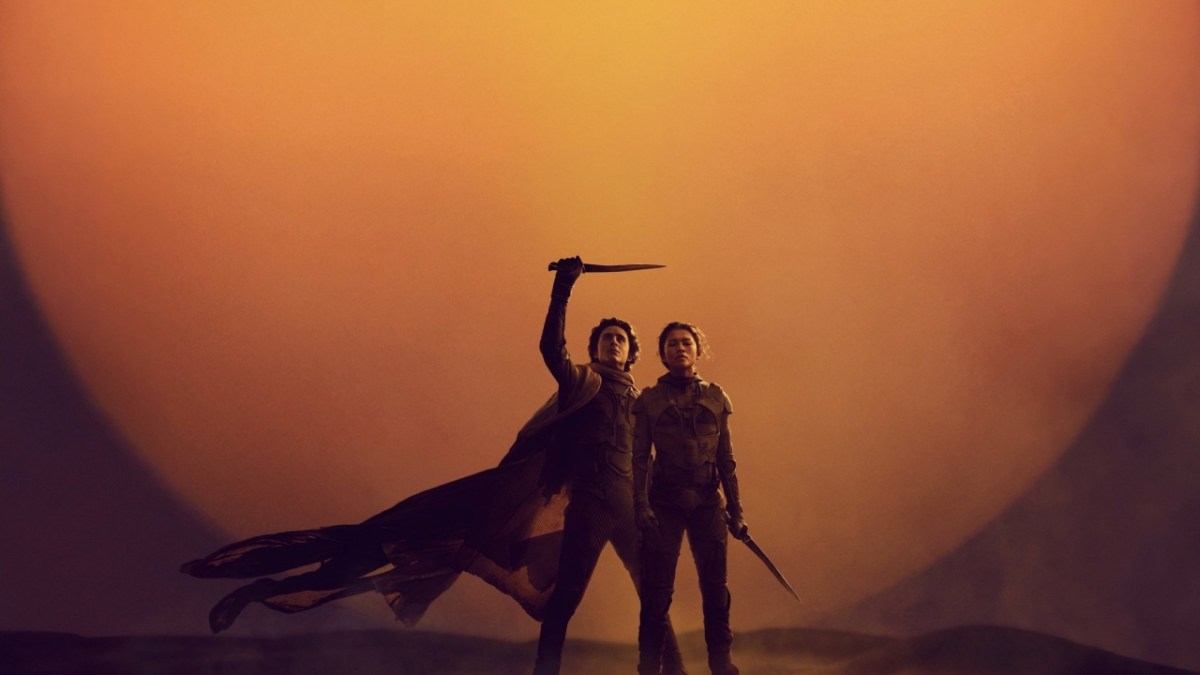
Plot: Follow the mythic journey of Paul Atreides as he unites with Chani and the Fremen while on a path of revenge against the conspirators who destroyed his family. Facing a choice between the love of his life and the fate of the known universe, Paul endeavors to prevent a terrible future only he can foresee.
Awards: Won 2 Oscars – Best Sound & Best Visual Effects & Nom. for 3 Oscars – Best Picture, Best Cinematography, Best Production Design
Distributor: Warner
Accessibility Index
Subject Matter: Moderate – Myths & Prophecies; Power Plays
Narrative Style: Slightly Complex
Pace: Normal
Audience Type: Mainstream
Viewed: In Theatres (Shaw Lido & Waterway Point IMAX)
Spoilers: No
I watched this twice in IMAX, yet I still found myself resonating more with the first film, just like what LOTR’s Fellowship of the Ring (2001) did for me aeons ago. I’m a sucker for world-building spectacles that take their time to immerse us.
Dune: Part One (2021) followed in the footsteps of Denis Villeneuve’s previous Arrival (2016) and Blade Runner 2049 (2017), deliberately-paced blockbusters that lured us in.
Dune: Part Two does it more aggressively, sucking us into the vortex, a deviation that perhaps allows more discerning audiences to be a tad more forgiving towards its occasional overplotting and uneven pacing, which feel most pronounced in its final act.
But as a sci-fi film, it ticks all the checkboxes and unabashedly calls to attention its aesthetic maximalism. An example of this is the monochromatic segment (apparently shot in infrared) celebrating the arrival of Feyd-Rautha, a new villainous supporting character played by Austin Butler.
But his character, like a few others played by Lea Seydoux, Christopher Walken and Florence Pugh, feels one-dimensional—we are told how to think about them and they barely offer anything emotionally. Even Stilgar (Javier Bardem), a fascinating character from the first picture, is reduced to the basic traits of a ‘hype man’.
However, as I said, it’s all pardoned because the task of adapting Frank Herbert’s source material remains somewhat unsurmountable in tentpole filmmaking.
“May thy knife chip and shatter.”
Even though the film runs for nearly three hours, there is still not enough time to properly lay things out. Nevertheless, we ought to be thankful for being blessed with a cinematic experience to behold.
Like Dune: Part One, an important aspect of the experience comes from Hans Zimmer’s music—here, he introduces a new ‘love’ theme, most prominent when it serenades the protagonists Paul (Timothee Chalamet) and Chani (Zendaya) whose mutual feelings for each other become clearer while relaxing atop a sand dune.
This theme appears to be a tribute to two of my favourite composers—Ennio Morricone (recalling his main theme from the 1988 miniseries Secret of the Sahara) and Vangelis (particularly the nostalgic and iconic synth sounds of the Yamaha CS-80).
Villeneuve has always been a conscientious filmmaker who knows how to lay the blocks one by one; Dune: Part Two is the first time we see him tempted to let it all go, relying to a large degree on pure faith in the spectacle.
The result is all the more stunning in the second viewing when those plot and pacing issues disappear, thus intensifying its maximalism in the most desirable way possible.
Grade: A-
Trailer:
Music:
 Eternality Tan
Great review! I’m really looking forward to watching this one soon once I get through last year’s Oscar contenders. I was such a massive fan of the original “Dune” so I’m curious to see whether Denis Villeneuve would be able to top it. I loved the depiction of the Middle East in the original movie. Here’s my review of the first “Dune”; https://huilahimovie.reviews/2021/10/28/dune-2021-movie-review/
LikeLiked by 1 person
[…] Dune: Part Two […]
LikeLike
[…] Dune: Part Two […]
LikeLike
[…] Visual Effects: It has to go to DUNE: PART TWO. No other 2024 film came […]
LikeLike