








Ray’s third adaptation of Rabindranath Tagore’s work late on in his career is a quietly-composed and deliberately-paced tale about the intertwining of domestic and national affairs.
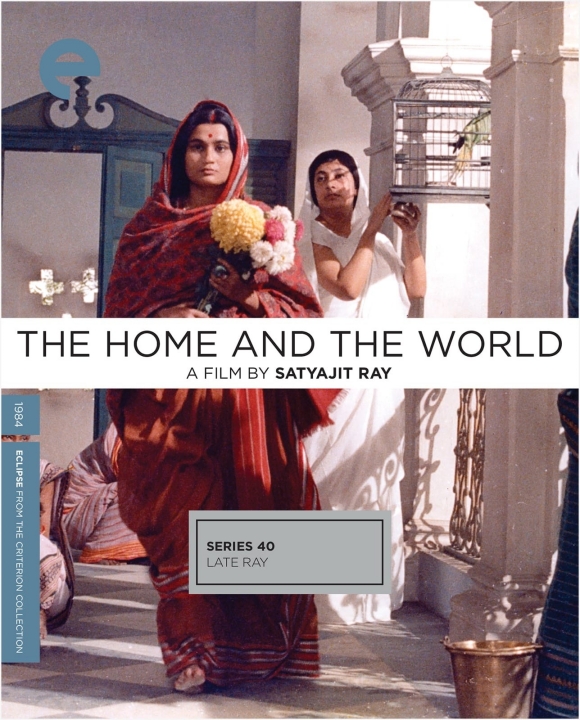
Dir. Satyajit Ray
1984 | India | Drama | 138 mins | 1.33:1 | Bengali
Not rated – likely to be PG
Cast: Soumitra Chatterjee, Victor Banerjee, Swatilekha Sengupta
Plot: A rich estate owner persuades his wife to leave the seclusion of the women’s quarters to meet one of his best friends to whom he is politically opposed. Tensions arise when she falls in love with his friend, reflecting growing political unrest outside the house.
Awards: Nom. for Palme d’Or (Cannes)
Source: National Film Development Corporation
Accessibility Index
Subject Matter: Moderate – Politics, Gender, Society
Narrative Style: Slightly Complex
Pace: Slightly Slow
Audience Type: Slightly Arthouse
Viewed: Criterion Eclipse DVD
Spoilers: No
Despite being obsessed with the writings of Rabindranath Tagore, it took Satyajit Ray until the last stage of his career to direct only his third adaptation of the Nobel Prize-winning writer’s material.
More than twenty years after Teen Kanya (1961) and Charulata (1964), the long-gestating The Home and the World finally saw the light of day and rightfully competed for the Palme d’Or at the Cannes Film Festival.
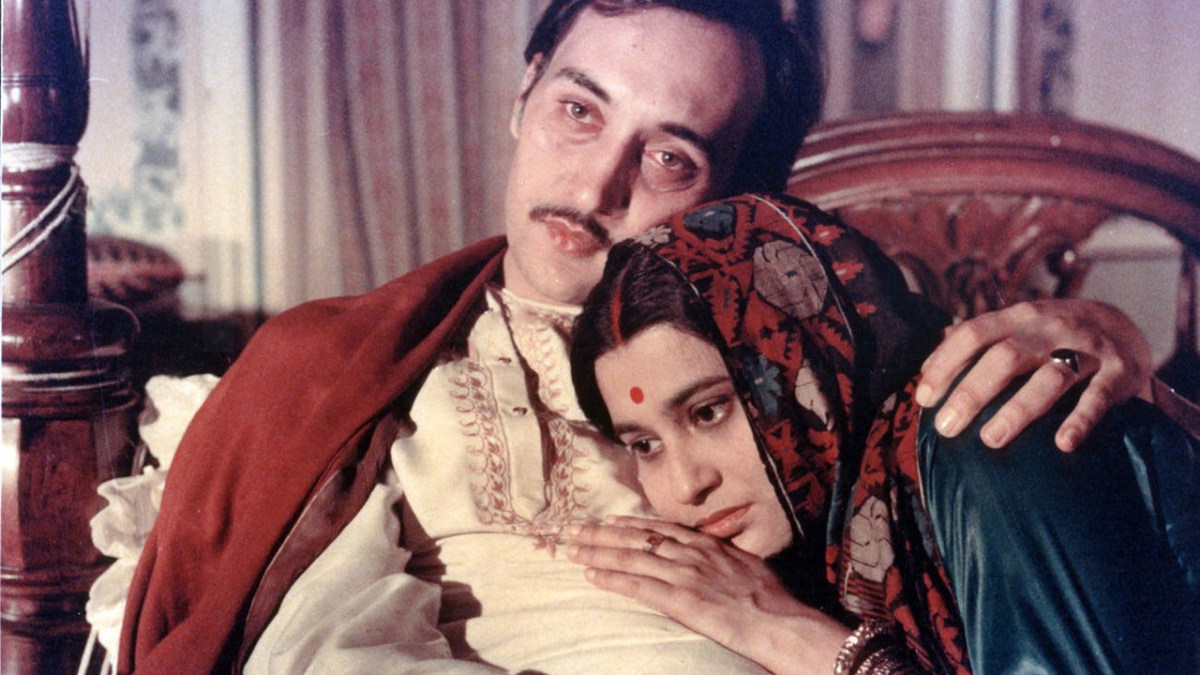
This is Ray at his most deliberately-paced, and his film is so quietly-composed that there is a sense of Zen-like stillness to the proceedings, particularly domestic scenes within the beautifully-shot interiors of the estate where Nikhilesh (Victor Banerjee), a wealthy landowner, and his wife, Bimala (Swatilekha Sengupta), reside.
Outside, it can hardly be any more different. A political revolution seems to be taking flight in the form of a radical swadeshi (meaning ‘of one’s own country’) movement led by Sandip (Soumitra Chatterjee), a good friend of Nikhilesh.
As the title suggests, there are domestic affairs and there are national affairs. Ray’s film is built entirely upon numerous dialectical tensions that are carefully drawn out and complexly intertwined.
For instance, Sandip wants his anti-British movement to disrupt the already fragile Hindu-Muslim relations for the greater good. Nikhilesh, who’s Western educated, wants emancipation for his wife, who is attracted to the rhetoric—and personality—of Sandip.
One might see The Home and the World as a typical love triangle story, but set against the historical backdrop of the Partition of Bengal in the 1900s, a period that Tagore lived through with personal experiences to share, Ray’s film is as warm and vivid as the palace’s candlelit rooms at dusk.
Although Sandip and Nikhilesh are at odds with each other ideologically, Bimala is the true focus of the film inasmuch as she might represent the duality that is ‘womanhood’ and ‘motherland’.
As domestic and national affairs begin to conflate, Ray’s steady gaze on Bimala through the graceful use of slow zooms and pullbacks allows us a way into her private thoughts, ones that may be too risky to reveal even for a woman who is free to think for herself.
Grade: A-
Clip:
Music:
 Eternality Tan
[…] away only three years later, with her last screen role in Satyajit Ray’s late career masterwork The Home and the World […]
LikeLike