




An editing masterclass that feels ahead of its time, this is Welles at his most playful and elusive—utterly fascinating if you surrender to his tricks, obvious or otherwise, as he slyly provokes with a thesis on fakery, expertise, illusion and truth.
Review #3,071
Dir. Orson Welles
1973 | France, Germany | Documentary | 88 mins | 1.66:1 | English, French & Spanish
PG (passed clean) for some sexual references
Cast: –
Plot: Documents the lives of infamous fakers Elmyr de Hory and Clifford Irving. De Hory, who later committed suicide to avoid more prison time, made his name by selling forged works of art by painters like Picasso and Matisse. Irving was infamous for writing a fake autobiography of Howard Hughes. Welles moves between documentary and fiction as he examines the fundamental elements of fraud and the people who commit fraud at the expense of others.
Awards: Official Selection (Cannes)
Source: Documentaire sur Grand Ecran
Accessibility Index
Subject Matter: Moderate – Fraud & Fakery; Expertise; Illusion & Manipulation
Narrative Style: Complex
Pace: Slightly Slow
Audience Type: Slightly Arthouse
Viewed: Criterion Blu-ray
Spoilers: No
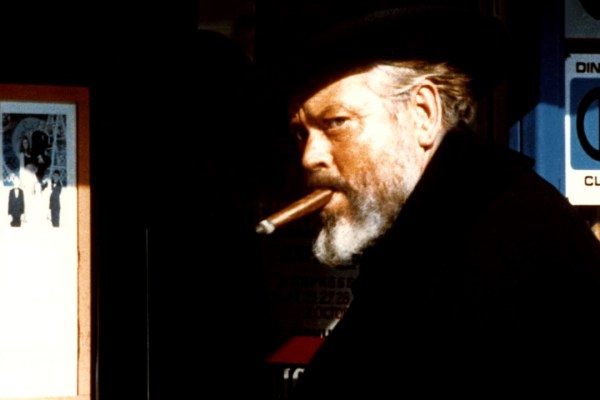
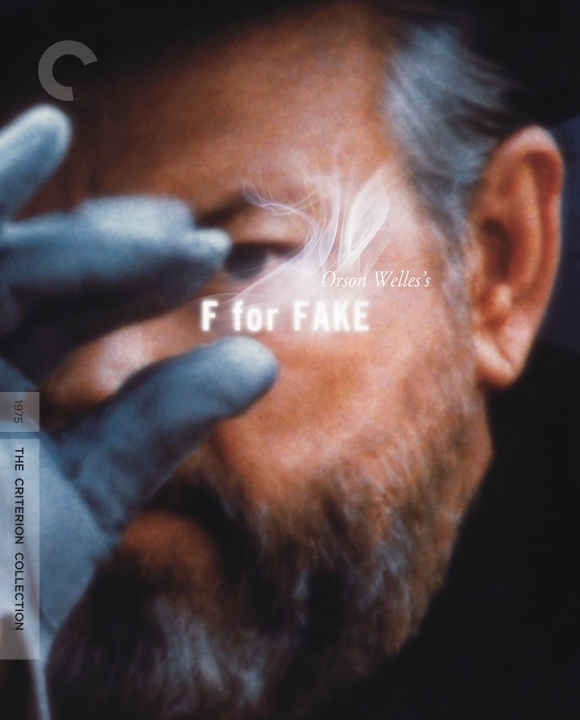
F for Fake is a movie you need to open enough of yourself to get into. You must also share Orson Welles’s quaint sensibilities and appreciate his masterful sleight of hand at work. His last proper feature is an essayistic documentary that explores ideas of truth (and half-truths), deception, and lies.
And Welles does it in a style that invites disbelief, but at the same time comes across as fairly believable. He self-proclaims to be a charlatan, conjuring up tricks and mind games, leading the way with his physical presence and natural charisma.
In F for Fake, the three main persons of interest revolve around Welles’ thesis—that of fakery and its propagation. One of them is Elmyr de Hory, possibly the most talented (and infamous) of all art forgers.
The other, with whom de Hory has a symbiotic relationship, is Clifford Irving, a master trickster himself who claimed to have written an autobiography for the reclusive Howard Hughes, one of the great American enigmas of the 20th century.
Welles interviews both, making use of an assortment of filmed and archival footage to shape and contextualise the cultural and political impact of the duo’s antics. All this is done cheekily—Welles tempts you to treat his film as an intellectual portraiture of the nature of truth, but what underlies the whole experiment is, of course, the work of an accidental trickster.
“What we professional liars hope to serve is truth. I’m afraid the pompous word for that is ‘art’.”
The third subject of F for Fake is, not surprisingly, Welles himself—from his unexpected pre-WWII radio farce on The War of the Worlds to… well, you will find out when you see the film. Was this a final hurrah by Welles for Welles? There’s a sense of a fading artist reminding us of his value.
The film is an editing masterclass for sure, even ahead of its time, I daresay, like a labyrinthine collage of assaultive ideas and personalities. But unless you can resonate with Welles and his bag of candies, F for Fake won’t work as fascinatingly as you might think.
I found it a bit of a struggle to enjoy when I first saw it a decade ago, with my zero knowledge of de Hory and Irving, and relative unfamiliarity with Welles (outside of the early-peak ‘curse’ that was Citizen Kane) being the main culprits.
But as I enter a newfound phase of personal adulation for Welles’ incredible body of work, popping in my trusty Criterion Blu-ray disc again has yielded immeasurable rewards.
Grade: A
Trailer:
Music:
 Eternality Tan
[…] as Dunye shows how strong her sleight-of-hand game is. All I can say is that Orson Welles in F for Fake (1973) would have been proud of […]
LikeLike