







Oshima’s WWII anti-war melodrama feels more like theatre than cinema, as the quartet of compelling actors (Bowie, Sakamoto, Conti, and Kitano), queer undercurrents, and a highly emotional epilogue elevate it into something unexpectedly sublime.
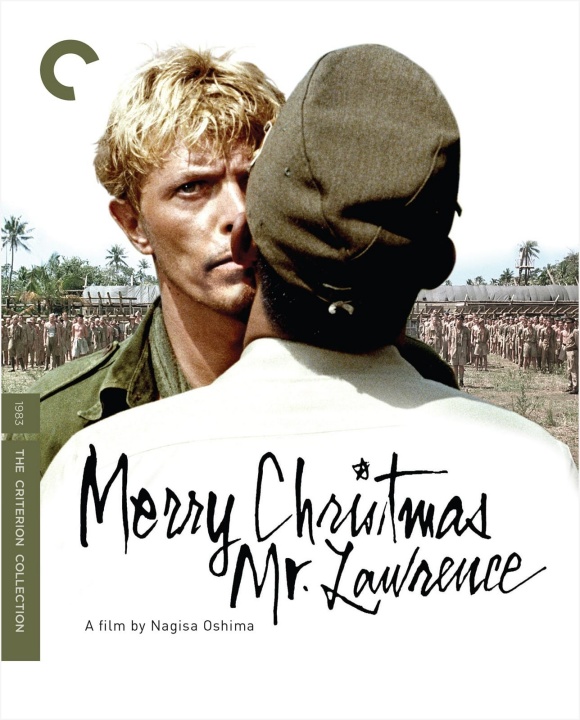
Review #3,068
Dir. Nagisa Oshima
1983 | UK, Japan | Drama, War | 123min | 1.78:1 | English & Japanese
PG13 (passed clean) for some coarse language and disturbing scenes
Cast: David Bowie, Tom Conti, Ryuichi Sakamoto, Takeshi Kitano, Jack Thompson
Plot: During WWII, a British colonel tries to bridge the cultural divides between a British POW and the Japanese camp commander in order to avoid bloodshed.
Awards: Nom. for Palme d’Or (Cannes); Won Best Original Score (BAFTA)
Source/Distributor: HanWay Films
Accessibility Index
Subject Matter: Moderate – WWII; Prisoners-of-War; Brotherhood & Dignity; Cultural Divide
Narrative Style: Slightly Complex
Pace: Slightly Slow
Audience Type: Slightly Arthouse
Viewed: Criterion Blu-ray
Spoilers: No
I’ve listened to Ryuichi Sakamoto’s famous main theme for Merry Christmas Mr. Lawrence more than a thousand times and even self-learnt it on the guitar and piano. That it took me more than a decade to pop in the Blu-ray for the first time is a testament to my chronic procrastination.
I’m glad to have finally taken the plunge, and with several of Nagisa Oshima’s films under my belt, Mr. Lawrence felt more like an odd curiosity. When the iconic theme blessed my ears, it felt weird, as if someone had inserted an erroneous piece of music.
The film is also in a mix of Japanese and English, with the Japanese actors speaking some of the most incomprehensibly accented English I’ve ever heard; the British characters don’t fare significantly better either (the Criterion version, unfortunately, didn’t have English subtitles for the English parts).
For quite some time, I was trying to figure out what kind of film Oshima envisioned, though it was clearly an anti-war piece. The clunky dialogue aside, what eventually came through were the quartet of compelling actors, from the two rock stars in David Bowie and Sakamoto, as well as Tom Conti and Takeshi Kitano, with the Japanese half making their acting debuts.
“Tonight, I’m Father Christmas.”
Much of Oshima’s work is set in a Japanese prisoners-of-war camp in WWII, led by a camp commandant (Sakamoto) who has taken a keen interest in a new prisoner, a British Major (Bowie). Repressed queer desires are set against the Japanese tradition of bushido, while the titular Lieutenant-Colonel Lawrence (Conti), who is fluent in Japanese, strikes up a contested kinship with a thuggish Sergeant (Kitano).
Oshima treats the story like the melodrama that it is, heightening dramatic moments through explicit staging, with flashbacks that seem otherworldly. I daresay Mr. Lawrence feels more like theatre than cinema, and maybe that’s why cult cinephiles have co-opted it into their ever-broadening canon.
The gay undertones (seen as an evil spirit that needs to be eradicated), exploration of cultural prejudice and mutual understanding, and harrowing depictions of domination and submission all feed into a work that culminates in an emotional epilogue that operates at the level of sublime mastery.
Grade: A-
Trailer:
Music:
 Eternality Tan