
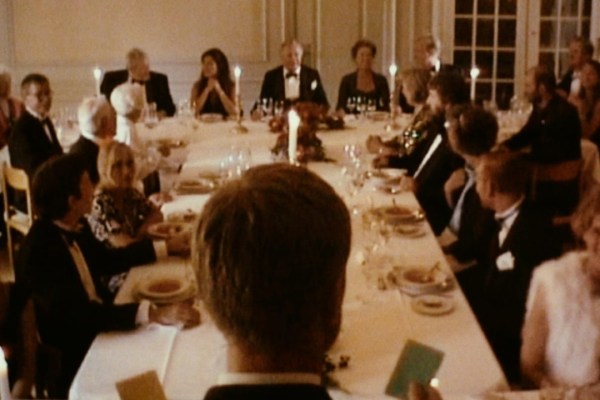

The first-ever feature made by a Black lesbian filmmaker, this deceptively smart auto-fictive engagement with the ‘absence’ of Black film history and personal identity asks us to recognise the voices that are missing in the age-old narratives that have come to pass.

Review #3,041
Dir. Cheryl Dunye
1996 | USA | Drama, Romance | 84min | 1.33:1 | English
Not rated – likely to be R21 for homosexual scenes and nudity
Cast: Cheryl Dunye, Guinevere Turner, Valarie Walker, Lisa Marie Bronson, Cheryl Clarke
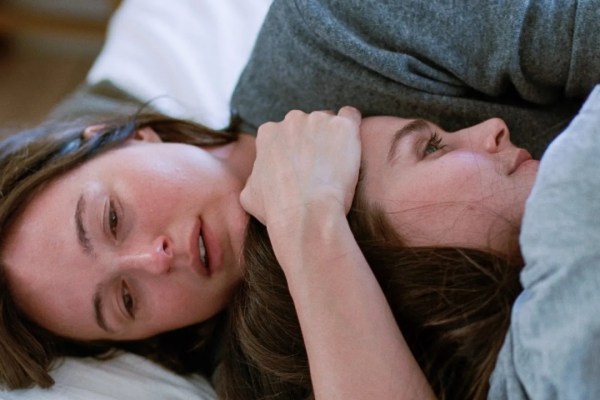
Plot: Cheryl, an aspiring Black lesbian filmmaker working in a video store, is making a documentary about a black actress from the 1930s who was typecast, credited only as “the watermelon woman.” While uncovering the meaning of her life, Cheryl simultaneously experiences an upheaval in her own.
Awards: Won Teddy Award (Berlinale)
Source: Jingletown Films
Accessibility Index
Subject Matter: Moderate – 1930s Black Actresses; Meta-Filmmaking; LGBTQ; Black Film History; Personal Identity
Narrative Style: Slightly Complex
Pace: Normal
Audience Type: Cult Mainstream
Viewed: MUBI
Spoilers: No
It’s quite amazing that after all these years of watching different kinds of docu-dramas, from the run-of-the-mill types to something as profound as, say, Kiarostami’s Close-Up (1990), I still feel like I’m at the tip of the iceberg after catching The Watermelon Woman.
It is such a discovery and a revelation. I first noticed the film when it quite recently entered the Criterion Collection (not a surprise considering their rather conspicuous efforts to include more Black American filmmakers nowadays).
Directed by Cheryl Dunye, who is apparently the first-ever Black lesbian filmmaker to make a feature film, The Watermelon Woman is hard to pigeonhole because it’s not just a drama masquerading as a documentary (and vice-versa, such is its porous form and structure); it is wholly a new vibe in itself. I’ve never encountered something so amateurish, yet it fits not just its construct but also that of its time.
A self-conscious and self-reflexive piece of autofiction that is completely embedded in the mid-‘90s—when VHS rentals, pay phones, and helpdesk librarians thrived—The Watermelon Woman sees Cheryl, the filmmaker-cum-video store employee, encountering an intriguing face in a movie from Hollywood’s early talkies era.
“We’re lesbians, remember, Cheryl? We’re into female-to-female attraction.”
That face, a black woman, belongs to an unnamed actress, simply known as ‘The Watermelon Woman’. With great interest, Dunye burrows herself into research and documents the process.
A work that deals head-on with the absence of recognition for black actresses from that era, The Watermelon Woman explores the nature of film history (e.g., who gets to write it) and personal identity, as intersected by aspects of race, gender, and sexual orientation.
Yet, this is not all didactic and serious, as Dunye shows how strong her sleight-of-hand game is. All I can say is that Orson Welles in F for Fake (1973) would have been proud of her.
At the same time, and as earlier indicated, there is a sense that The Watermelon Woman feels like a class assignment, the dead giveaway being its no-frills, all-gimmicky editing style that reminds me of those days trying out basic Windows Movie Maker.
Whether intentional or not, Dunye’s film is so much more than the sum of its parts. It asks us to recognise the voices that are missing in the age-old narratives that have come to pass. In other words, how do we know what we know about people that we know so little about?
Grade: A-
Promo Clip:
Music:
 Eternality Tan