




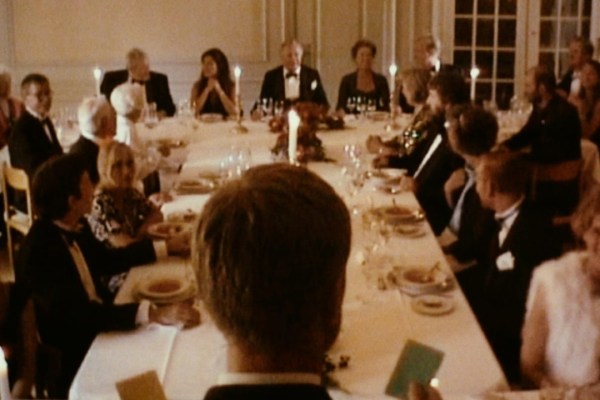


A tale of beauty and decay, Visconti’s cinematic requiem for Thomas Mann sees Dirk Bogarde, in a quiet, despairing performance, playing an ageing composer obsessed with the perfect looks of a teenage boy, accompanied generously by Mahler’s heart-aching ‘Adagietto’.
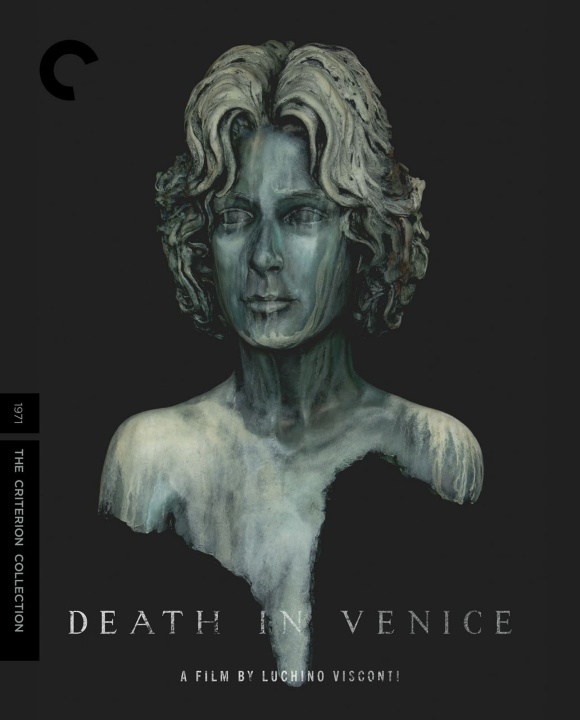
Review #3,038
Dir. Luchino Visconti
1971 | Italy, France | Drama | 131min | 2.35:1 | English & other languages
PG (passed clean) for some mature themes
Cast: Dirk Bogarde, Bjorn Andresen, Romolo Valli, Mark Burns, Nora Ricci
Plot: Composer Gustave Aschenbach travels to a Venetian seaside resort in search of repose, but finds no peace, for he soon develops a troubling attraction to an adolescent boy, Tadzio, who embodies an ideal of beauty that Aschenbach has long sought.
Awards: Won 25th Anniversary Prize & Nom. for Palme d’Or (Cannes); Nom. for Best Costume Design (Oscars)
Distributor: Warner Bros
Accessibility Index
Subject Matter: Moderate – Youth & Beauty; Attraction; Death & Decay
Narrative Style: Slightly Complex
Pace: Slightly Slow
Audience Type: Slightly Arthouse
Viewed: Criterion Blu-ray
Spoilers: No
It shouldn’t have come as a surprise to anyone in the early 1970s into both literature and cinema when Luchino Visconti announced that he would adapt Thomas Mann’s infamous 1912 novella, ‘Death in Venice’.
After all, the Italian auteur met up with Mann in 1951, four years before the latter’s passing, as he wanted to adapt the German author’s ‘The Magic Mountain’, albeit without any significant progress.
So, we have here in Death in Venice, at least, Visconti’s deferred cinematic love letter (or is it requiem?) to Mann, to the great composer Gustav Mahler, and to that elusive ‘ideal beauty’ that would paralyse the protagonist, Gustav von Aschenbach.
Played by Dirk Bogarde in a performance of quiet vulnerability and despair, Aschenbach is an implicit stand-in for Mahler, a major tweak from the book by Visconti so that, well, he has the excuse of repeatedly playing the heart-aching ‘Adagietto – Symphony No. 5’ during several long stretches in the film where dialogue is unnecessary.
It is a very beautiful film, I must say—and I love Mahler, so I don’t mind all that indulgence. The controversy, however, comes from the casting of Bjorn Andresen, whom Visconti not only took ages to find, but also documented publicly his search.
“You must never smile like that at anyone.”
Forever known as ‘the most beautiful boy in the world’, Andresen would play Tadzio, the teenager that Aschenbach is infatuated with after a chance encounter in the lobby of his hotel, where he is recuperating from an illness.
Many have lamented Visconti’s explicit treatment of queer desire between an old man and a young boy, particularly how the camera (operated by Pasqualino De Santis, Gianfranco Rosi’s go-to DP) pans and lingers on Tadzio.
But these critics also missed the point of cinema: it is the medium for looking, searching, locating… Here, Aschenbach’s gaze is one of longing and contemplation as he beholds youth and beauty, something that, with time having the last word, he can never hope to repossess.
As the city reeks of a slow death from a contagious plague that has started to infect people, Visconti asks us to accept that decay, old age, and failure are also part of life. In fact, Aschenbach’s renowned career in music has all but de-composed after the disastrous premiere of his latest work.
Grade: A-
Trailer:
Music:
 Eternality Tan