









Welles’ butchered studio film remains a remarkable showcase of his storytelling prowess, one that is haunted by deep regrets and vicious jealousies, as an aristocratic family faces inevitable decline in a modernising world.
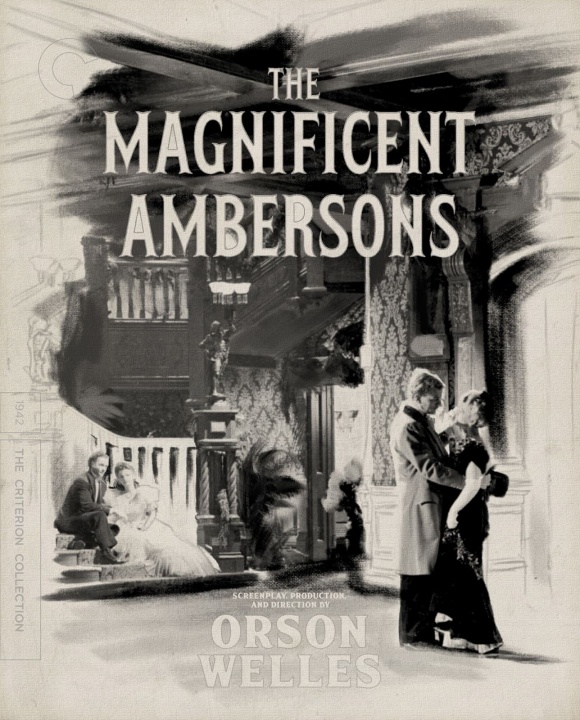
Review #3,018
Dir. Orson Welles
1942 | USA | Drama, Romance | 88min | 1.37:1 | English
Not rated – likely to be PG
Cast: Joseph Cotten, Dolores Costello, Anne Baxter, Tim Holt, Agnes Moorehead
Plot: The spoiled young heir to the decaying Amberson fortune comes between his widowed mother and the man she has always loved.
Awards: Nom. for 4 Oscars – Best Picture, Best Supporting Actress, Best Cinematography & Best Art Direction-Interior Decoration
Distributor: Warner Bros
Accessibility Index
Subject Matter: Moderate – Tradition vs. Modernity; Decline of Wealthy Family; Regrets & Jealousies
Narrative Style: Slightly Complex
Pace: Normal
Audience Type: Slightly Mainstream
Viewed: Criterion Blu-ray
Spoilers: No
One of cinema’s most frustrating ‘what-ifs’, The Magnificent Ambersons only exists now as a truncated cut that runs close to 90 minutes, with Orson Welles’ original 40+ minute footage excised by RKO and destroyed.
Any glimmer of hope that duplicates of the missing reels are hiding in perfect condition in some dingy basement of a film archive somewhere in the world feels more like delusional thinking as the decades continue to pass.
Short of a stupendous miracle, cinephiles can take heart that Ambersons, in its present form, is actually very good, though that doesn’t imply that the studio’s actions were right.
Welles imbues his adaptation of Booth Tarkington’s novel with a bountiful sense of spiritedness, through his restless camerawork, dynamic compositions and eager narration (even the end credits are narrated!), yet the film is intrinsically haunted by an even more powerful gust of bleakness, as deep regrets and vicious jealousies destabilise the wealthy Amberson family over time.
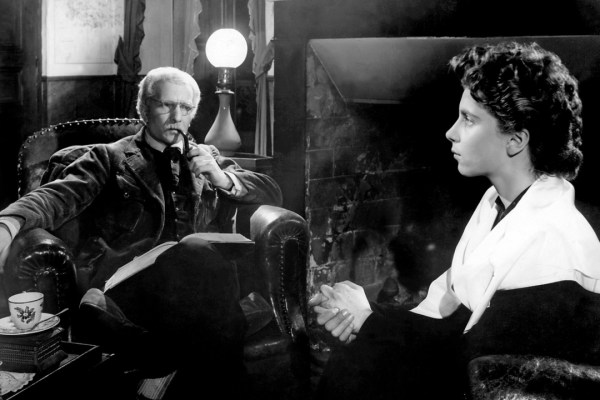
With impressive, and at times, heartbreaking performances from a cast that include Joseph Cotten, Tim Holt, silent film star Dolores Costello, All About Eve’s Anne Baxter, and particularly, Agnes Moorehead, who earned one of the film’s four Oscar nominations for Best Supporting Actress, The Magnificent Ambersons compels with its zesty script that makes every character, detestable or otherwise, seems novelistically larger than life.
“There aren’t any old times. When times are gone, they’re not old, they’re dead. There aren’t any times but new times.”
Most of all, Welles’ work is about time passing, as the invention of automobiles (as cranky as they had been in those early days) portends an inevitable new world of change, away from horse-pulled carriages.
In fact, Cotton plays an automobile inventor, and his daughter (Baxter) holds her own as a confident young woman who doesn’t get swayed by men’s antics (a kind of proto-feminist, I’d say), showing us the immense contrast with the conservatism and entitlement that the Ambersons thrive in.
Yet, as the new world beckons and this rich family declines as slowly and surely as the walls of their decaying mansion, Welles seems to also hint at the unchecked corporatised capitalism that would rear its ugly, exploitative head—in the hands of just a few elites, what’s the difference really between the wealth of an aristocratic family and those generated by late capitalism?
This would make a great triple-bill with Satyajit Ray’s The Music Room (1958) and Luchino Visconti’s The Leopard (1963) about the end of an era for, well, certain people.
Grade: A
Trailer:
Music:
 Eternality Tan