





This intense Turkish Berlinale Golden Bear winner, with one of the most sickening lead characters in world cinema, is about the blatant abuse of self-imposed power, as a greedy man builds dams to stop water from irrigating the lands of his neighbours.

Review #3,002
Dir. Metin Erksan
1963 | Turkey | Drama | 90min | 1.33:1 | Turkish
Not rated – likely to be NC16 for some sexual references
Cast: Hulya Koçyigit, Erol Tas, Ulvi Dogan
Plot: A scheming tobacco farmer sets out to ruin his competition by diverting the local water to his own property.
Awards: Won Golden Bear (Berlinale)
Source: World Cinema Project
Accessibility Index
Subject Matter: Moderate – Greed & Lust; Abuse of Power & Injustice; Farm Irrigation
Narrative Style: Straightforward
Pace: Slightly Slow
Audience Type: Slightly Arthouse
Viewed: Criterion Blu-ray
Spoilers: No
If there is ever a contender for one of the most sickening lead characters in world cinema, the one in Dry Summer will surely land a nod.
Osman, the selfish and greedy man that he is, decides to unilaterally build a series of dams to block water from reaching his neighbours.
Things don’t improve after a legal tussle, and so as the impending summer draws nearer, everyone’s on edge as farming with water is already difficult in these parched Turkish lands. Osman’s’ brother, Hasan, doesn’t agree with his brother’s antics but remains compliant due to hierarchy.
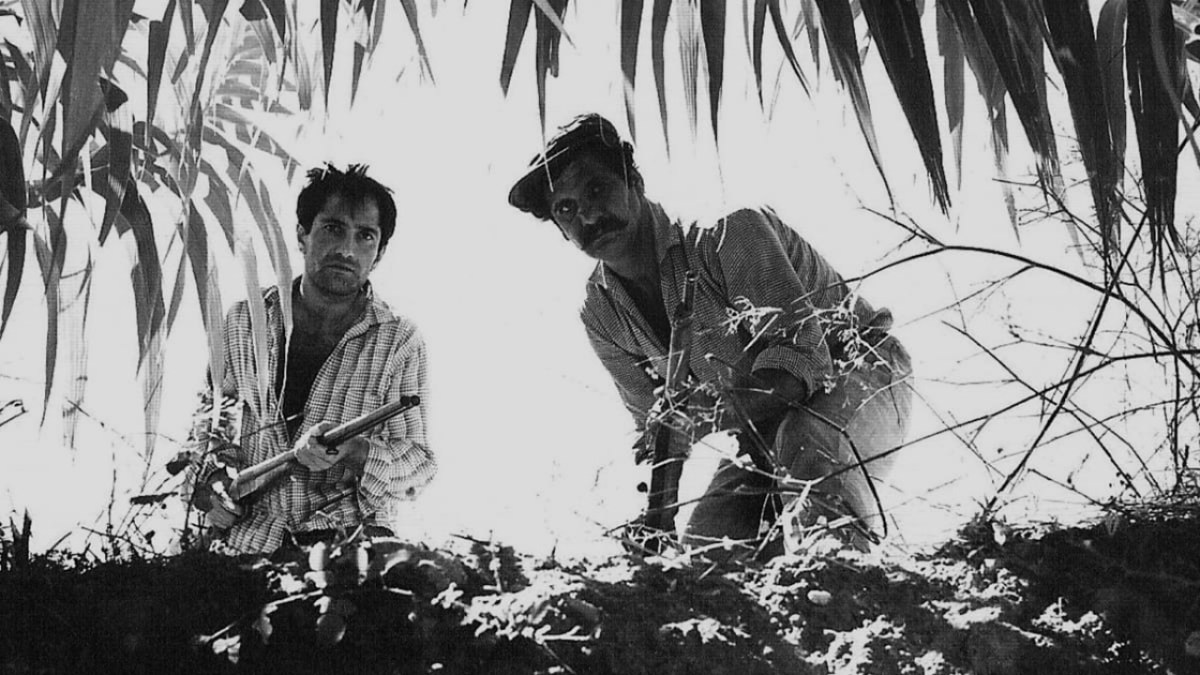
Dry Summer, the first-ever Turkish film to win a major prize at a top-tier international film festival (the Berlinale Golden Bear no less), sears into your brain with its intensity, be it the blatant abuse of self-imposed power (and in numerous scenes, Osman’s disgustingly lustful behaviour towards Hasan’s newly-wedded wife), or the at times impressionistic display of light and shadow.
“Water is the earth’s blood, you can’t cut it off.”
While working mostly in the conventions of plot, director Metin Erksan imbues the film’s visual style with wild angles and symbolic framing, suggesting that power is wielded by the one who controls the frame.
Osman, who seems to be able to control his fate but inevitably bears (or shall we say, defers) the consequences of increasing, violent escalations against a rising, angry mob, must contend with the chaos he has unleashed.
Erksan’s choice of using more Western-sounding experimental dissonant music in scenes of conflict is an inspired one, a direct contrast to the more ethnically localised plucking of a stringed instrument in other scenes.
Dry Summer would make an excellent thematic double-bill with Egyptian great Youssef Chahine’s earlier Cannes Palme d’Or-nominated The Blazing Sun (1954), also about farming, water issues, romantic dilemmas, with the added context of class exploitation.
However, if you are squeamish about animal violence, please give Dry Summer a miss. There are two needless shots that cross the moral lines, marring somewhat this Turkish classic for the ages.
Grade: A-
Promo Clip:
 Eternality Tan
[…] Dry Summer (1963) […]
LikeLike