
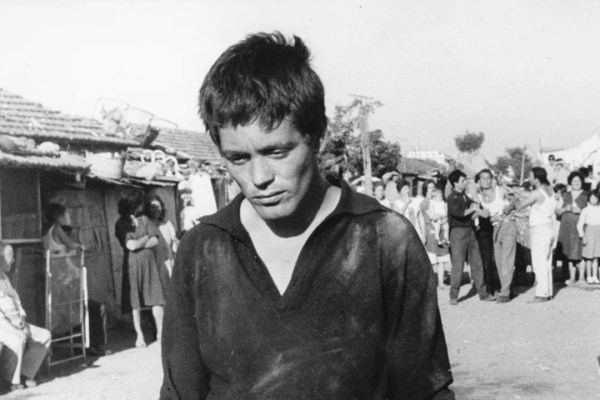







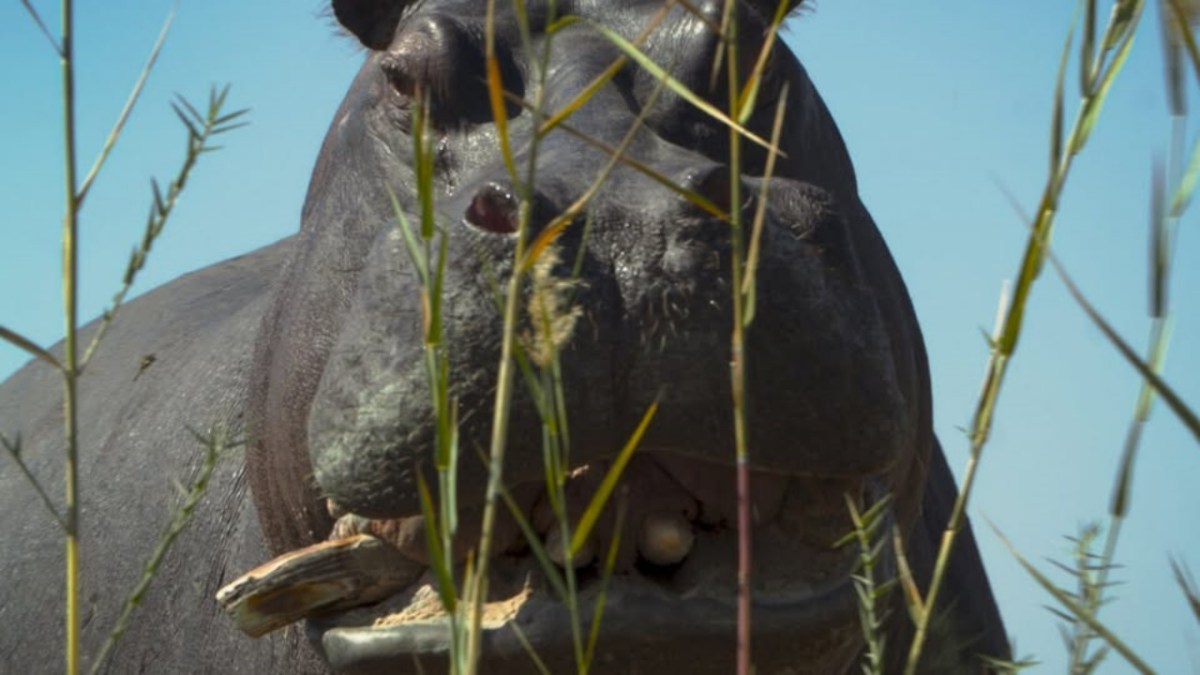
An African hippo is flown to South America in this thoughtful allegory of forced capture, exploitation and fearmongering, with its nebulous cinematic form and unconventional ‘myth-telling’ likely to impress adventurous cinephiles.

Review #2,959
Dir. Nelson Carlo de los Santos Arias
2024 | Dominican Republic, Namibia | Drama, Experimental | 122min | 1.39:1 | Spanish, Afrikaans & German
Not rated – likely to be NC16 for coarse language
Cast: Jhon Narvaez, Sor María Rios, Fareed Matjila, Harmony Ahalwa, Jorge Puntillon Garcia
Plot: A voice that claims to be the ghost of Pepe, the first and only hippopotamus ever killed in the Americas, tells his story. Beginning in Southern Africa and moving to South America, Pepe narrates his eventful life—from being owned by Colombian drug baron Pablo Escobar to his final days roaming free.
Awards: Won Silver Bear – Best Director (Berlinale)
International Sales Monte & Culebra
Accessibility Index
Subject Matter: Hippopotamus; New Environment; Rural Towns; Exploitation
Narrative Style: Slightly Complex/Experimental
Pace: Slightly Slow
Audience Type: General Arthouse
Viewed: MUBI
Spoilers: No
The Latin American region has always piqued my interest in my continuing cinema exploration journey. Hence, with great satisfaction, I was elated to discover a work so invigorating, creative and inspiring that it was quite unlike anything I had seen before.
That film is Pepe, directed by Nelson Carlo de los Santos Arias, and from the Dominican Republic, which could be the first ever film I have seen from the country.
Pepe isn’t about the famous Portuguese footballing defender or the even more famous green frog meme; instead, it is about an ordinary hippopotamus from Southern Africa.
Unfortunately, this hippo is unceremoniously taken out of its habitat and flown to South America to be raised on a farm.
An allegory of forced capture, exploitation and fearmongering (hippos escape into the local river causing chronic anxieties in fishermen), Pepe employs a fluid mix of documentary techniques and fictive storytelling modes, sometimes even attempting a more experimental, free-association form.
“What did I do to be dead?”
With numerous segments centering on the hippos that won’t look out of place in a National Geographic programme (though the director renders it with a more poetic eye than its observational gaze would suggest), the film also operates as an ethnographical piece on the men and women who tend to the land while enjoying life’s simple pleasures.
An interesting sound device used reminds of Dahomey (2024), where a disembodied voice represents the ‘dead’, speaking about the futility and enigma of its past.
In Mati Diop’s work, this comes from a French-stolen Beninese artifact; in Pepe, it is a dead African hippo in a strange faraway land. Coincidentally, the two films competed at the Berlinale, with both winning major prizes.
With a quirky use of an assortment of music, sometimes percussive or atonal, Pepe will likely impress adventurous cinephiles with its nebulous form and unconventional ‘myth-telling’.
Grade: A-
Trailer:
 Eternality Tan
[…] Director: Nelson Carlo de los Santos Arias for PEPE. An unconventional ‘myth-telling’ film for adventurous cinephiles, helmed by a […]
LikeLike
[…] seeing Pepe (2024), which vibed entirely with the adventurous cinephile side of me, I made it a point to watch […]
LikeLike