








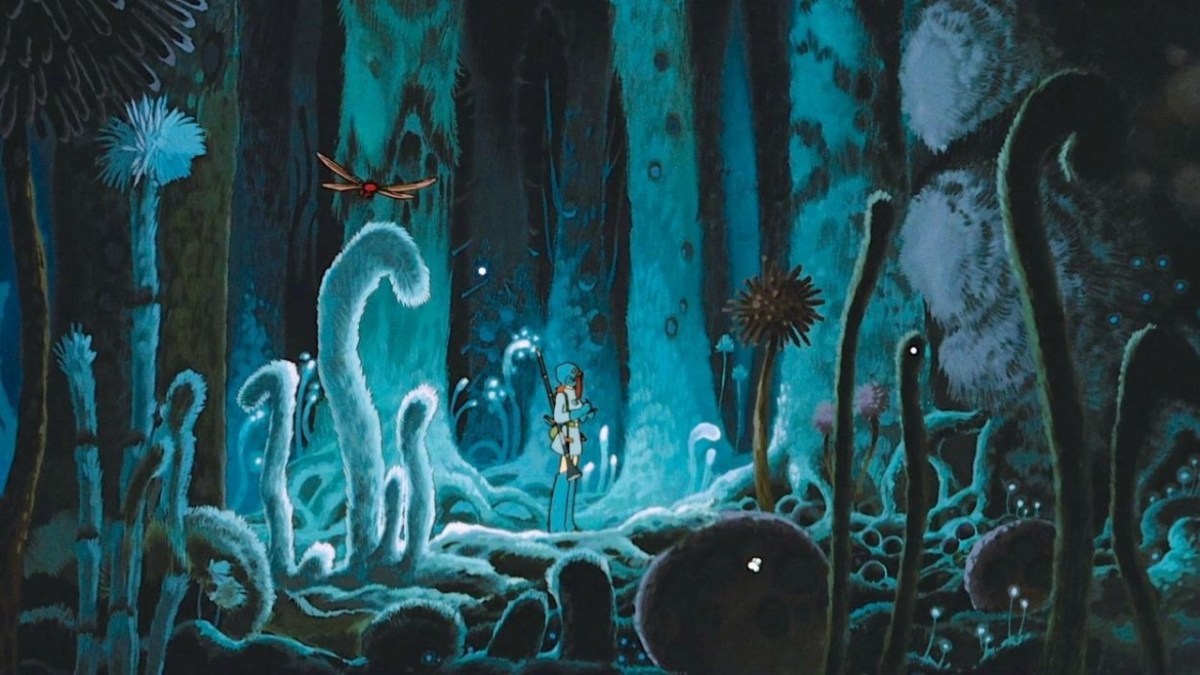
A dress rehearsal for what would come later, this captivating early effort may be thought of as Miyazaki’s ‘Dune’—a fantasy epic with warring nations, a mythic prophecy and giant insects that also operates as a potent call to prevent the mother of all ecological disasters.
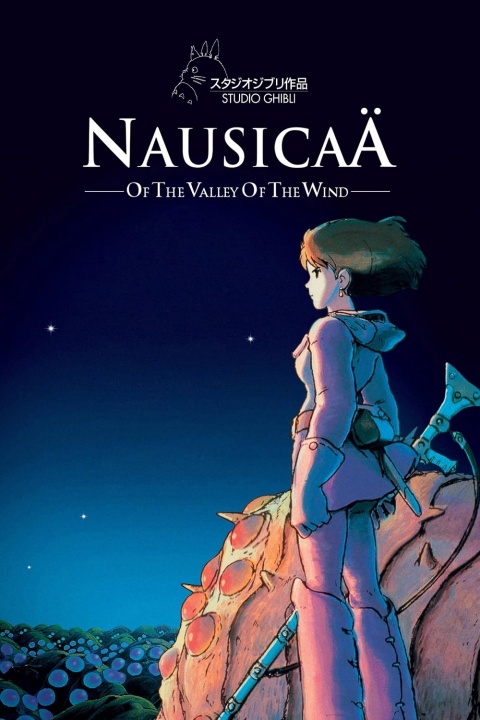
Review #2,933
Dir. Hayao Miyazaki
1984 | Japan | Animation, Fantasy, Adventure | 117min | 1.85:1 | Japanese
G (passed clean)
Cast: Sumi Shimamoto, Ichiro Nagai, Goro Naya
Plot: After an apocalyptic war, a young pacifist princess tries to find a way for humans to coexist with the toxic jungle created by it and prevent further destruction of their already dying world.
Awards: –
Source: Topcraft / Studio Ghibli
Accessibility Index
Subject Matter: Moderate – War & Destruction; Ecological Disaster; Co-Existence
Narrative Style: Slightly Complex
Pace: Normal
Audience Type: Mainstream
Viewed: Netflix
Spoilers: No
This was the film that the now disgraced Harvey Weinstein infamously released as Warriors of the Wind with significant cuts.
Move ahead to 1997, he demanded the same of Princess Mononoke, only to receive a katana sword that reads ‘No Cuts’ in his office. Director Hayao Miyazaki would famously proclaim, “I defeated him”–it felt as vindicative then as it is now.
Sometimes erroneously labelled as the first Studio Ghibli film, Nausicaa of the Valley of the Wind does have all the hallmarks (e.g. female protagonists, ecological and anti-war themes, etc.) of latter-day Miyazaki, including his first collaboration with the enduring composer Joe Hisaishi.
Though occasionally rough around the edges, Nausicaa could be seen as the dress rehearsal for the more polished and perfect Castle in the Sky (1986), which has since become my favourite of his oeuvre.
“Do you know why the well water is pure?”
The titular heroine, a princess who must prevent her idyllic village from being destroyed by deadly environmental toxins, must also contend with aggressive nations on a warpath towards her people. At the same time, a prophecy hangs in the air.
This could be Miyazaki’s “Dune”, with giant insects for ‘sandworms’. Giant insects were also a thing in Rene Laloux’s reappraised Time Masters (1982), made just two years earlier.
In this fantasy adventure, Miyazaki calls for nature to be allowed to replenish and rebalance itself. How can anyone survive, let alone live a contented existence, when the very vehicle that shelters and nourishes us is a hair’s breadth away from irreversible collapse?
More than forty years on, we inherit an Earth on its last legs. The alarm bells will continue to ring indefinitely, resounding even more loudly when the haunting silence comes after our collective perishing.
Grade: A-
Trailer:
Music:
 Eternality Tan