







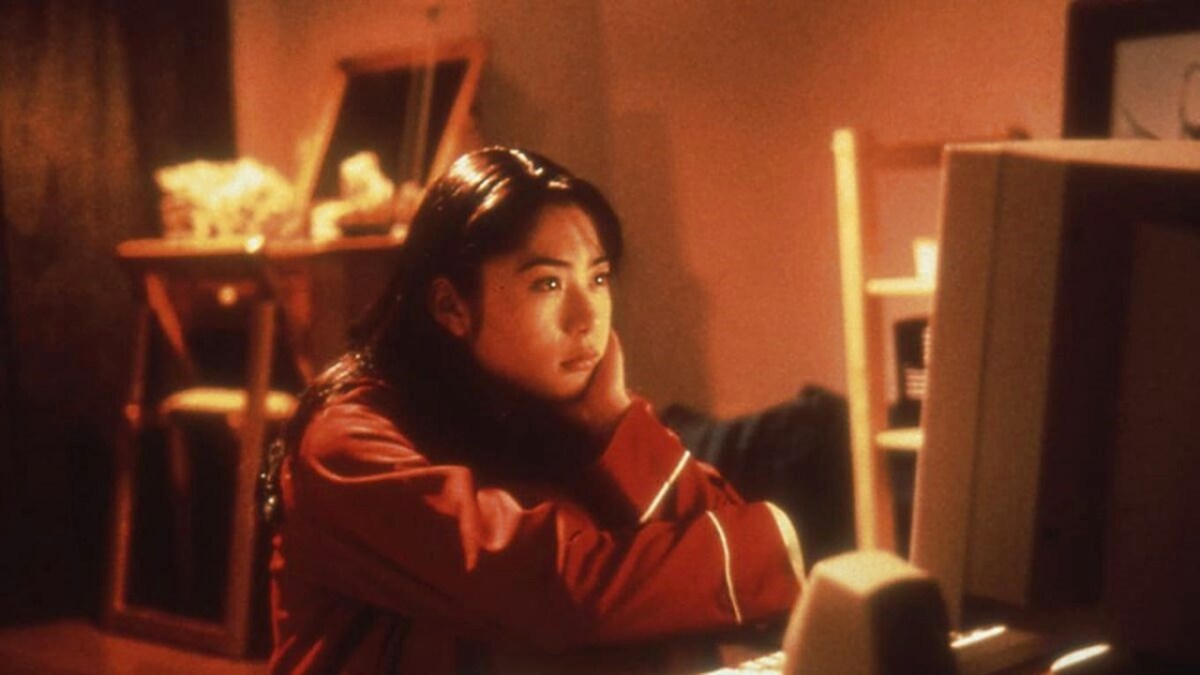
Two strangers find a special bond through an online cinema forum’s email service in Morita’s progressively emotional take on what it means to connect with another human being in the wake of a lonelier, more technological world.
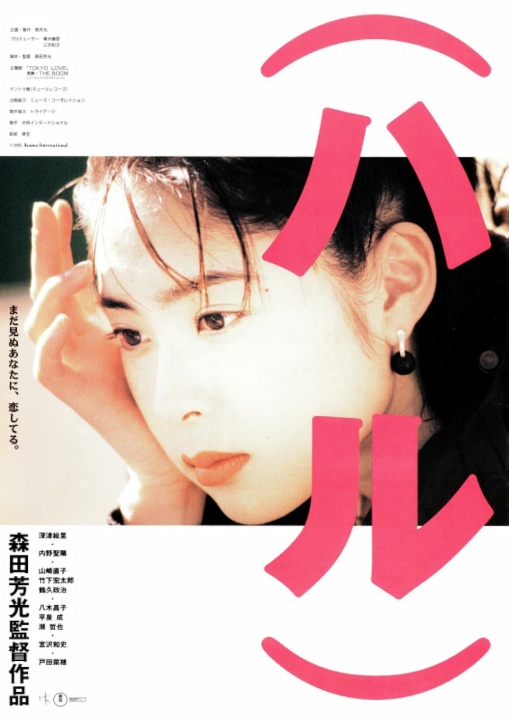
Review #2,890
Dir. Yoshimitsu Morita
1996 | Japan | Drama, Romance | 118 min | 1.85:1 | Japanese
PG13 (passed clean) for some sexual references
Cast: Eri Fukatsu, Seiyo Uchino, Naho Toda
Plot: A young Tokyo businessman joins an online movie forum and develops a special bond with one of its members through back and forth e-mails.
Awards: –
Source: Kouwa International
Accessibility Index
Subject Matter: Moderate – Online Forum; Email Communication; Loneliness & Connection; Soul Mates
Narrative Style: Slightly Complex
Pace: Slightly Slow
Audience Type: Slightly Arthouse
Viewed: Oldham Theatre (as part of the Yoshimitsu Morita Retrospective by the Asian Film Archive)
Spoilers: No
According to Letterboxd, this is the highest-rated work in all of Yoshimitsu Morita’s filmography. It is easy to see why. Who doesn’t enjoy a story about two strangers bonding over a common topic (in this case, movies) and finding their special connection playing a significant role in their lives?
Before Sunrise (1995) was released one year earlier, but while Haru isn’t anything like Richard Linklater’s beloved film in terms of style and content, it shares a similar spontaneity of kinship between a young man and woman.
What makes Haru particularly interesting is that it revolves around the burgeoning technology of email communication as Haru and Hoshi (their virtual names) connect through an online cinema forum. As such, much of the film is in the form of text-on-screen, occasionally overlaying scenes of the night cityscape.
It is, to a certain extent, an innovative way of storytelling, portending to the future of chronic and anticipatory texting as well as harkening back to the ‘intertitles’ of silent filmmaking. It also predates the similar if more stylishly intuitive use in Shunji Iwai’s All About Lily Chou-Chou (2001).
“I’ve been watching a lot of movies these days.”
It can sometimes be rather challenging to immerse oneself in Haru with this mode, and truth be told, I drifted in and out somewhat until a pivotal ‘crossroads’ scene midway gave Morita’s work the missing emotional spark that it needed to push the narrative and characterisations to a rewarding finale.
As Haru and Hoshi go about their daily lives, we see, in the many montages that Morita offers, the loneliness of existing in a more technological world, one where human connection becomes more transactional and less ‘real’.
Little did we know that it would get worse, which is why many cinephiles have connected with Morita’s film as a time capsule. In fact, one might argue that Haru is itself situated at the crossroads between the old and new worlds, notwithstanding the odd curiosity of seeing email convos presented onscreen.
Grade: B+
Trailer:
Music:
 Eternality Tan
[…] Yoshimitsu Morita, whose films such as The Family Game (1983), Deaths in Tokimeki (1984) and Haru (1996) struck me […]
LikeLike