






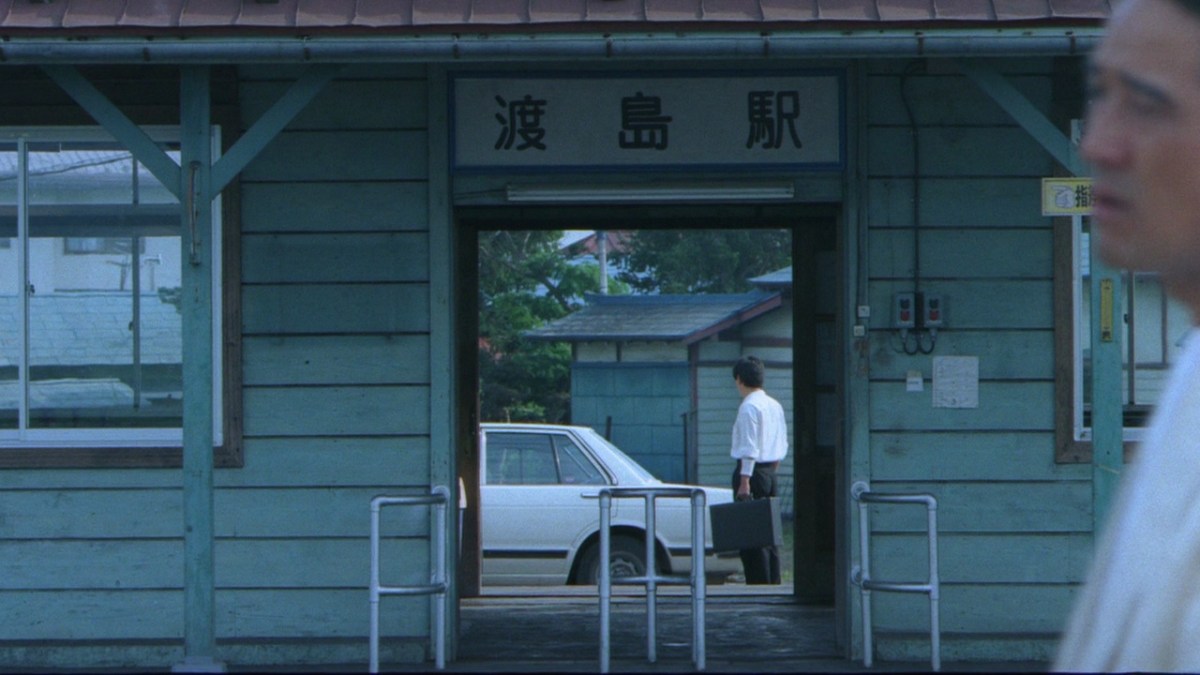
A professional killer implicated deep within an organised crime syndicate waits to be activated in Morita’s impressive mood piece of a character study, methodically conceived and featuring a denouement as shocking as any in ‘80s Japanese cinema.
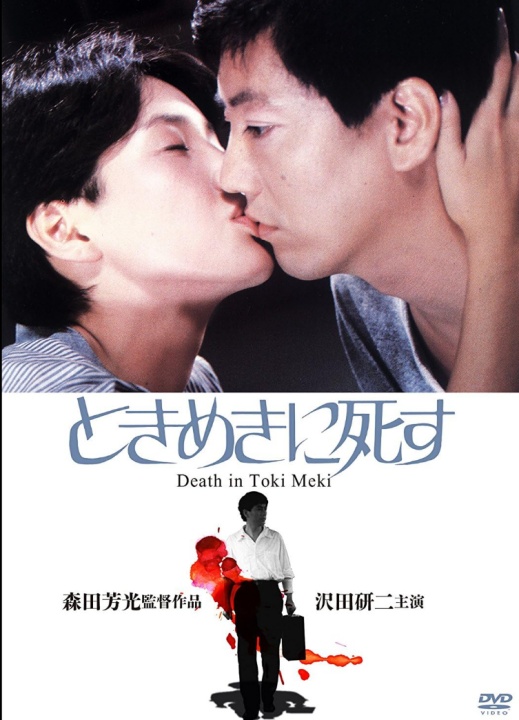
Review #2,877
Dir. Yoshimitsu Morita
1984 | Japan | Drama, Crime | 105 min | 1.85:1 | Japanese
R21 (passed clean) for sexual scenes and nudity
Cast: Kenji Sawada, Kanako Higuchi, Naoki Sugiura
Plot: A nondescript hitman, holes up in a remote country villa, alone but for a finicky manservant, waiting for the arrival of his cult leader target.
Awards: –
Source: Hane Cinema
Accessibility Index
Subject Matter: Moderate – Hitman; Waiting to Strike; Psychology & Morality
Narrative Style: Slightly Complex
Pace: Slightly Slow
Audience Type: Slightly Arthouse
Viewed: Oldham Theatre (as part of Yoshimitsu Morita Retrospective)
Spoilers: No
My second Yoshimitsu Morita film after The Family Game (1983), Deaths in Tokimeki has pretty much sold me on the director.
I think it is even more impressive, but maybe it’s because of my love for films that center on a professional killer who is waiting to strike but has to strategically lie low for some time.
Nothing much happens, but when things do, and as the extraordinary climax would attest, they escalate unexpectedly and shockingly.
Recalling the likes of Jean-Pierre Melville’s Le samourai (1967) and perhaps even influencing the works of Takeshi Kitano such as Sonatine (1993), Tokimeki is that brilliant mood piece of a character study that sees Naoya (Kenji Sawada), the hitman, staying with a caretaker doctor (who in more than one occasion stresses that he is paid a lot to be of service) who monitors his diet and blood pressure.
“Who’s the target?”
Although Morita implicitly suggests that Naoya may not be of a completely sound mind, the film finds its footing in the brotherly friendship between him and the doctor.
Sawada, who would later play a part in Paul Schrader’s Mishima (1985) and the titular role in Seijun Suzuki’s Yumeji (1991), is mostly stoic, capturing Naoya’s uneasiness bubbling beneath his tense muscles. The doctor, almost always with a concerned look on his face, exudes a sense of calm and duty.
The ‘hiding’ place, a safe house with drab finishings, contrasts with the beautiful seaside locale. It is tempting to Naoya, I’m sure, to just leave everything behind and start a new life.
But unlike Melville’s iconic loner, Morita’s protagonist is implicated deep within an organised crime syndicate, a cog in the machine. It is thus inevitable that he must also at the critical moment of activation perform with a sense of calm and duty.
Deaths in Tokimeki, punctuated by rather amusing ‘80s synth music, will reward viewers looking for something methodical and deliberately paced as the narrative careens into somewhere diabolical.
Grade: A-
Trailer:
 Eternality Tan
[…] Deaths in Tokimeki (1984) […]
LikeLike
[…] the Asian Film Archive, I discovered Yoshimitsu Morita, whose films such as The Family Game (1983), Deaths in Tokimeki (1984) and Haru (1996) struck me […]
LikeLike