






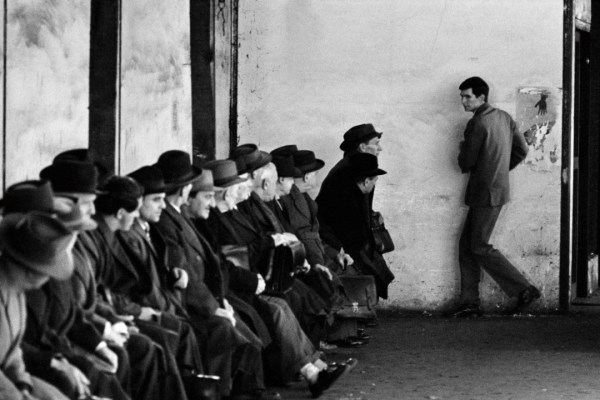

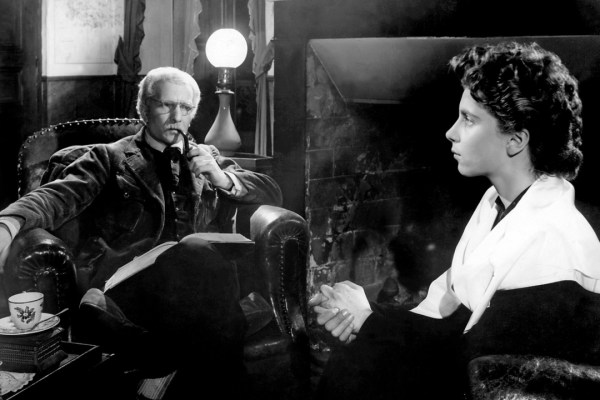
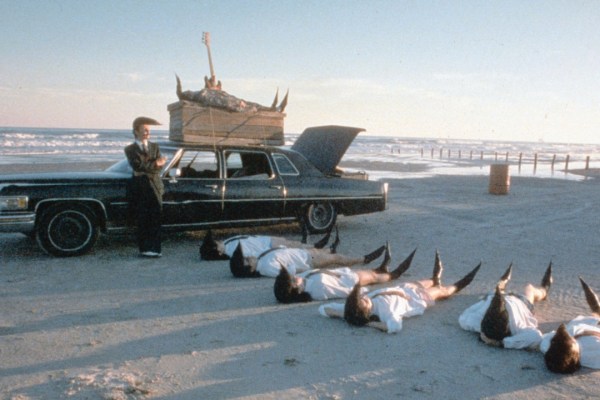
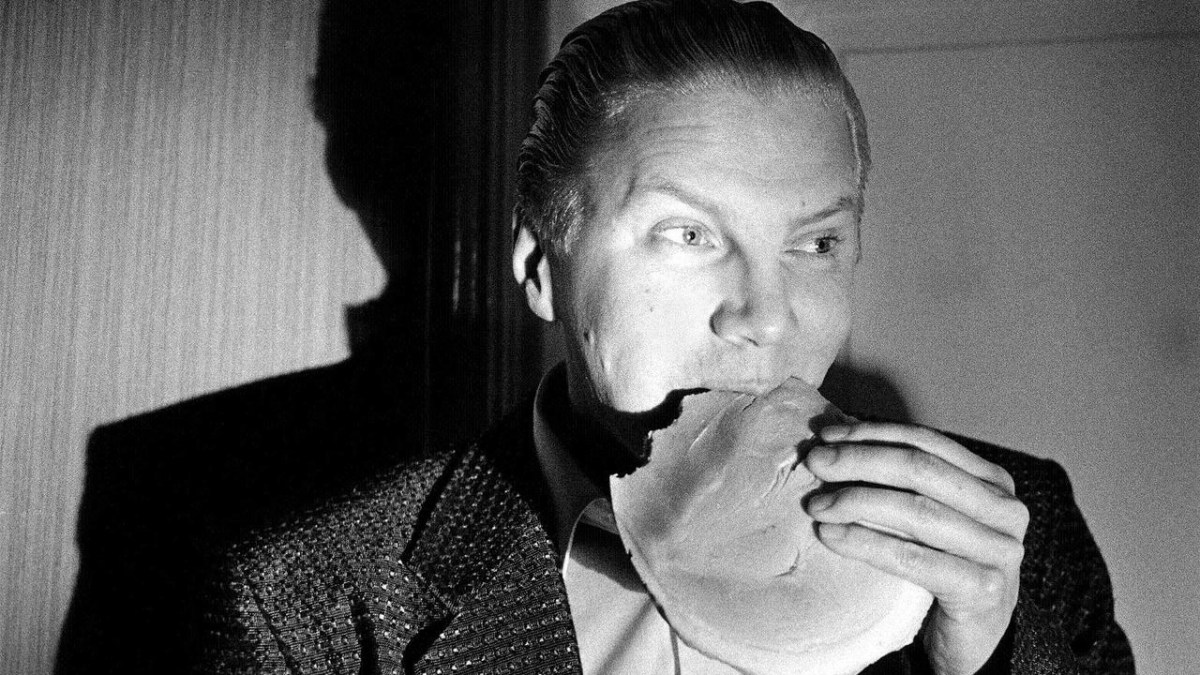
Kaurismaki adapts Shakespeare for the dog-eat-dog world of industrialising Finland with this decent black-and-white revenge noir filled with moments of absurdist humour and conniving tactics.
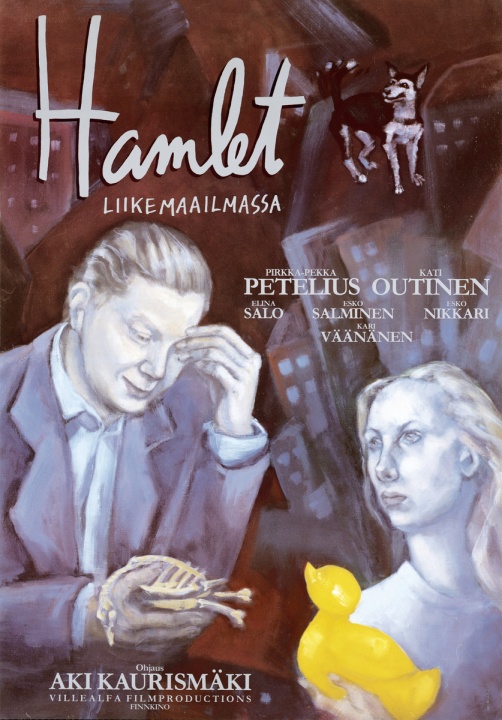
Review #2,832
Dir. Aki Kaurismaki
1987 | Finland | Comedy, Drama | 89 min | 1.85:1 | Finnish
Not rated – likely to be PG13 for some sexual references
Cast: Pirkka-Pekka Petelius, Esko Salminen, Kati Outinen, Elina Salo, Esko Nikkari
Plot: When Hamlet discovers his father’s deceased body, he finds himself pulled into a power struggle as his scheming uncle attempts to secure a monopoly on the Scandinavian rubber duck industry.
Awards: Official Selection (Berlinale)
International Sales: The Match Factory
Accessibility Index
Subject Matter: Moderate – Refashioning of Hamlet; Power Struggle
Narrative Style: Straightforward
Pace: Slightly Slow
Audience Type: Slightly Arthouse
Viewed: MUBI
Spoilers: No
Just four years after adapting Dostoevsky’s ‘Crime and Punishment’ for his first feature, the then-emerging Aki Kaurismaki decided to tackle Shakespeare. And so, we have Hamlet Goes Business, which like Crime and Punishment (1983), is translated into ‘80s Finland and features the director’s deadpan tragicomic style.
Like his sophomore feature, Calamari Union (1985), Hamlet is shot in black-and-white, but while the former could be described as ‘cool’, the latter has dark shades of noir.
Kaurismaki has said that the classical noir of old Hollywood inspired him greatly. But no matter how serious—or deadly—things get (well, there are a hell lot of people trying to poison each other), Kaurismaki characteristically retains some level of absurdity for certain key scenes, including two laugh-out-loud moments involving a radio jukebox that must be seen to be believed.
“Soft people won’t get anywhere these days.”
The character of Hamlet here is portrayed like a man-child, sometimes naïve but not always unaware of the conniving tactics used by others on him. He’s equally adept in returning the favour.
Revenge, ruthlessness and survival become the name of the game in industrialising Finland as it had been in Shakespeare’s original setting of medieval Denmark.
Kaurismaki wanted to adapt ‘King Lear’ and ‘Macbeth’ as well, but his planned trilogy didn’t come to fruition. So, Hamlet Goes Business is the closest we get to seeing a famous literary text refashioned for arthouse audiences who enjoy oddball movies.
It is also a curious work with echoes of the past (and quite literally so, as Kaurismaki uses silent-era ‘special effects’ to show the apparition of Hamlet’s deceased father), while also portending to the future that is the post-Soviet dog-eat-dog capitalist world.
Grade: B+
 Eternality Tan
Sounds like a quirky take on the Hamlet story. It sounds a unique adaptation. The only official film adaptation I’ve seen of Hamlet would be Kenneth Branaugh’s 1996 version (I’m not counting The Lion King because the Hamlet allusions were shallow and window-dressing). This could be something to check out.
LikeLiked by 2 people
I need to tackle Branagh’s adaptation one of these days and also Laurence Olivier’s…
LikeLiked by 1 person
I think you’ll enjoy Branagh’s version. It’s certainly one of the more unadulterated versions even if it’s 4 hours long. I’m also glad they brought up the Fortinbras storyline which really is a catalyst of the cycle of vengeance motifs.
LikeLiked by 1 person
So two of us miraculously got through the Branaugh version.
LikeLiked by 2 people
Nice! Good to know I’m not the only one. What did you think of his version?
LikeLike
I was entertained by the great sets and scenes but not moved. Maybe it deserves a second look. What did you think?
LikeLiked by 1 person
There were certainly great sets and costume design. I enjoyed that version of Hamlet even though there were some flaws and I wasn’t a fan of some of the casting choices.
LikeLike
[…] it may still interest completists. His black-and-white tribute to classical noir and Shakespeare, Hamlet Goes Business (1987), is so much more enthralling and […]
LikeLike