





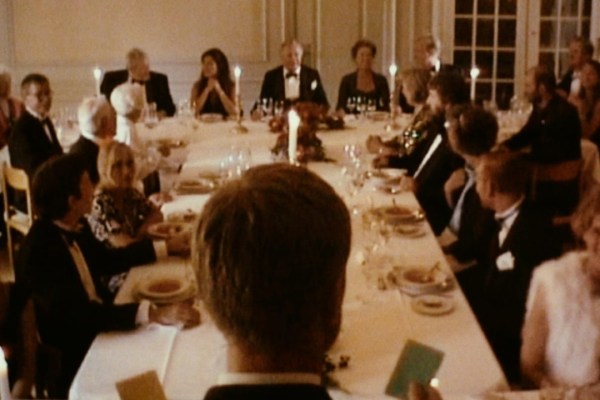

This Locarno Golden Leopard winner, through its radical film language and vibrant experimentation with form, speaks to the disenchanting African experience in France where the Blacks have been continually ostracised, discriminated and exoticised.
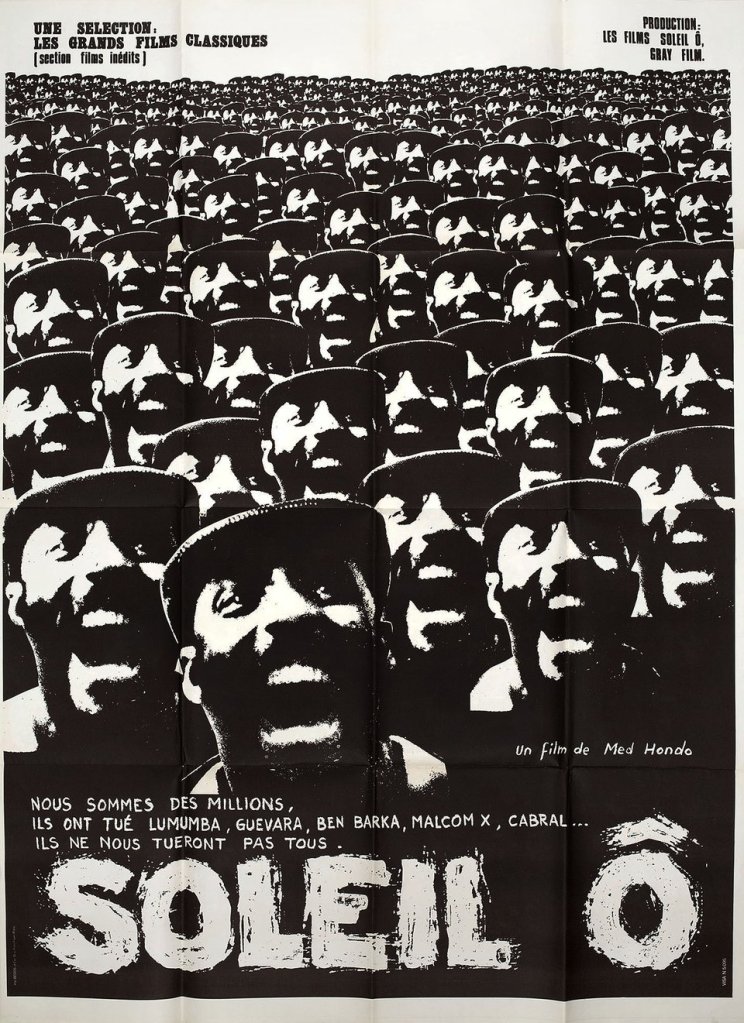
Review #2,754
Dir. Med Hondo
1970 | Mauritania, France | Drama | 102 min | 1.37:1 | French & Arabic
Not rated – likely to be PG13 for some sexual references
Cast: Robert Liensol, Theo Legitimus, Ambroise Mbia
Plot: A young man arrives in Paris from Mauritania where he hopes to make a ‘better’ life for himself. Finding it extremely hard to find a job or an apartment although an educated man, and on the receiving end of condescending sexual advances from women, he will soon face discrimination from all angles.
Awards: Won Golden Leopard (Locarno)
Source: Film Foundation
Accessibility Index
Subject Matter: Moderate – Racial Discrimination; The Black Experience; Africans in Europe
Narrative Style: Slightly Complex/Experimental
Pace: Slightly Slow
Audience Type: General Arthouse
Viewed: Criterion Blu-ray
Spoilers: No
Despite being his first feature, Med Hondo’s Oh, Sun was such a fully realised work of political clarity. Hondo, one of the unsung heroes of African cinema, had in recent years been reappraised, sparked by his passing in 2019, and significantly, a new restoration of the aforesaid film.
It won the Golden Leopard at the Locarno International Film Festival, yet poor distribution had left the film consigned to merely a footnote in whatever scant discourse African cinema had engendered in the ensuing years.
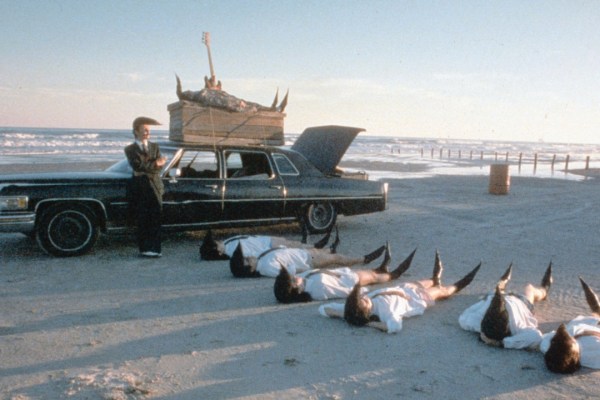
I’ve to admit that Oh, Sun took a while to get me interested, but it does feature a fascinating opening sequence that could be described as a Brechtian retelling of Africa’s sobering history, performed with staged artistry of how colonisation, violence and religion altered the continent and its people irreversibly.
Through a mix of experimental techniques and performative gestures aimed at galvanising corrective political action, Oh Sun surely shares a similar spirit to the most radical side of the French New Wave. Think of something like Godard’s Weekend, coincidentally released in the same year.
“Black invasion. The words are loaded with dynamite.”
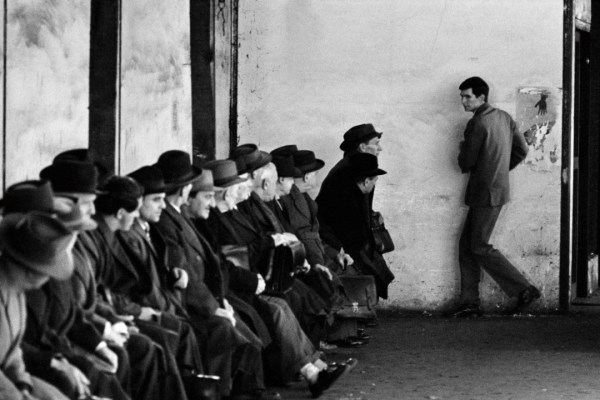
Although a work from Mauritania, Hondo’s film spoke to the larger pan-African condition, particularly as prescribed by the influx of the Blacks (mostly men) into France, which led to them being discriminated against, ostracised and exoticised by employers, landlords and white French women respectively.
Some have categorised Oh, Sun as part of the ‘Third Cinema’ movement, albeit retrospectively, as the infamous manifesto written by two Argentine filmmakers was only published two years (in 1969) after the release of Hondo’s work.
The manifesto called for an anti-imperialist, revolutionary stance towards filmmaking, far from the capitalistic studio productions (of First Cinema) and auteurist visions (of Second Cinema).
Oh, Sun was very much in natural alignment with this cinema of resistance, as Hondo strived to liberate his fellow Africans from oppression.
Grade: B+
 Eternality Tan