


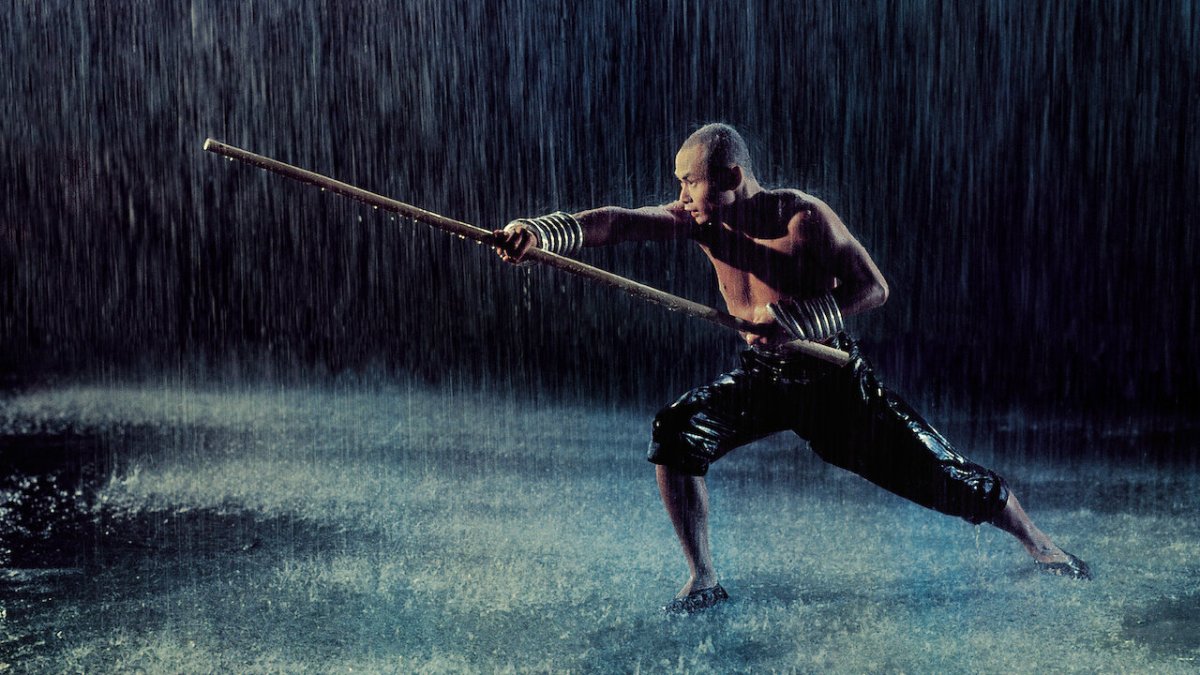
A young man is forced to escape from the oppressive Tartars and into the doors of a Shaolin temple in this exceptional high point of ‘70s HK kung-fu cinema that is as entertaining and cathartic as they come.
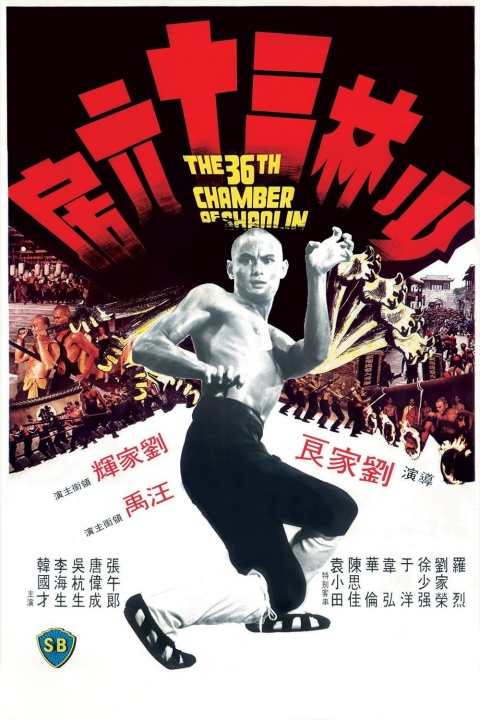
Review #2,747
Dir. Lau Kar-leung
1978 | Hong Kong | Action, Drama | 111 min | 2.35:1 | Mandarin
NC16 (passed clean) for some violence
Cast: Gordon Liu, Lo Lieh, John Cheung Ng-Long
Plot: San Te, a civilian on the run from oppressive Manchu officers, takes refuge in a Shaolin temple where he devotes himself to the most rigorous of kung fu training.
Awards: –
Distributor: Celestial Pictures
Accessibility Index
Subject Matter: Moderate – Kung-fu Training; Discipline & Perseverance; Morality
Narrative Style: Straightforward
Pace: Normal
Audience Type: Mainstream
Viewed: MUBI
Spoilers: No
There had been so many Hong Kong martial arts movies in its heyday that some were relegated to B-movie fodder to keep the commercial wheels turning.
Few, however, come as distinguished from that fertile period of action filmmaking as The 36th Chamber of Shaolin, often considered one of the kung-fu genre’s highest points, directed by Lau Kar-leung at the height of his powers and starring his ‘god-brother’ Gordon Liu in a scene-stealing lead role as San Te, a docile student-turned-fighting monk.
In a way, 36th Chamber works like an ‘origin story’, as San Te is forced to escape from the oppressive Tartars and into the doors of a Shaolin temple, where he begins a physical-cum-spiritual education that will transform his life—and possibly the lives of others.
As entertaining and cathartic as these kinds of movies can ever aspire to be, Lau’s film spends nearly half of its runtime in the confines of the temple as San Te must advance from one increasingly difficult training chamber to another.
“I should have learned kung-fu instead of ethics.”
It feels, at times, like a video game movie, where quests must be completed to move on to the next phase. While the film’s denouement feels a tad rushed, one can’t fault the contagious energy and dynamic film language on display from the get-go.
With spirited fight scenes that are skilfully choreographed and edited, 36th Chamber promises everything that we love about the genre, and reminds us that Hollywood’s attempts at cannibalising martial arts have rarely succeeded at this level.
What I appreciated most about Lau’s work here is how he painstakingly shows—with sharp dashes of comedy—the mental and physical discipline that is required to be a master of one’s craft.
Through San Te’s exploits and practical application of his learnings, we take comfort in the fact that perseverance and mentorship are key to achieving great things together with others.
Grade: A-
Trailer:
Music:
 Eternality Tan
[…] presence of Gordon Liu as the aspiring monk recalls Lau’s earlier, also equally fantastic, The 36th Chamber of Shaolin (1978). Here, the fight scenes are more elaborate and inventive, and in the climax, more violent […]
LikeLike
[…] on several ‘70s and ‘80s Shaw Brothers martial arts films like The One-Armed Swordsman (1967), The 36th Chamber of Shaolin (1978) and The 8 Diagram Pole Fighter (1984) and enjoyed them so […]
LikeLike
[…] towards many of these Shaw Brothers productions of the time, the best ones like Lau Kar-Leung’s The 36th Chamber of Shaolin (1978) or The 8 Diagram Pole Fighter (1984) have more thematic layers to […]
LikeLike
[…] in the same year as The 36th Chamber of Shaolin and Shaolin Mantis, Heroes of the East very much confirms what an action powerhouse of a studio […]
LikeLike