









A stunning ‘ethnographic’ work by Imamura about the age-old clash between ritualistic tradition and disruptive modernity as a Tokyo engineer visits an isolated island in order to develop it, only to find a superstitious, and even, incestuous, family dictating the law of the land.

Review #2,701
Dir. Shohei Imamura
1969 | Japan | Drama | 172 min | 2.35:1 | Japanese
R21 (passed clean) for mature theme
Cast: Rentaro Mikuni, Choichiro Kawarasaki, Kazuo Kitamura, Hideko Okiyama, Yoshi Kato
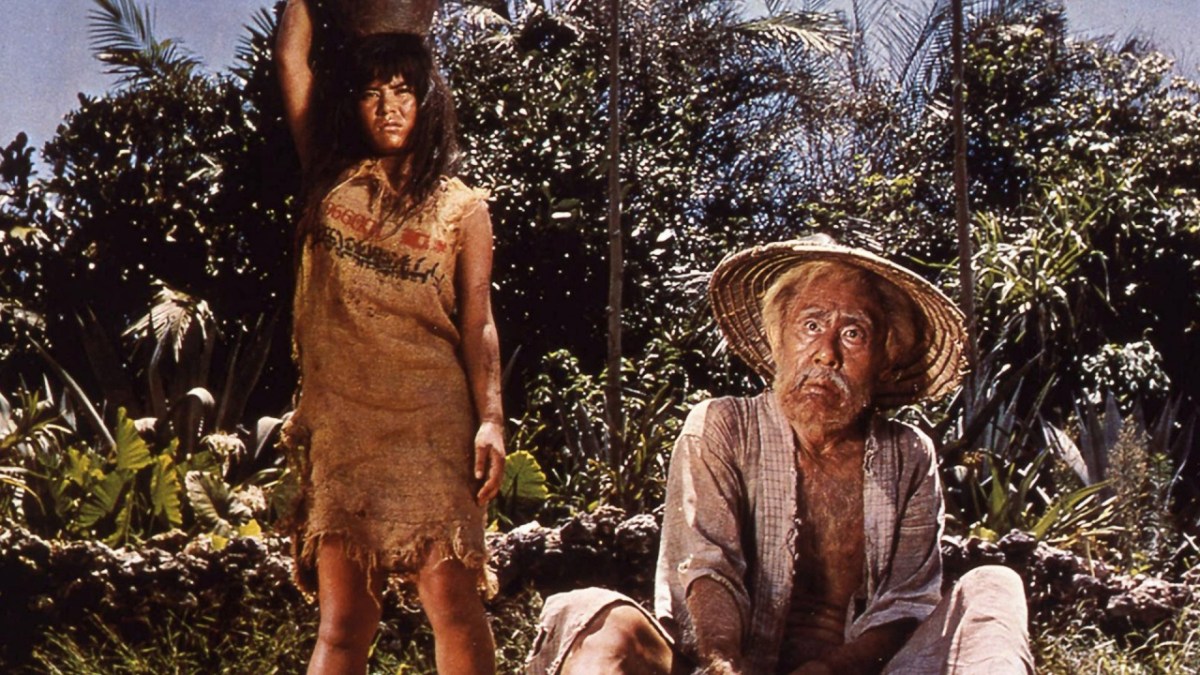
Plot: An engineer from Tokyo arrives on a drought-ridden tropical island to drill a well to power a nearby sugar mill. He meets the inbred Futori family, hated by the locals for breaking religious customs.
Awards: –
Distributor: Nikkatsu
Accessibility Index
Subject Matter: Slightly Mature – Tradition vs. Modernity; Rituals; Incest; Isolation
Narrative Style: Complex
Pace: Slightly Slow
Audience Type: Slightly Arthouse
Viewed: Screener (as part of Japanese Film Festival 2023)
Spoilers: No
I’m still at the tip of the iceberg as far as exploring Shohei Imamura’s body of work is concerned, but the more I watch his films, the more I feel his formidable ability as a filmmaker. Profound Desires of the Gods is an example of the kind of bravura, risky filmmaking that needs a visionary artist to pull it off.
Running at three hours, but certainly making its length count, the film is a stunning piece of narrativized ‘ethnography’, as an engineer from Tokyo is sent to an isolated island in order to develop it commercially.
While he is aware of the tribal communities that populate the island, little does he know how he will be implicated in the age-old clash between tradition and modernity. This theme of tradition versus modernity is not a new subject, but Imamura’s treatment is eye-opening for a couple of reasons.
Firstly, his visual style may be described as an antecedent to the likes of early Malick as shots of nature (e.g. close-ups of insects, sea creatures, etc.) are inserted into the narrative, frequently at random, though they clearly are a metaphor for the wild, untamed energy that comes with the territory.
“They have an unspoken sovereign authority there.”
Secondly, and relatedly, this animalistic quality aligns with the main group of characters dictating the law of the land—a family with strong superstitious beliefs, with explicit overtones of incest.
Certainly a taboo subject anywhere in the world, Imamura somehow transforms incest from repulsive behaviour to something deeply rooted in the emotional psyche of these people. As modernity threatens to disrupt, familiar rituals become more hardened in the face of uncertainty.
Imamura had always been interested in the plight of the marginalised as well as the dark desires that govern the actions of humans. With Profound Desires of the Gods, he shows us there is little difference between human ‘gods’ and ‘beasts’; what’s left behind are myths of perversion and transcendence.
Grade: A
Trailer:
Music:
 Eternality Tan
[…] cinema, as we can trace it back thematically to films such as, for example, Shohei Imamura’s Profound Desires of the Gods […]
LikeLike