








A popular singer anxiously waits for her medical test results in this charming yet reflective drama that remains one of Varda’s best-known works from the French New Wave era.
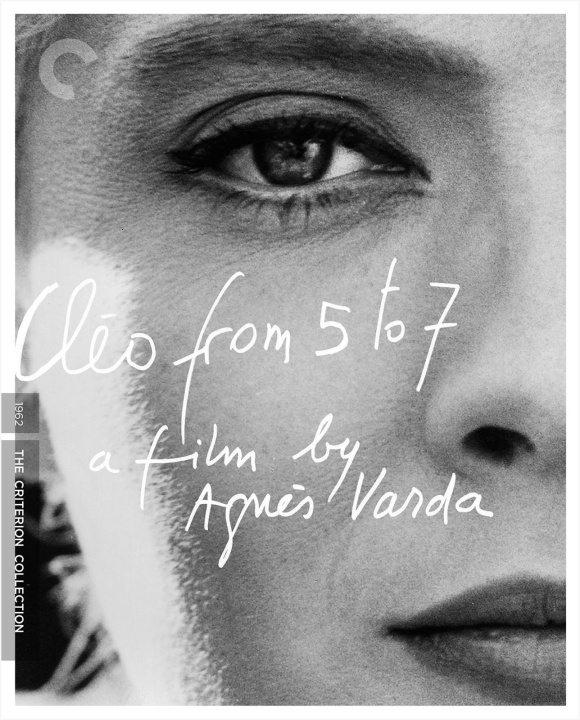
Review #2,698
Dir. Agnes Varda
1962 | France | Drama | 90 min | 1.66:1 | French
NC16 (passed clean) for nudity
Cast: Corinne Marchand, Antoine Bourseiller, Dominique Davray
Plot: Cleo, a singer and hypochondriac, becomes increasingly worried that she might have cancer while awaiting test results from her doctor.
Awards: Nom. for Palme d’Or (Cannes)
Distributor: Cine-Tamaris
Accessibility Index
Subject Matter: Moderate – Health & Illness; Mortality; Finding Meaning in Life
Narrative Style: Straightforward
Pace: Slightly Slow
Audience Type: Slightly Arthouse
Viewed: Criterion Blu-ray
Spoilers: No
Some of the most beautiful shots of tarot cards in cinema kickstart what would be Agnes Varda’s best-known work from the French New Wave era.
However, some have mistaken Cleo from 5 to 7 for her debut feature such is its impact, and also in light of the landmark first features her compatriots like Jean-Luc Godard, Francois Truffaut and Alain Resnais produced at the beginning of the movement.
In fact, we can now retrospectively mark Varda’s first feature, La Pointe Courte (1995) as the start of the Nouvelle Vague.
Cleo from 5 to 7 is almost like a proto-feminist film, featuring the titular character, a popular singer (played by Corinne Marchand) who is awaiting her medical test result, which could be terminal illness-level bad news.
“You seem to be waiting for something, rather than someone.”
So from 5 to 7 (or more precisely 6.30pm) in the evening, Varda tracks her in objective time (methodically demarcated by chronological chapters) as she moves about the Parisian streets visiting luxury stores, having a joyride with a friend, and in one sequence, serendipitously meeting a stranger in the park.
In her own home, she entertains visiting musicians, a segment where Varda transforms the film into a pseudo-musical.
Varda has said in at least one interview that Cleo from 5 to 7 is a film about objective time as experienced subjectively, which is somewhat palpable in the sense that there are parts of the film that feel like time moves slower or faster than usual.
Despite its subject matter, it is not exactly a depressing film; it’s more reflective about mortality and may come across as generally charming. Look out for a silent short that appears in Varda’s film, featuring, well, Godard and his muse, Anna Karina.
Grade: A-
Trailer:
Music:
 Eternality Tan
[…] Cleo from 5 to 7 (1962) […]
LikeLike
[…] Varda’s first feature in colour after Le Pointe Courte (1955) and Cleo from 5 to 7 (1962), Le bonheur (or ‘Happiness’) screams vibrant, cheery optimism from the get-go, as we […]
LikeLike