
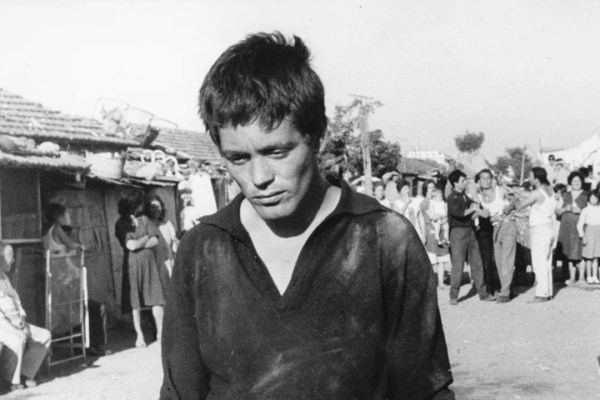







Tsukamoto’s latest is somewhat a mixed oddity, set in the torrid aftermath of WWII and centering on several characters who must eke out a survival while confronting personal trauma, shot in a handheld style with a digital indie look.

Review #2,696
Dir. Shin’ya Tsukamoto
2023 | Japan | Drama, War | 95 min | 1.85:1 | Japanese
Not rated – likely to be M18 for some sexual scenes and violence
Cast: Shuri, Moriyama Mirai, Ouga Tsukao
Plot: In the black marcket, a war orphan is confronted with the struggles of people living in the immediate aftermath of WWII.
Awards: Won Netpac Award & Nom. for Orrizonti Award (Venice)
International Sales: Nikkatsu
Accessibility Index
Subject Matter: Moderate – Japanese Militarism; Human Suffering; War Trauma
Narrative Style: Straightforward
Pace: Slightly Slow
Audience Type: General Arthouse
Viewed: Screener
Spoilers: No
Best known for Tetsuo: The Iron Man (1989), which has been considered an exemplar of the Japanese cyberpunk movement, Shin’ya Tsukamoto is no ordinary artist.
With a considerable cult following not dissimilar to his fellow compatriots Takashi Miike and Sion Sono, many of his films rarely enter the mainstream. In the last decade, Tsukamoto has embarked on a loose historical trilogy about war, though the term ‘historical’ is a misnomer.
In the case of Shadow of Fire, his latest work to compete in the Orrizonti category of the Venice Film Festival, which previously gave him main competition berths for Fires on the Plain (2014) and Killing (2018)—both part of this trilogy—one can sense that he is trying to explore historical trauma through a modern sensibility.
His use of the handheld digital camera gives Shadow of Fire a kind of disorienting ‘digital’ look, as if we are peering into a portal created by AI. As such, the experience feels ahistorical but also somewhat mixed, at least to me.
“I don’t want you to do dangerous things.”
It was a tad difficult for me to get into the film, but it threw up a narrative curveball in the second half that compelled me to last the course.
A young woman ekes out a living by being a prostitute in her own home, while an orphaned boy with thieving skills seeks shelter at her place. The setting is the torrid aftermath of WWII as Japanese civilians suffer great hardship. There is rampant poverty, hunger and disease.
A Japanese soldier with severe war trauma visits the abovementioned duo, but that’s just one act of a narrative that while modest in its aims, has something critical to say about Japanese militarism.
Shadow of Fire is an odd film, both structurally and stylistically, but its messaging is as pointed as the barrel of a gun on someone’s head.
Grade: B-
Trailer:
 Eternality Tan
[…] rise from the ashes of the atomic bomb. (I would pair Minus One with Shinya Tsukamoto’s latest Shadow of Fire (2023) as a thematic […]
LikeLike